
The Growth of African Military Drone Production
Nine African countries now assemble or manufacture their own military drones, and between them they account for 216 locally built units, according to Military Africa’s drone procurement data. Imports from foreign suppliers still dominate the totals, and foreign procurement will for some time yet. Local production offers what imports cannot: aircraft built for local terrain, cheaper upkeep over time, and engineering skills that stay at home.
The nine are at very different stages. A few established aerospace hubs sit at one end, newer regional assembly programmes at the other.
South Africa
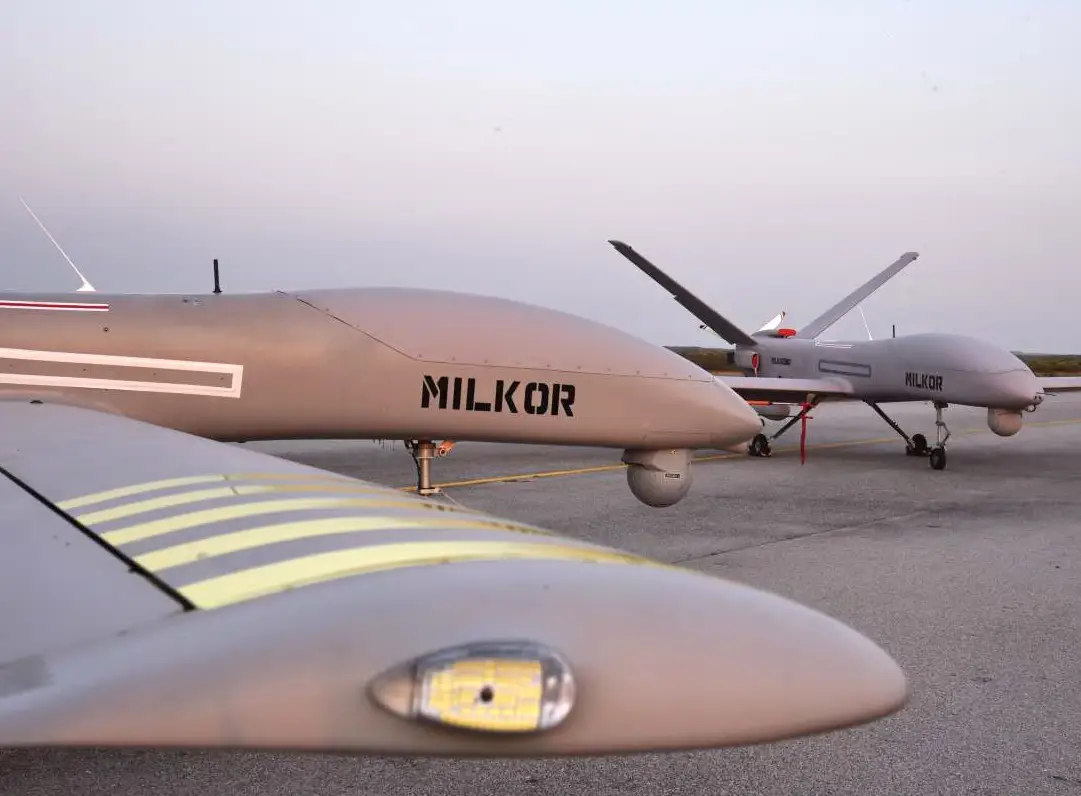
South Africa leads in high-end design. Decades of defence research let its firms build Class III medium-altitude long-endurance (MALE) aircraft. The Milkor 380 is the clearest example: an 18.6-metre wingspan, a 1,500-kilogram maximum take-off weight, a 220-kilogram payload and 30 hours’ endurance. It is built with composite resin infusion and carries multi-sensor pods and precision-guided weapons. Alongside Denel’s older Seeker series, it shows an African firm can design, flight-test and build long-range drones that compete with foreign vendors.
Nigeria
Nigeria buys abroad and builds at home. Its air force flies 34 different imported platform types, a fragmented fleet that brings supply headaches, maintenance backlogs and dependence on foreign vendors for spares. The Nigerian Air Force Research and Development Centre’s answer is home-grown types such as the Tsaigumi: 95 kilograms at take-off, 10 hours’ endurance and an electro-optical and infrared sensor suite, built for surveillance over counter-insurgency fronts.
The parts problem
All nine share one weakness. Local factories build airframes, ground stations and wiring, but engines, specialised microelectronics, high-definition optics and satellite navigation receivers still come from abroad. Supply-chain shocks, export licence delays and currency swings feed straight into production rates. Real independence means making composite materials and avionics locally as well as assembling airframes.
Domestic manufacturing is likely to shape more of the trade between African states over the next decade. As local designs mature, African firms want to sell field-tested aircraft to their neighbours without Western or Eastern conditions attached. Common regulations and cross-border supply chains will decide whether that becomes a real continental market or stays a string of small production runs.
