
VTOL and rotary drones now make up a third of African deliveries
Fewer African armed forces want drones that need a runway. The Africa Drone Intelligence database shows vertical take-off fixed-wing and rotary aircraft rising from 10.8 percent of units delivered in 2010 to 2014 to 35.2 percent in 2023 to 2026. Conventional fixed-wing drones fell from 89.1 percent to 64.8 percent over the same periods.

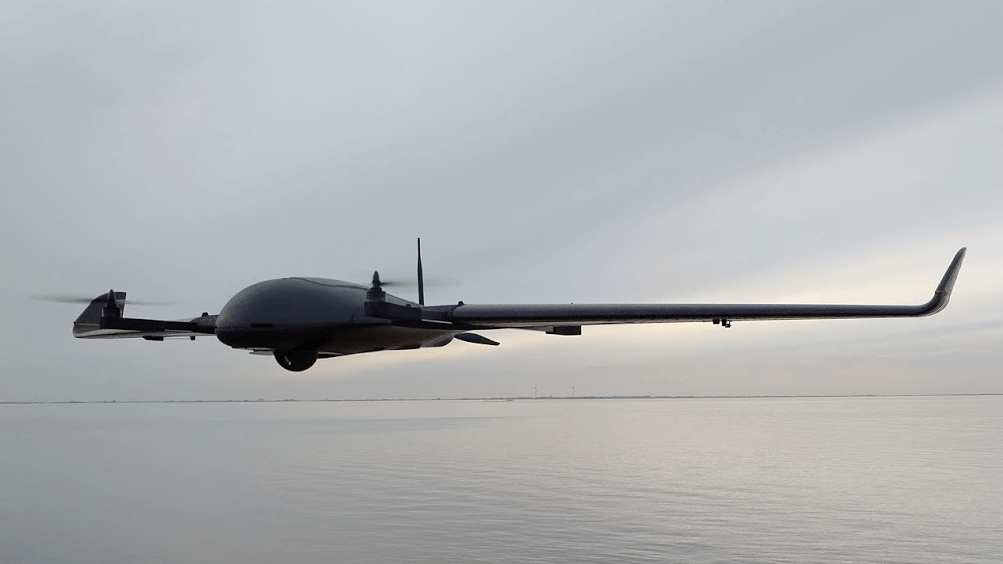
Rotary drones, mainly quadcopters and small helicopters, made up 5.1 percent of deliveries in 2010 to 2014 and 17.9 percent in 2023 to 2026, 90 units in the latest period. Vertical take-off fixed-wing designs, which lift off like a helicopter and cruise on a wing, rose from 5.7 percent to 17.3 percent, 87 units. Across the whole record the database counts 238 VTOL fixed-wing units with 13 buyers.
China supplies most VTOL aircraft
Chinese manufacturers supplied 163 of the 238 VTOL fixed-wing units, 68 percent. The largest buyer is Haftar’s Libyan National Army with 64, including 12 each of the QP537, SATUAV V15, Volitaion VT370, Altair-370 and VF-200 from five different Chinese makers between 2022 and 2024. Ethiopia and Nigeria follow with 48 each, then Ghana with 20.
European suppliers make up most of the remainder. Ukraine’s Ukrspecsystems supplied 10 PD-2 to Ghana in 2022 and three PD-1 to Nigeria in 2021, the UK’s Comtrac 12 CTS Ovation to Nigeria, and France’s Milton Innovations 14 Long Range Observer to Chad and Mauritania in 2025.
Why the shift
Vertical take-off aircraft remove the need for prepared runways and launch catapults, which matters to forces operating from forward bases, ships and remote border posts. They are also cheap enough for army units to own directly rather than relying on air force assets. Ghana’s indigenous AeriusPro, six recorded in 2025, follows the same design approach, as Unmanned Africa reported in its report on the AeriusPro training programme.
The price is payload and endurance. Most VTOL designs in the database carry only cameras and fly for a few hours, so they complement rather than replace medium-altitude strike drones such as the Bayraktar TB2 and Wing Loong II. Armies are spreading surveillance across more units. They are not giving up the big aircraft. French VTOL suppliers’ return to the market is covered in French small drones return to African armies through VTOL deals.
