
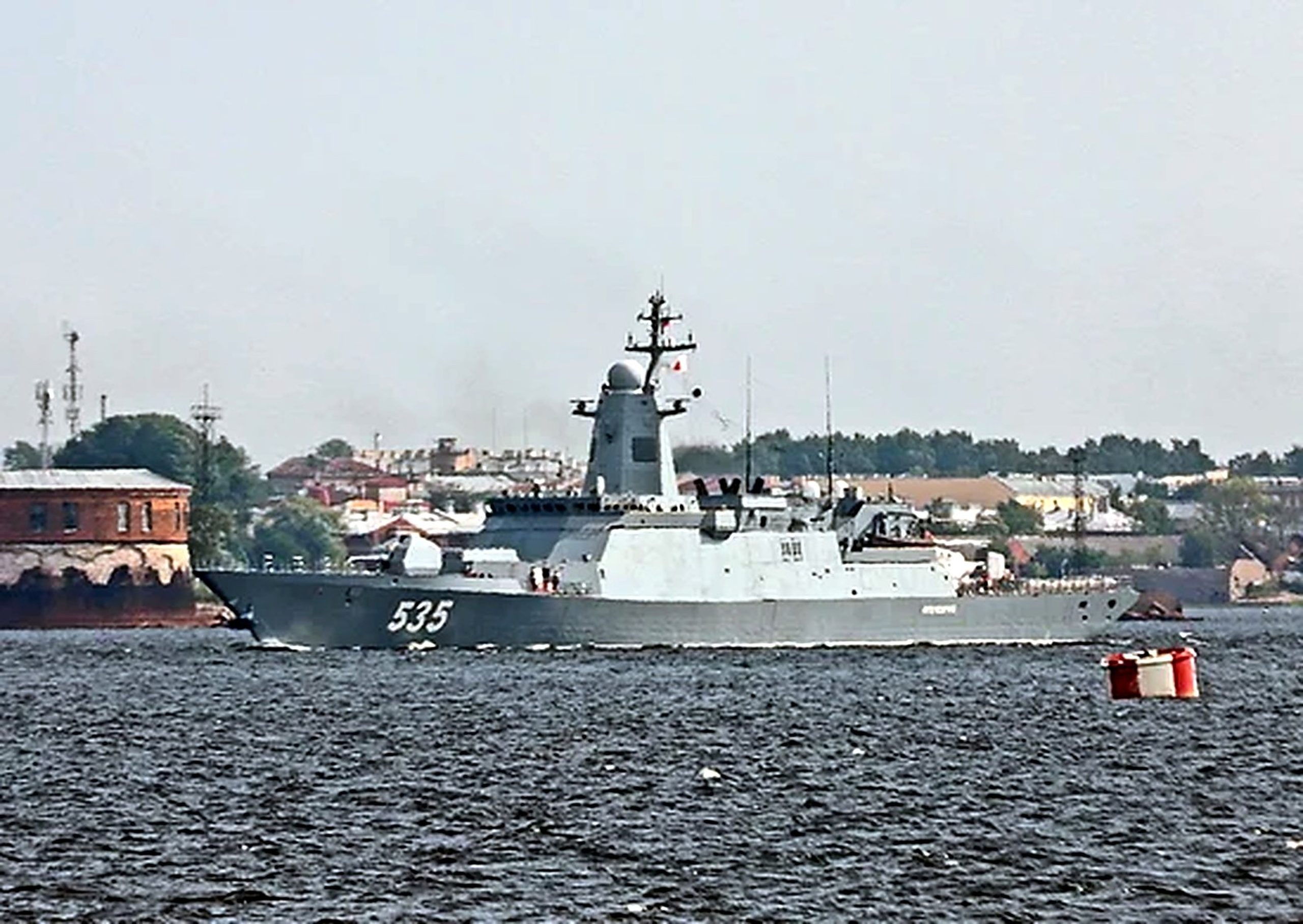
After Merkury, Libya weighs how to protect its ports and waters
Libyan officials are calling for stronger maritime surveillance, early warning and coast guard capabilities after Ukrainian sea drones sank the Russian corvette Merkury at Benghazi on 22 November 2026, an attack that exposed how little a divided Libya can do to protect its own ports. The debate, reported by Asharq Al-Awsat on 24 November, has split along the same lines as Libya’s politics.
Ukrainian President Volodymyr Zelensky said seven naval drones were launched and that the Merkury, commissioned in 2023, was sunk along with a Ka-27 helicopter, Defense News reported. “Our second target was the Russian dry cargo vessel MV Angara, which the enemy used to transport weapons,” he said, Premium Times reported. Libyan military officials told the Associated Press the corvette was severely damaged, while satellite imagery published by The Telegraph showed it largely submerged with only its bow above water.
“A declaration of war”
Presidential Council member Musa al-Koni called the attack a “declaration of war against the Libyan state” and pledged legal and diplomatic steps, including referral to the International Court of Justice and the UN Security Council. In the east, Saddam Haftar, deputy commander-in-chief of the Libyan National Army (LNA), said: “We firmly reject the use of our territory or territorial waters as an arena for settling scores,” Al Jazeera reported. The UN Support Mission in Libya (UNSMIL) called for “an immediate, independent and transparent investigation.”
High Council of State member Abubakr Mohammed Othman said the incident reflected “institutional divisions, multiple centers of decision-making and the absence of a unified national authority.” He called for securing ports and critical infrastructure, clear rules on the entry and activities of foreign military vessels, and information sharing with Mediterranean neighbours. Law professor Ramadan al-Tweijer said Libya “will respond with all the resources at its disposal to defend its territory” but lacked the capability to become a party to an international war.
A port at the centre of Russia’s Africa supply line
Benghazi and Tobruk, under Khalifa Haftar’s control, have become Russia’s main maritime logistics hubs in the Mediterranean since the fall of the Assad government in Syria in December 2024, linking sea routes to inland airbases such as al-Khadim and al-Jufra and on to Africa Corps deployments in the Sahel, according to Al Jazeera. Military Africa has reported on Russian cargo ships ferrying tanks and MRAPs to Africa via Tobruk and on a suspected Iskander launcher at an airbase near Sirte. The LNA itself flies Russian Orlan-10 drones, Belarusian Mirotvorets strike drones and 60 Chinese VTOL drones bought in three years, but none of that fleet is suited to stopping a sea drone in a harbour.
Benghazi is not the first Ukrainian sea-drone operation linked to Libyan waters. In March 2026 the Russian gas tanker Arctic Metagaz partly sank about 130 nautical miles north of Sirte after explosions that Moscow blamed on Ukrainian naval drones, and Ukrainian drone specialists have been reported operating from western Libya, which the Tripoli authorities have denied hosting.
Can Libya defend its harbours?
Defending a harbour against small, low-signature uncrewed surface vessels needs radar and electro-optical surveillance, booms and barriers, armed patrol craft and rules of engagement that a single chain of command can enforce. Libya’s navy and coast guard are split between Tripoli and the LNA, and much of their effort has gone into migrant interdiction rather than port defence. Other African navies are adding drones and unmanned surface vessels for maritime surveillance, and the same sensors are the first layer of any harbour defence. Unless the two sides coordinate, and unless foreign powers stop using Libyan ports as forward bases, Benghazi is unlikely to be the last Libyan harbour drawn into a war that is not Libya’s own.
