
The Money Behind Africa’s Military Drone Boom
Ask five market-research firms how big the global military drone market will be in 2026 and you get five answers, from about $13 billion to nearly $35 billion. At least four of them must be well off. For Africa the picture is murkier still. One widely cited “Middle East and Africa” figure puts the regional military drone market at around $2 billion in 2026. A separate Africa-only report, which counts commercial drones too, puts the whole continent near $1 billion in 2024, rising toward $9 billion by 2033.
Those numbers cannot all describe the same thing, and that tells you something: Africa’s military drone sector is still too opaque for basic questions of size. Units are easier, because Unmanned Africa and outlets like Military Africa have been counting them directly rather than modelling them. More than 1,203 foreign-supplied drones sit in African inventories, 216 more were built locally in nine countries, and a growing share of both are strike or counter-strike types. The more useful question is who is paying. That answer is changing faster than the unit counts.
States buying without conditions
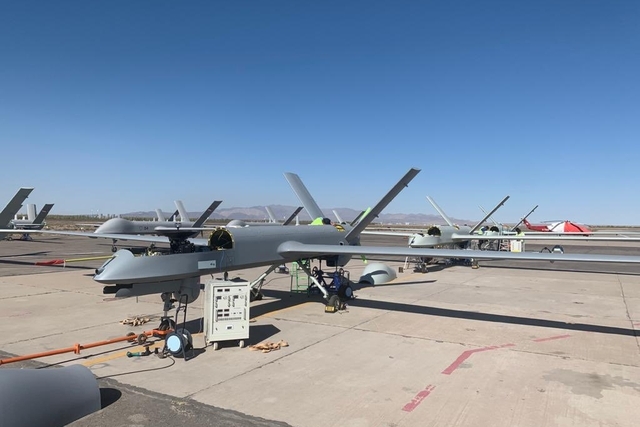
For most of the past decade the answer was simple. African states paid, directly or through financing deals, for hardware from suppliers that sold without the political conditions Western governments attach. Unmanned Africa has covered how thoroughly Turkey and China dominate that model: Ankara uses Baykar’s export success to open doors diplomatically and commercially, and Beijing ties Wing Loong and CH-series sales to longer trade relationships.
Most of the hardware in African skies still arrives this way, and the reason is price. A state that could never afford crewed fighter jets can field a working strike and surveillance force for a fraction of the cost, on financing terms that rarely face the parliamentary scrutiny a Western sale would.
Money that never touches a budget
A second, murkier source of money funds proxy forces instead of governments. Sudan is the clearest current case. The Rapid Support Forces fly Chinese-built drones they could not plausibly have bought themselves. A UN Panel of Experts previously found the United Arab Emirates “most probably” supplied and helped operate similar Chinese-made aircraft for Libya’s Khalifa Haftar during his 2019 to 2020 assault on Tripoli, and similar UAE financial backing is now widely reported for the RSF.
Unmanned Africa’s reporting on both conflicts has tracked the hardware closely. The financing deserves its own attention, because it never appears in a defence budget or a public procurement record. Spending like this is exactly why nobody can size the African market from the bottom up with any confidence.
Venture capital arrives
The third source barely existed two years ago: Silicon Valley-style venture capital. Terra Industries, a drone and autonomous-systems maker founded in Nigeria in 2024 by Nathan Nwachuku and Maxwell Maduka, raised $11.75 million in January 2026 from 8VC, the firm founded by Palantir co-founder Joe Lonsdale. Lux Capital added $22 million the next month, and a syndicate including Valor Equity Partners, an investor in Anduril and SpaceX, put in $18 million in August.
Several outlets describe the $52 million total as the largest seed round ever raised by an African startup in any sector. Terra is spending it on expanding its Pax-1 factory in Abuja and finishing Pax-2 in Ghana, which it says will be the continent’s largest drone factory. Its range covers surveillance drones, the Kama counter-drone interceptor and autonomous ground and maritime systems. The pitch is sovereignty. Maduka has argued that African governments have been “forced to rely on foreign defence systems from China, Europe, and elsewhere” that leave them dependent on outside vendors for maintenance and software.
Does the sovereignty pitch hold up?
It deserves a hard look. Terra’s legal headquarters is in Danville, California, not Abuja, and it has opened offices in San Francisco and Washington DC to work with the US government, with London planned. Its factories are African, and its stated customers are African and Global South governments rather than NATO militaries, which sets it apart from Western defence primes.
The money, though, comes from the same venture ecosystem that built Anduril, which has raised more than $2.5 billion. Terra’s record $52 million is roughly 2 percent of that. “Africa’s first defence prime”, as Nwachuku has described his ambition, is operating far below the companies it measures itself against. Is California capital deployed in Nigeria and Ghana African defence sovereignty, or a slicker version of the dependence the old suppliers created? That question is still open, and worth revisiting once Terra’s factories reach full capacity.
Milkor: capital flowing the other way
South Africa’s Milkor has gone the other way. It built the 380, the largest African-designed MALE drone, on decades of South African aerospace experience rather than a fresh venture round. Now it is the one reaching outward. An April 2026 memorandum of understanding with South Korea’s LIG Nex1 covers joint work on mission payloads and an electronic warfare suite, and Milkor already has offices in Abu Dhabi and Riyadh. That is a smaller, slower story than Terra’s sprint. It may be the better test of whether African designs can attract outside capital on their own terms.
Parts, and the counter-drone boom
All three money models hit the same wall. As this site has reported before, the parts that decide a drone’s performance, its engine, optics and satellite navigation receiver, are still mostly imported even where airframes are built locally. Money buys a factory far faster than it builds a domestic supply chain for what goes inside.
Meanwhile the fastest-growing part of the market is counter-drone systems. Continental spending there is growing at more than 27 percent a year through 2030, faster than even the aggressive projections for combat drones, as militaries face the insurgent and paramilitary drone threats this site reports on almost every week. It is funded through the same three channels: state budgets, foreign-backed proxies that now need their own defences, and venture-funded makers building interceptors alongside the strike drones that created the demand.
None of this settles how big Africa’s military drone market is in dollars. It does show who now decides how fast it grows: foreign state suppliers, foreign patrons funding proxies and global venture capital, each with different reasons for wanting more drones and different ideas about who should control what gets built.
