
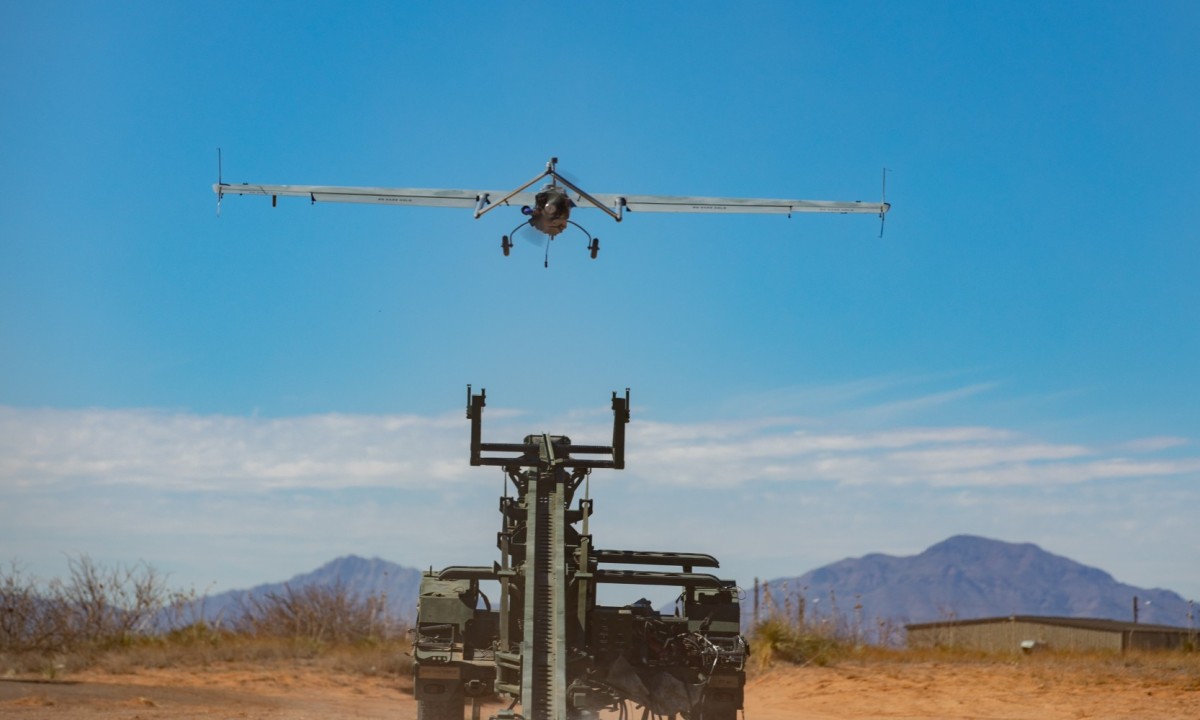
Are Unmanned Systems a new Frontier of CT and COIN Operations in Africa?
Drones and other unmanned systems can help African militaries fight non-state armed groups. They will not do it on their own. Armies across the continent need a way of fighting that makes room for tactical adaptation, systems that can talk to each other, and home-grown counter-drone capability.
Africa’s wars have lasted decades and have intensified as armed groups pick up new technology. Since at least 2020, armed groups on the continent have adopted drones, and the wars in Ukraine and the Middle East have sped up the spread of uncrewed aerial systems that these groups now use to attack, to watch and to make propaganda. By 2025, non-state armed actors had acquired and used military drones in at least nine African countries. The number of militant groups in sub-Saharan Africa confirmed to possess armed-drone capabilities went from zero in 2023 to at least eight in 2026.
Governments have bought drones too, for counter-insurgency and counter-terrorism. African drone procurement rose from 618 units across the 2010s to 1,054 in the first six years of this decade. That surge has run alongside the spread of armed conflict, and both sides now fly drones in combat. Drone strikes rose from fewer than 20 events between 2013 and 2015 to more than 394 between 2022 and 2024.
The results have been mixed. Drones have given African militaries greater lethality and stronger ISR support, yet they have not meaningfully changed the course of the continent’s wars. Armed groups remain a serious threat and have become deadlier themselves, especially in the Sahel, which has been the continent’s most lethal theatre for four years running.
Buying the technology was the easy part. Turning it into military capability and winning engagements across a whole theatre has proved much harder. African armies need to rethink how drones fit into their wider forces and operations.
Why drones struggle in counter-insurgency
A mobile enemy and few targets
The first problem is the enemy. Armed groups usually fight in Fabian or guerrilla style, relying on mobility and stealth and avoiding fixed defences. They move in small units, come together briefly to attack, and scatter before government forces can find and hit them. Small arms and other portable weapons keep them light, with few logistics or infrastructure needs. All of this cuts the number of clear targets, and the time they stay visible, for drone surveillance and strike.
The result is lopsided. Insurgents choose when and where to gather, rarely hold ground for long and hide among civilians or in rough terrain. Government forces have to defend territory, man bases and checkpoints, use known supply routes and keep logistics running. They give the enemy far more persistent, predictable targets than the enemy gives them. A drone strike may kill fighters, destroy a vehicle or break up a temporary gathering without forcing a decisive fight or damaging the insurgency as an organisation. Drones are useful in counter-insurgency. Better surveillance and precise strikes still do not solve the basic problem of pinning down a dispersed, fast-moving enemy.
Too many suppliers
The second problem is a scattered supply base and what it does to integration and interoperability. Between 1980 and 2026, 34 African states acquired 1,959 drones through 234 procurement records from suppliers in at least 21 countries. Nigeria has one of the most varied profiles: 34 drone types in 34 separate procurements from China, Turkey, the United States, the United Kingdom and local developers.
Spreading purchases reduces dependence on any one supplier and makes supply chains sturdier. It also fills arsenals with systems built on different architectures, with each maker’s proprietary technology and interfaces. In counter-insurgency that is costly, because finding, identifying, tracking and hitting a mobile target depends on information moving fast between surveillance aircraft, command posts, intelligence cells and strike assets.
Diversity at the point of purchase can become fragmentation at the point of use. Against insurgents whose mobility already leaves little time to find and engage them, poor integration lengthens the sensor-to-shooter chain and wastes the advantage drones are supposed to bring. An army can end up with an ever more sophisticated and varied drone fleet and no better at integrated counter-insurgency.
Too little counter-drone capability
Those two problems expose a third: too little attention to defending against drones. Because the advantage is lopsided, insurgent drones can do disproportionate damage to state forces. Cheap, improvised drones can hit military and civilian targets, while the insurgents’ own mobility makes them hard to hit back. Yet African procurement still leans toward offensive drones, with less emphasis on detecting, tracking, jamming and intercepting small, low-flying armed commercial drones.
That imbalance will matter more as armed groups learn to degrade state capabilities. The Azawad Liberation Front recently used fibre-optic-controlled drones to defeat military jamming in operations against Malian forces. It also reportedly downed a Russian-operated Mil Mi-24P attack helicopter supporting the Malian Armed Forces (FAMa) during a joint siege on Anefis by the FLA and Jama’at Nusrat al-Islam wal-Muslimin (JNIM) in northern Mali. African armies face a double task: use drones better against dispersed insurgents, and stop those insurgents using drones against expensive aircraft, bases and civilians.
Fighting insurgents in the drone age
The so-called drone revolution will not transform counter-terrorism and counter-insurgency in Africa. Drones bring real advantages, but whether they change outcomes depends on how well they fit into the wider force. African militaries need to move from a focus on buying platforms to a focus on employing them: the processes, structures and coordination that turn hardware into capability.
Integration first
That starts with integration. Whether a drone comes from abroad or from a local factory, its ability to share data with existing surveillance, command, fires and other systems should be a basic requirement of procurement and force design. Diverse suppliers may make the supply chain sturdier, but buyers should check that the systems can talk to each other. Where full technical interoperability is impossible, armies should invest in integration layers and combat digital ecosystems that feed every system’s data into a common picture. The aim is an integrated capability in which sensors, decision-makers and weapons work as one system, not a pile of different drones.
Tactical adaptation
Integration has to come with tactics that match the way armed groups fight. That calls for innovation in training and doctrine as much as technology, so forces become as quick and flexible as their opponents. One option is training troops to move along the “Fabian–Napoleonic spectrum“, dispersing and moving to reduce their own exposure while keeping the ability to mass forces and fire for a decisive fight. It also means a healthy tooth-to-tail ratio: enough operators, maintainers and intelligence specialists behind the combat units, with the communications, logistics and other support needed to turn drones into battlefield effects.
Home-grown counter-drone capability
Finally, winning with drones now depends as much on denying them to the enemy as on using them. African militaries should build both kinetic and non-kinetic counter-drone capabilities into their unmanned-systems plans. As Africa’s defence industry learns to design and build its own platforms, cheap locally made counter-drone systems could help close the gap, and could change as fast as the tactics and technology armed groups bring to the fight.
