
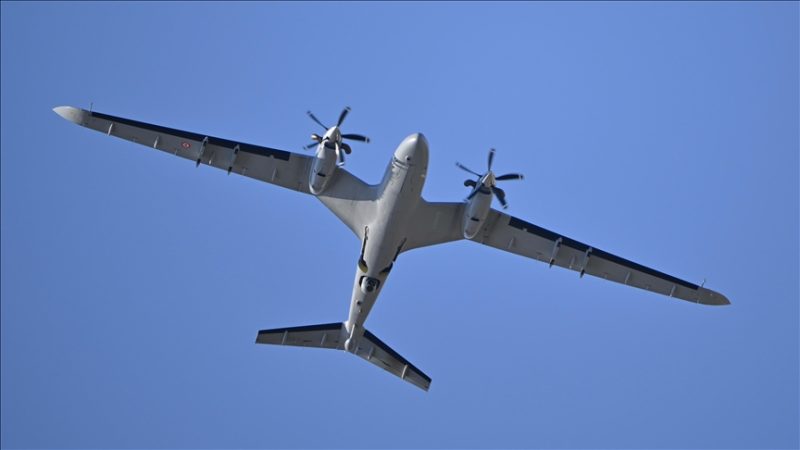
Turkish Akinci armed with Eren munition continues to decimate Chinese drones in Sudan
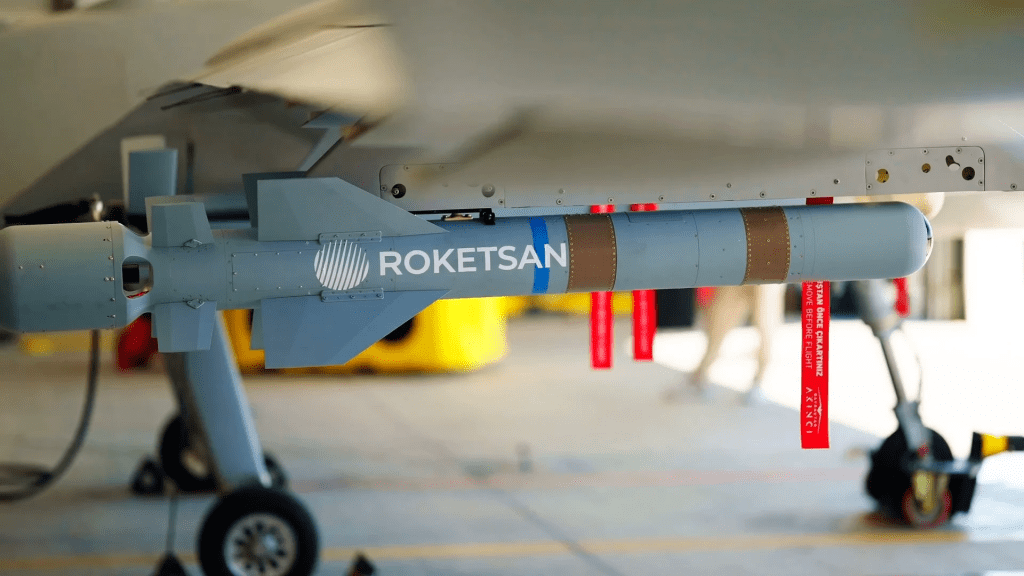
Nobody has an exact count of the drones Sudan’s Akinci fleet has shot down, and the number in circulation depends on what a tally chooses to include. Open-source estimates put the Chinese-built CH-95 drones destroyed by Sudanese Armed Forces (SAF) Akincis at roughly six to eight, according to Defence Express, while Defence Security Asia says the figure now exceeds eight. Neither number has been audited, and the evidence behind them is mostly seeker footage, video clips and unconfirmed social media posts. What is not in doubt is the pattern. Since mid-2024 the SAF has repeatedly used its Turkish-made Bayraktar Akinci to hunt the Chinese drones flown by the Rapid Support Forces (RSF), and in at least some cases it has done so with Roketsan’s EREN munition.
Timeline of Sudan Drone Procurement
The Sudanese Armed Forces (SAF) officially acquired the Bayraktar Akıncı drone in 2024. In November 2023, Sudan and Baykar had the Initial Secret Agreement, SAF signed a $120 million deal with Baykar for TB2 drones, munitions, and technical packages. Throughout 2024, SAF upgrades its pipeline to acquire the advanced Akıncı heavy drone platform.
By Mid-2025, Satellite imagery tracks Akıncı systems arriving via regional hubs, including deployments to support operations, and in May 2025, a base housing Turkish technical personnel training Sudanese soldiers to pilot the Akıncı was targeted in Port Sudan. In September/October 2025, Paramilitary RSF units shoot down the first SAF Akıncı heavy drones over West Kordofan and North Darfur.
The arrival of the Akıncı greatly extended the SAF’s deep-strike reach and turned Sudan’s conflict into a testing ground for drone-on-drone warfare.
A tally with no auditor
The footage shows a large influx of foreign hardware. The SAF mainly utilizes Iranian Mohajer-6 and Turkish Bayraktar Akıncı platforms. Conversely, the RSF relies extensively on Chinese FH-95 and CH-95 heavy drones, which analysts suggest are supplied via clandestine logistics networks bypassing the international embargo.
The totals diverge because the reporting does not agree on what counts. Some outlets include aircraft destroyed on the ground as well as in flight. Some credit the Akinci with kills the SAF itself attributed to ground-based air defences. And one widely cited incident involves a rival Akinci rather than a Chinese drone at all.
A reconstruction from the dated reports below, which is this site’s own and not an official figure, shows how wide the range is. Count only the incidents in which footage-based reporting credits an Akinci with downing a CH-95 or FH-95 in flight (coverage uses the two designations interchangeably) and the engagements of 7 July, mid-July, 17 August and 24 September give five aircraft, since the last involved two. Add the earlier FH-95 that Military Africa attributes to EREN and the total is six. Include a ground kill in July and the 23 June and 2 July incidents, whose platform is unclear, and it reaches nine. The six-to-eight range sits inside that spread, which shows how much depends on the counting rules.
Social media posts frequently show SAF infantry inspecting the wreckage of downed RSF drones in arid environments. In these clips, soldiers point out intact components, such as unexploded laser-guided missiles, evidence that the RSF fields heavily armed fixed-wing aircraft as well as commercial quadcopters.
How the campaign unfolded
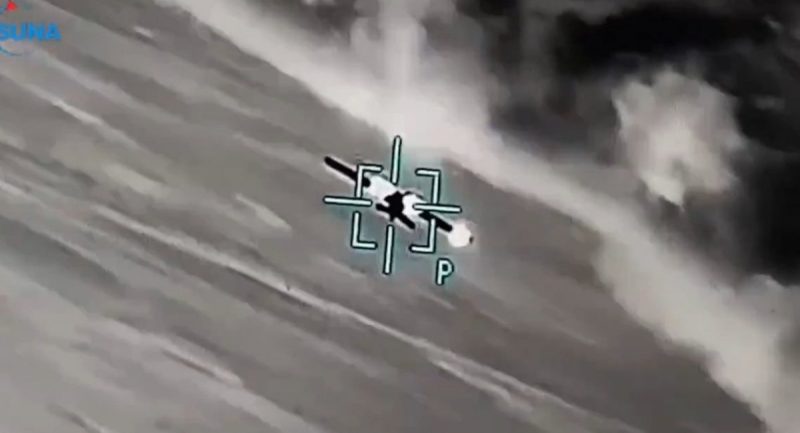
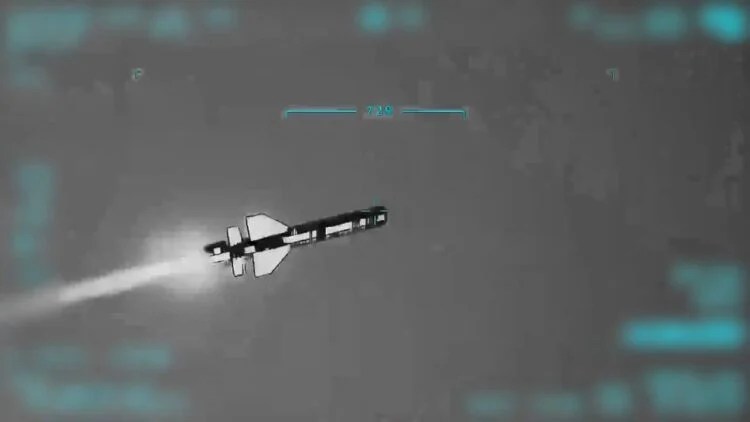
Footage shared by defence monitors confirms that Sudan has become a premier testing ground for anti-drone aerial interception. Video analysis shows SAF’s Turkish-supplied Bayraktar Akıncı tracking and destroying RSF’s Chinese-made CH-95 / FH-95 platforms in mid-air using active loitering munitions (believed to be Roketsan’s EREN interceptors).
The first and most disputed engagement came in May. Military Africa reported that an SAF Akinci used an EREN munition to shoot down another Akinci-class aircraft, and suggested the target was Ethiopian-operated. Meta-Defense was more careful: the Ethiopian identity was suggested by the Sudanese Air Force, it noted, and no independent verification had been publicly documented. Military Africa’s July reporting offers a different account of the earlier rival-Akinci kills, describing two such aircraft as allegedly supplied to the RSF by the United Arab Emirates (UAE) and flown from Bahir Dar airport in Ethiopia. The accounts disagree on who operated the aircraft but both point to Ethiopia, and none of the reports reviewed for this article carries a response from Addis Ababa.
The campaign against Chinese drones followed through the summer. An FH-95 was reported destroyed north of Tawila in North Darfur on 23 June, and another near Tendelti in White Nile State on 2 July, though the SAF credited its air defences for the second. On 7 July a CH-95 was downed along the Export Road between Bara and Omdurman. The SAF’s statement credited ground-based air defences and did not name the operator, but Military Africa reports the kill was made with an Akinci, and notes that the RSF is the only known FH-95 user in Sudan. Around 13 July, Defence Blog reported video of an Akinci firing an air-to-air missile at one CH-95 northwest of El Obeid and destroying a second on the ground, with neither side confirming at the time. On 17 August, further video showed an Akinci destroying a CH-95 in flight, the same day Sudanese officials reported two FH-95s downed in North Kordofan.
The most recent claim dates from 24 September, when two CH-95s were reportedly downed near Alga’a and Kagam, east and west of Sawdiri in North Kordofan. Defence Security Asia notes that the evidence was released seeker footage with no SAF battle-damage assessment, and that the weapon used is unverified, with an EREN-class munition and a Sungur missile both possible.
Why the heavier drone wins
Defence Express makes the most useful analytical point in the coverage: this is a contest of weight class and equipment, not of Turkish against Chinese technology. It describes the CH-95 as a roughly one-tonne aircraft carrying about 250 kilograms, with no air-to-air weapons and no sensors built to detect other aircraft, and says no CH-95 has been recorded shooting down an Akinci. Military Africa’s specifications fit that picture. The FH-95 sits in the 850 to 1,000 kilogram class with four hardpoints, while the Akinci takes off at around 6,000 kilograms, carries up to 1,500 kilograms across nine hardpoints and mounts a Murad-100A active electronically scanned array radar.
Altitude does not explain the difference, since Military Africa puts both aircraft’s service ceilings at roughly 40,000 feet or more, a figure this site’s analysis of drone altitudes examines for the Akinci. What the Akinci adds is a way to find and engage another aircraft. The EREN, which Military Africa describes as a 35-kilogram munition with a range of about 100 kilometres built to catch slow-moving aerial targets, supplies the weapon.
Defence Express also suggests that Turkey is effectively supplying both sides indirectly, a claim that rests on the allegation, which no government has confirmed, that the RSF flies Turkish-built Akincis obtained through the UAE. Military Africa says the overlap in hardware is one reason rights groups struggle to identify who is responsible for individual strikes on civilians. The stakes are concrete. On the day of the 7 July intercept, the Sudanese rights group Emergency Lawyers said drone strikes had killed at least 15 civilians in North Kordofan over the preceding two days, including 13 people in a vehicle carrying wedding guests, according to Military Africa, which did not attribute the attacks to either side.
The other ledger
The Akinci is also prey. Military Africa has reported at least three Akinci losses to RSF ground fire since the aircraft entered service in late 2024, and its October 2025 coverage described a fourth near El Fasher. Defence Security Asia says wreckage photographs support several losses. The RSF’s own claims run higher. This site’s shootdown chronicle logged claimed Akinci kills from July 2025 to January 2026 at El Fasher, Nyala, Marshang, Al Khoei, Abu Quaoud and Dilling, most of them unverified. Open-source analysts have suggested several were made by Chinese-supplied air defences such as the FK-2000 gun-missile system or the FB-10A missile, not by the small arms RSF fighters are often filmed firing at passing drones.
That is why the word “decimate” is hard to test. Six to eight aircraft over roughly four months is a steady rate of loss, and the claimed kills have continued into late September. But no source reviewed here gives the size of the RSF’s CH-95 inventory, so the share destroyed cannot be calculated, and the SAF is losing aircraft of its own to the same enemy’s air defences.
The aerial contest also sits beside an electronic one. The RSF’s Belarusian jamming equipment is the reason the SAF developed its Safaroog loitering munition, and it is part of why a drone that can hunt other drones matters to Khartoum.
What would make the count auditable is better evidence: battle-damage assessments, wreckage imagery and independent confirmation of which weapon was used. Until that exists, six to eight is best read as the range of what has been claimed, not what has been proved.
Verified Drone Shoot-Downs in Sudan (2024 to 2026)
| Date | Location / Region | Target Drone Model | Estimated Operator | Confirmed Interceptor / Air Defence | Source / Context |
|---|---|---|---|---|---|
| Oct 11, 2026 | Wad al-Mahi, Blue Nile State | Unidentified Strategic Drone | External (Entered from Ethiopian airspace) | SAF Ground Air Defences | Hostile strategic reconnaissance flight intercepted. |
| Oct 5, 2026 | Al-Khuway, West Kordofan | FH-95 (Chinese-made) | RSF | SAF Air Defences | The 6th FH-95 strategic drone downed by SAF in the Kordofan region within a 30-day window. |
| Oct 2026 | Undisclosed (Likely West) | CH-95 / FH-95 (Chinese-made) | RSF | SAF Bayraktar Akıncı (Turkish-made) | Widely circulated video footage shows SAF Akıncı using high-speed loitering aerial interceptors to hunt down an armed RSF drone in mid-air. |
| Sept 24, 2026 | Al-Kukaiti, North Kordofan | FH-95 (Chinese-made) | RSF | SAF Ground Air Defences | Strategic long-range drone brought down near critical junctions. |
| Sept 18 to 19, 2026 | Kurmuk, Blue Nile State | 3 Long-Range Kamikaze Drones | RSF | SAF Air Defences | Three separate long-range RSF strike units destroyed in less than 24 hours. |
| Sept 15, 2026 | Al-Fashaga & Kassala | 3 Unidentified Armed Drones | RSF | SAF Air Defences | Intercepted over strategic eastern border zones near Gedaref and Kassala. |
| July 13, 2026 | El Obeid, North Kordofan | FH-95 (Chinese-made) | RSF | SAF Ground Defences | Intercepted while tracking government troop movements northwest of El Obeid. |
| July 7, 2026 | Al-Andaraba, North Kordofan | FH-95 (Chinese-made) | RSF | SAF Air Defences | Intercepted at midday over the Bara-Khartoum export highway. |
| July 2, 2026 | Tendelti, White Nile State | FH-95 (Chinese-made) | RSF | SAF Air Defences | Advanced multi-role EW and precision-strike asset neutralized. |
| Oct 7, 2025 | El-Fasher, North Darfur | Bayraktar Akıncı (Turkish-made) | SAF | RSF (Chinese FB-10A SAM) | High-profile shoot-down of SAF’s flagship heavy drone during an aerial resupply mission. |
| Early 2024 | Wadi Sayyidna / Khartoum | Mohajer-6 (Iranian-made) | SAF | RSF Anti-Aircraft Defences | Multiple instances where RSF social media profiles displayed wreckage of SAF’s Iranian-supplied loitering assets. |
