
Nigeria Eyes Aksungur Drones as Turkish Aircraft Spread Across Africa
Nigeria Plans 12 Turkish Aksungur Drones for Its Air Force
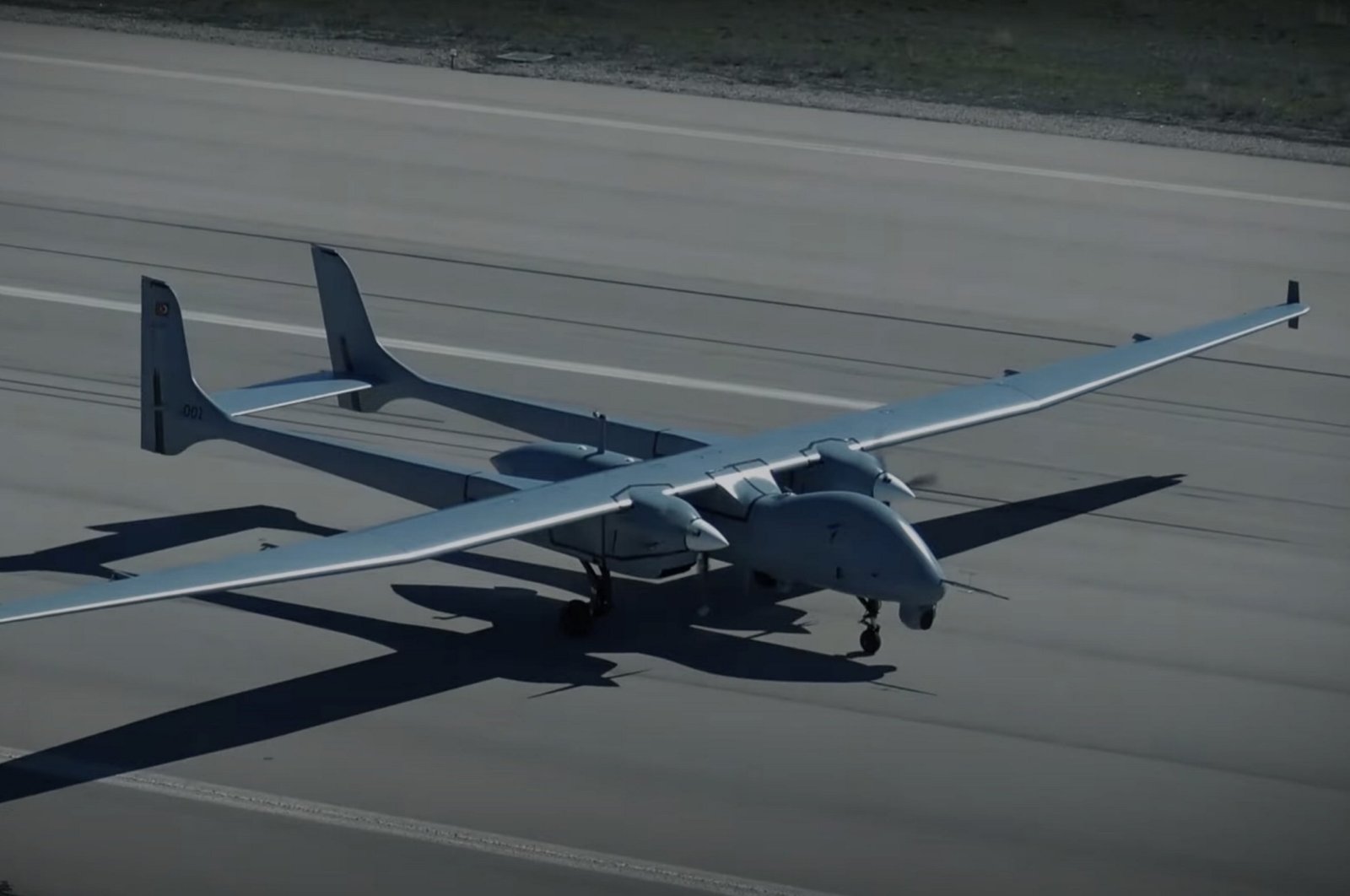
The Nigerian Air Force (NAF) has named a new aircraft type in its forward plans. In an infographic posted to its official X account on Sunday, 25 October 2026, the service listed 12 TUSAŞ Aksungur unmanned combat aerial vehicles among its “additional expected aircraft,” alongside other platforms planned for the force. If the plan goes ahead, Nigeria would become one of a small group of African air forces to operate one of Turkey’s largest armed drones.
The announcement is short on detail.
What the Air Force Said
The graphic lists the Aksungur as an expected aircraft. It gives no contract value, no delivery schedule, and no confirmation that a procurement agreement has been finalised. The Turkish manufacturer, Turkish Aerospace Industries (TUSAŞ, also written TAI), had not commented in the reporting reviewed for this article.
The graphic appeared on the same day the NAF’s Director of Public Relations and Information, Air Commodore Ehimen Ejodame, issued a statement marking the first anniversary of the Chief of the Air Staff, Air Marshal Sunday Kelvin Aneke, on 30 October. That statement reported more than 6,100 flying hours and over 2,900 sorties between November 2025 and September 2026. It described a broader acquisition programme that includes 12 Bell AH-1Z attack helicopters and “other planned aircraft and unmanned aerial systems” for airlift, combat, training, and intelligence, surveillance, and reconnaissance (ISR).
The Aircraft
The Aksungur is a twin-engine, medium-altitude, long-endurance (MALE) drone designed for ISR and strike. It descends from TUSAŞ’s smaller Anka and was developed first for the Turkish Navy, which received its first aircraft in October 2021.
According to the manufacturer, the aircraft has a wingspan of about 24 metres, a length of 12.5 metres, and a maximum take-off weight of 3,300 kilograms. It carries more than 750 kilograms of payload and can stay airborne for up to 50 hours without weapons, depending on configuration. Two PD-170 turbocharged diesel engines, built by TUSAŞ Engine Industries, each produce a claimed 172 horsepower. The service ceiling is 40,000 feet. With a 750-kilogram load at 25,000 feet, the stated endurance falls to about 12 hours, which is the figure that matters for armed missions. Three hardpoints under each wing are stressed for 500, 300, and 150 kilograms.
The sensor options include electro-optical and infrared cameras, synthetic aperture radar, and an optional satellite link for beyond-line-of-sight operation. TUSAŞ lists line-of-sight data-link coverage beyond 250 kilometres. Weapons cleared or shown with the aircraft include the TEBER-81 and TEBER-82 laser-guided bombs and the L-UMTAS, MAM-L, MAM-C, and Cirit guided munitions. Chad’s aircraft have been photographed carrying eight MAM-L munitions.
These are manufacturer figures. The longest recorded flight cited in earlier reporting is 41 hours, and TUSAŞ says it is working toward a 1,250-kilogram payload and roughly 60 hours of endurance. The figures describe design intent, not Nigerian operating experience.
Who Else Flies It in Africa
The Aksungur’s African customer list is short, and its details vary by country.
Chad is the best documented. Military Africa reported in April 2024 that footage released by Chad’s armed forces showed an Aksungur carrying guided munitions. That made Chad the second known export operator after Kyrgyzstan’s Border Guard Service. The number of aircraft has not been published.
Niger presented the type at Air Base 101 in Niamey. Reporting says the acquisition was announced in April 2025, and a Nigerien official put the cost at 12 billion CFA francs. Another regional outlet reported that six pilots and six payload operators had trained in Turkey. Human Rights Watch, in a February 2026 report on a drone strike in Niger, noted that the Nigerien military has reportedly acquired the Bayraktar TB2, Karayel-SU, and Aksungur, and said it could not identify the drone involved in that strike.
Angola signed for the type first among sub-Saharan states. A presidential order in 2022 authorised about 93.1 million dollars for Turkish drones through the state importer Simportex and TUSAŞ, and TUSAŞ was reported in 2023 to be supplying Aksungurs. Military Africa covered the purchase. Public information does not conclusively show that Angola has received and deployed the aircraft, so Angola is best described as a buyer and not yet a confirmed operator.
Algeria was reported by Algerian media in 2022 to have acquired six Aksungurs, a claim that has not been officially confirmed. Outside Africa, Turkey operates the type, and Kyrgyzstan’s Border Guard Service has displayed one.
What It Would Add to Nigeria’s Fleet
The NAF already flies Turkish and Chinese unmanned aircraft. Its fleet includes Bayraktar TB2 drones and Chinese Wing Loong II aircraft, and it has taken delivery of Turkish T-129 ATAK attack helicopters since 2023. The Aksungur would sit above the TB2 in weight and carrying capacity. A TB2 carries about 150 kilograms of payload, compared with more than 750 kilograms for the Aksungur, and the larger aircraft can loiter far longer.
That matters in Nigeria’s operating environment. In the North-East, the army and air force still face Boko Haram and its Islamic State-linked faction, the Islamic State West Africa Province (ISWAP). In the North-West, armed banditry, kidnapping, and attacks on military positions and civilians continue. Both theatres are large, and persistent surveillance over wide areas is the capability the NAF has the most difficulty providing with crewed aircraft. A drone that can stay overhead for many hours, cue ground forces, and strike with precision-guided weapons fits that problem.
A larger payload also allows a mixed sensor and weapons load, with a radar and an optical turret carried together, which a smaller aircraft often cannot manage.
One Part of a Wider Modernisation
The announcement arrives amid a broader programme. The NAF said it received five helicopters in September 2026, three AW-109 Trekker Type B and two H125. Six L-39ZA jets have been reactivated and upgraded in Slovakia and Nigeria, and a C-130 is undergoing periodic depot maintenance in Portugal. The 12 AH-1Z attack helicopters remain on the acquisition list.
Nigeria ranks third in Africa and 33rd globally in the 2026 Global Firepower Index, behind Egypt and Algeria on the continent. That ranking measures overall military strength and not air power alone, and Nigeria slipped from 31st in 2025.
Several things would show whether the plan is real and useful. The first is a contract and a delivery schedule, neither of which has been announced. The second is the training pipeline, since Niger sent crews to Turkey before its aircraft arrived, and Nigeria will need pilots, payload operators, and maintainers for an aircraft that is larger and more complex than the TB2. The third is basing and sustainment: a 24-metre aircraft needs long runways, secure ground control stations, and a reliable supply of engines and spares from a foreign manufacturer.
The fourth is the question of integration with the rest of the force. Drones deliver their value when their imagery reaches ground commanders quickly and when strike decisions follow clear rules. Twelve aircraft would be a meaningful fleet by African standards. Whether they change outcomes in the North-East and North-West will depend less on the airframe than on the system built around it.
