
Turaç brings Drone Kalkanı counter-drone turret to Africa at BAMEX
Turkish ammunition maker Turaç has brought its Drone Kalkanı (Drone Shield) counter-drone turret to Africa for the first time, showing the shotgun-armed system at the Bamako International Defence and Security Exhibition (BAMEX) 2026 in Mali’s capital, which runs from 9 to 13 November. The company says the robotic turret is about 95 per cent complete and is aimed at forces that need a cheap, close-range answer to small commercial and military drones.
BAMEX 2026 is organised by Mali’s Ministry of Defence and Veterans Affairs with the Turkish firm The Peak Defense, under the patronage of the Malian presidency, and has drawn more than 20 Turkish exhibitors alongside delegations from over 40 African states. Unmanned Africa has already covered Baykar’s Mali-flagged KIZILELMA and Skydagger’s interceptor and loitering munitions at the same show. Sister site Military Africa reported the opening of the show and its focus on procurement and local production, and ASELSAN’s KORKUT 35 mm air defence system, another gun-based answer to drones on the same floor.
A shotgun turret for the drone age
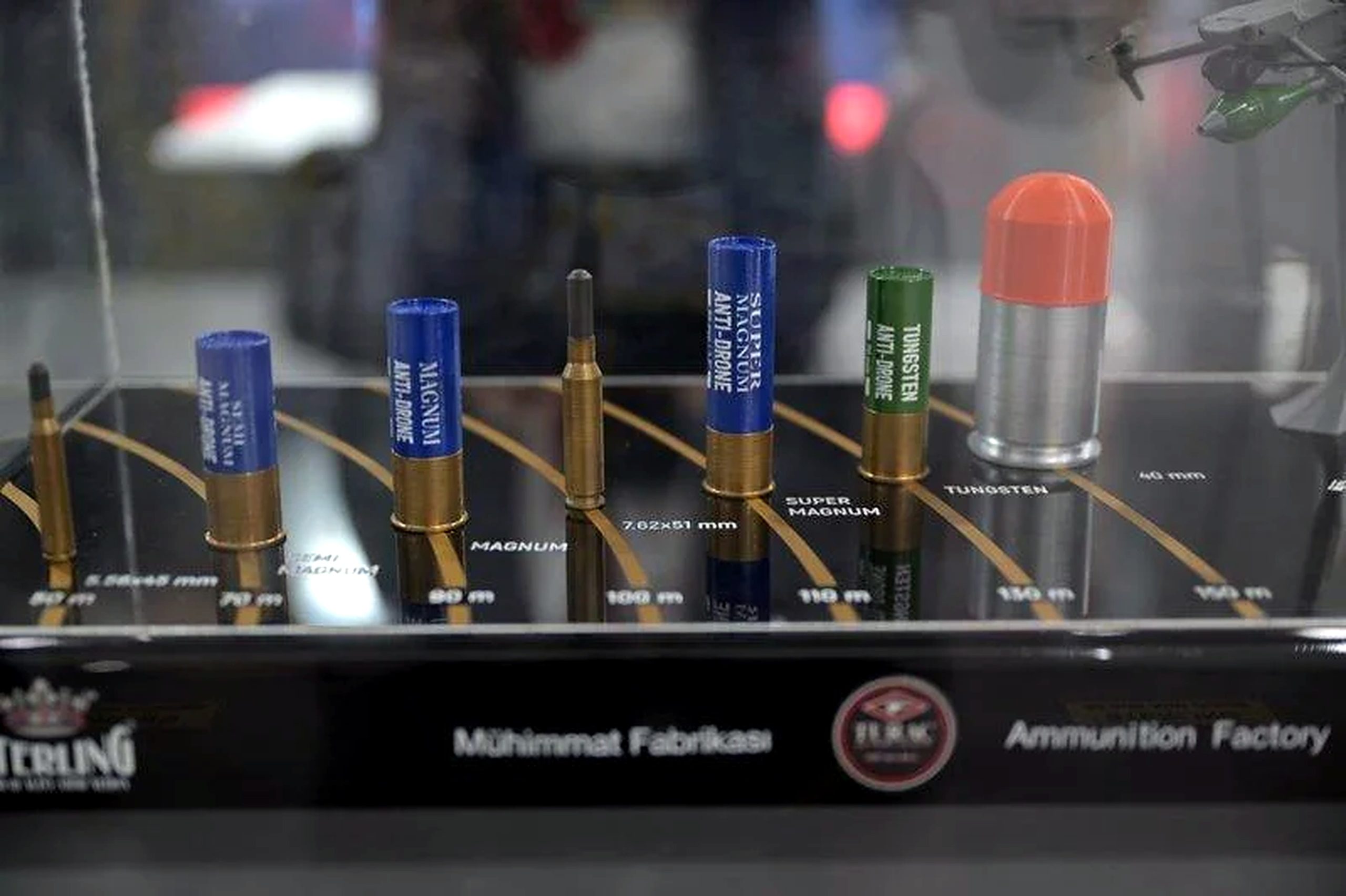
Drone Kalkanı is a pan-and-tilt robotic turret armed with two semi-automatic 12-gauge Derya MAX shotguns, also known as the MK-12. The weapon is a gas-operated design based on the AR-15 layout, built by Turkish manufacturer Derya Arms. Both barrels fire Turaç’s own Sterling 12-gauge magnum anti-drone shells, which the company has developed to put a dense pattern of pellets into the path of small rotary-wing and fixed-wing drones.
The turret’s sensors detect and track targets at between 600 and 800 metres. Once a drone closes to about 150 metres, the system fires both shotguns at the same moment to create a wide cloud of pellets, raising the chance of a hit against a small, fast and manoeuvring target. Turaç says the turret draws little power, so it can run from a host vehicle’s electrical system without an additional generator. At BAMEX the company showed a scale model of the turret on a pick-up truck, alongside footage from live-firing tests, Envanter Medya reported.
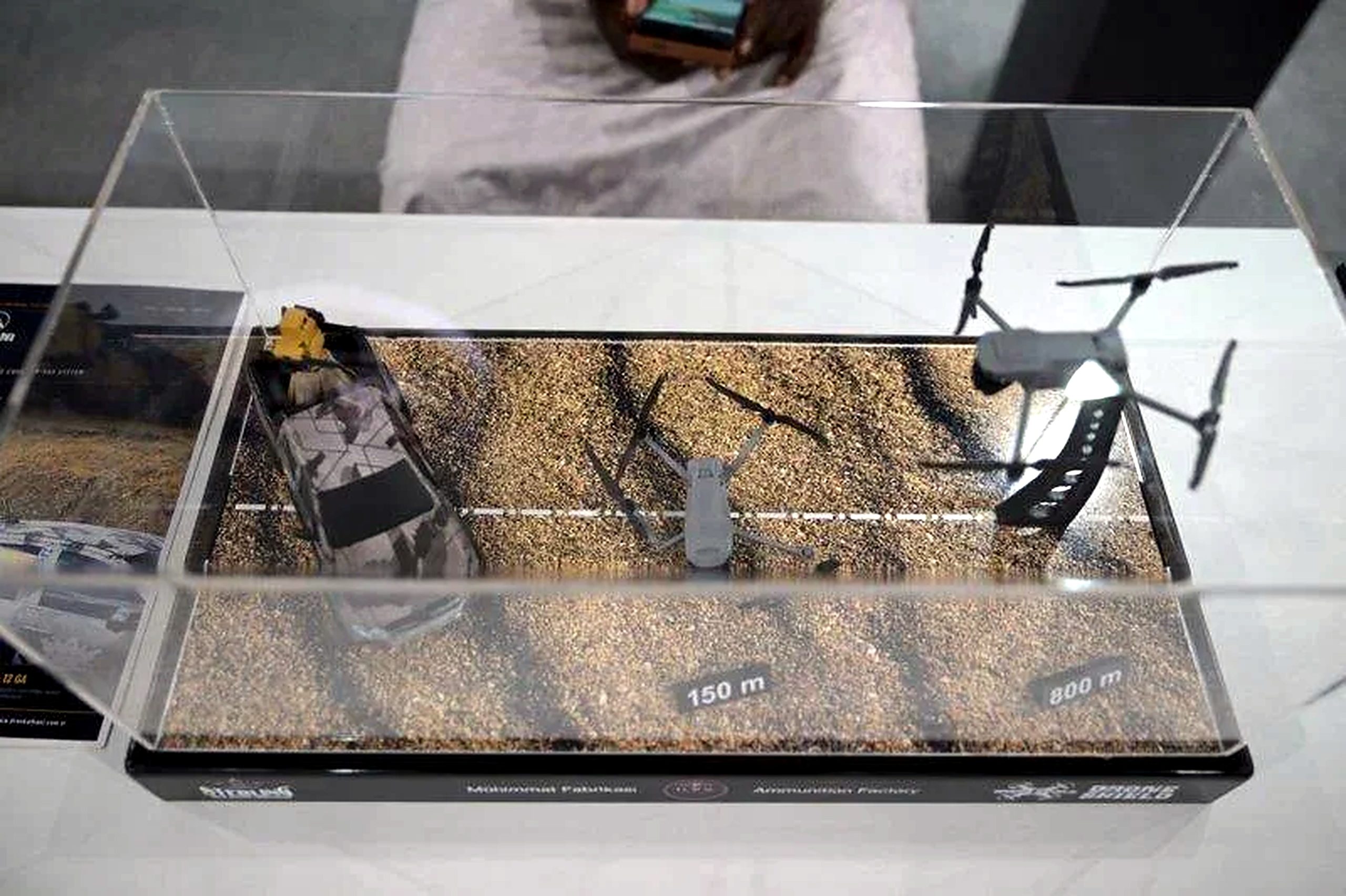
The system is designed to fit a wide range of platforms. Turaç says it can be mounted on wheeled and tracked vehicles, on ships, on unmanned ground vehicles (UGVs) and at fixed sites such as bases, checkpoints and critical infrastructure. The UGV option links it to a category African armies are only beginning to field, as our survey of unmanned ground vehicles arriving on Africa’s battlefields describes. The turret was first shown publicly in Türkiye in September 2026, according to Ukrainian outlet Militarnyi.
Drone Kalkanı was developed by Turaç together with four other Turkish companies and one university, five partner organisations in all, covering firearms, robotics, mechanical engineering, algorithms and electro-optics. General Manager Fatih Altunbaş told Anadolu Agency at the show on 11 November, in remarks also carried by Envanter Medya, that the project is about 95 per cent finished and that the company wants African forces to see it before it enters production. He described the system as “very close to finished”.
Why kinetic, low-cost defence matters in the Sahel
The choice of Bamako for the system’s African debut is deliberate. Armed groups across the Sahel now use cheap commercial quadcopters fitted with grenades or improvised munitions against army posts, convoys and towns. In Mali, jihadist fighters and separatist groups have both adopted drones, as Unmanned Africa showed in its account of how cheap first-person-view (FPV) drones helped Azawad rebels retake Kidal. The Malian Armed Forces (FAMa) operate Bayraktar TB2 and AKINCI drones of their own, while Russia’s Africa Corps flies Shahed-type and Lancet munitions in the north.
Electronic jamming is the usual answer to small drones, but jammers can be defeated by drones on pre-programmed routes or fibre-optic links. A shotgun turret offers a physical “hard kill” option whose ammunition costs a fraction of a missile or a 35 mm air-burst round. The trade-off is reach: at 150 metres, Drone Kalkanı is a last-ditch point-defence layer for a vehicle or post, not a way to protect a wide area, and it works best alongside detection and jamming systems that thin out an attack before it arrives.
The stand drew senior visitors. The commander of United States Africa Command (AFRICOM), US Air Force General Dagvin Anderson, stopped at the Turaç booth during the exhibition after meeting Mali’s head of state, and watched footage of the system in action, according to Turkish media reports.
A supplier rooted in Mali
Turaç is not new to Mali. The company has made small-arms ammunition at its plant in Çankırı, central Türkiye, since 1987, and has supplied ammunition to the Malian armed forces since 2013. It says it is now present in more than 20 African countries and manages its sales across the Economic Community of West African States (ECOWAS) region from Mali through local partners. That model fits Bamako’s push, set out by Foreign Minister Abdoulaye Diop at BAMEX, for technology transfer in its defence ties with Türkiye.
Altunbaş said Malian defence, intelligence and security officials showed interest in Drone Kalkanı at the show, and that the company has received proposals from East African countries. He added that North African buyers, possibly Algeria or Tunisia, may follow. Turaç plans to exhibit the system next at the International Defence Exhibition and Conference (IDEX) in Abu Dhabi in February, where it will pitch it for the protection of Gulf refineries and petrochemical sites.
From Bamako to Abu Dhabi
Drone Kalkanı joins a growing line of Turkish counter-drone products marketed to African forces, from ASELSAN’s KORKUT, which Nigerian and Rwandan delegations watched down drones in Turkey, to the PTR12 shotguns shown by Prontaron Arms at the same show. Its appeal lies in simplicity: off-the-shelf shotguns, cheap ammunition and a light power load that suits the pick-up trucks and light armoured vehicles that make up most Sahelian fleets. Whether it moves from prototype to orders will depend on how the final five per cent of development goes, and on whether Mali or one of its neighbours chooses to become the launch customer.
