
Mozambique’s president orders drone research for a national defence industry
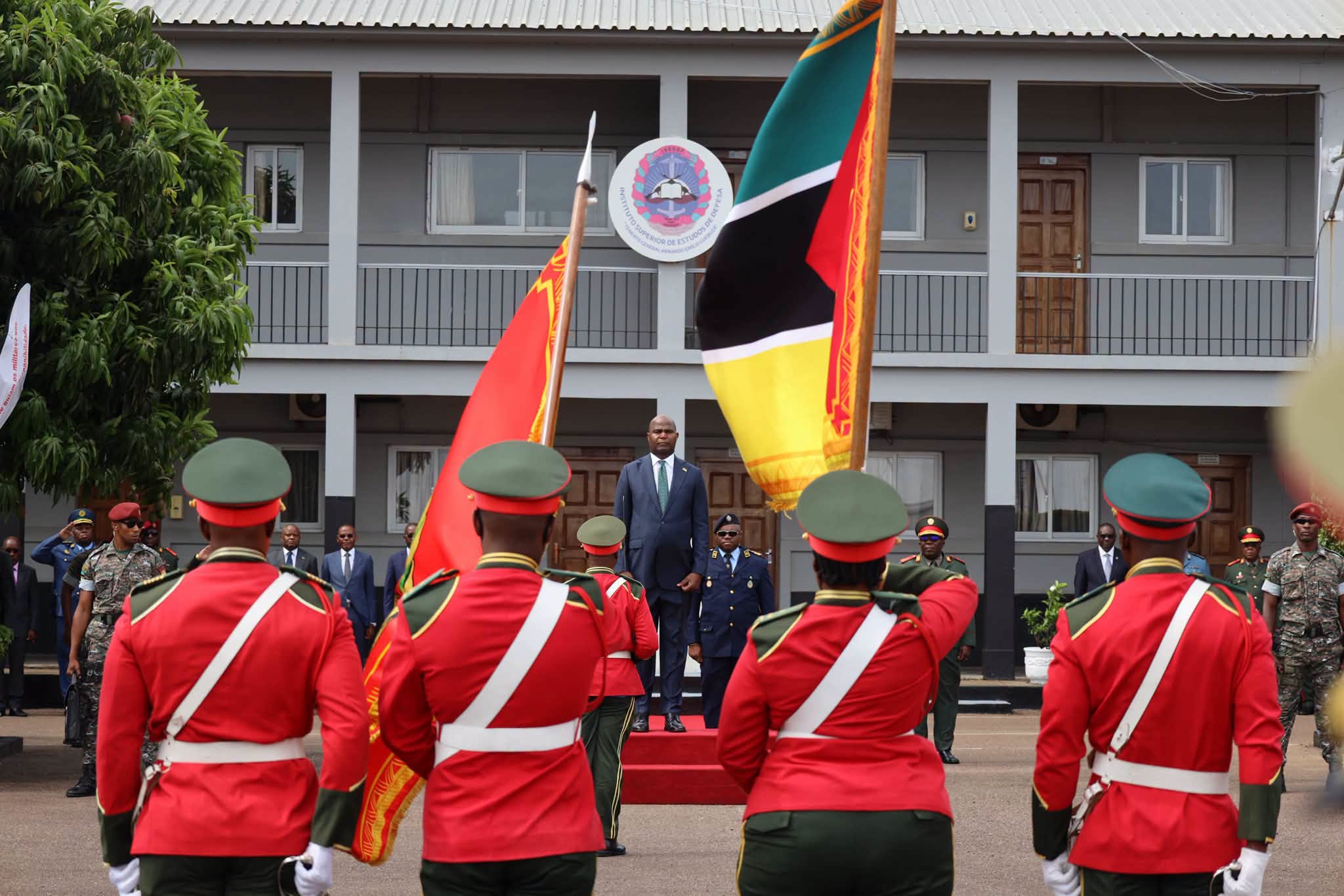
Mozambican President Daniel Chapo has told the country’s senior military college to design a research and technology centre that would develop prototype drones, counter-drone systems and unmanned ground vehicles (UGVs) as the first step towards a national defence industry. Speaking on 16 November 2026 at Machava, in the Matola municipality, at the closing ceremony of four courses at the Higher Institute of Defence Studies (Instituto Superior de Estudos de Defesa, ISEDEF), Chapo said: “The State is already thinking about having a defence industry” (“O Estado já está a pensar em ter uma indústria de defesa”), according to Diário Económico.
From drones to cyber defence
Chapo listed the technologies the centre should work on: drones, anti-drone systems, UGVs, precision weapons, geospatial intelligence and cyber defence. He cited the wars between Russia and Ukraine and between the United States and Iran as evidence that modern warfare relies increasingly on drones and unmanned ground vehicles rather than on the movement of troops, the state news agency AIM reported via Club of Mozambique. He extended the challenge to the country’s other military and paramilitary higher education institutions and urged ISEDEF to produce its own knowledge rather than relaying theory developed abroad.
“We must dream big, it is important to be bold and start trying, because one day it will work,” Chapo said. He also asked the Ministry of National Defence to look for financing mechanisms beyond the State Budget to equip the Defence and Security Forces (FDS), which he described as being in deficit, O País reported.
A plan without a budget
The speech builds on a government statement of November 2025 that Mozambique had no structured defence industry, accompanied by a plan to begin producing munitions, weapons, drones and video-surveillance systems through technology and industrial cooperation with foreign partners. A year on, no budget, timetable or funding model has been published for the research centre, and no industrial partners have been named, Diário Económico noted. The initiative remains at the concept stage.
The Cabo Delgado driver
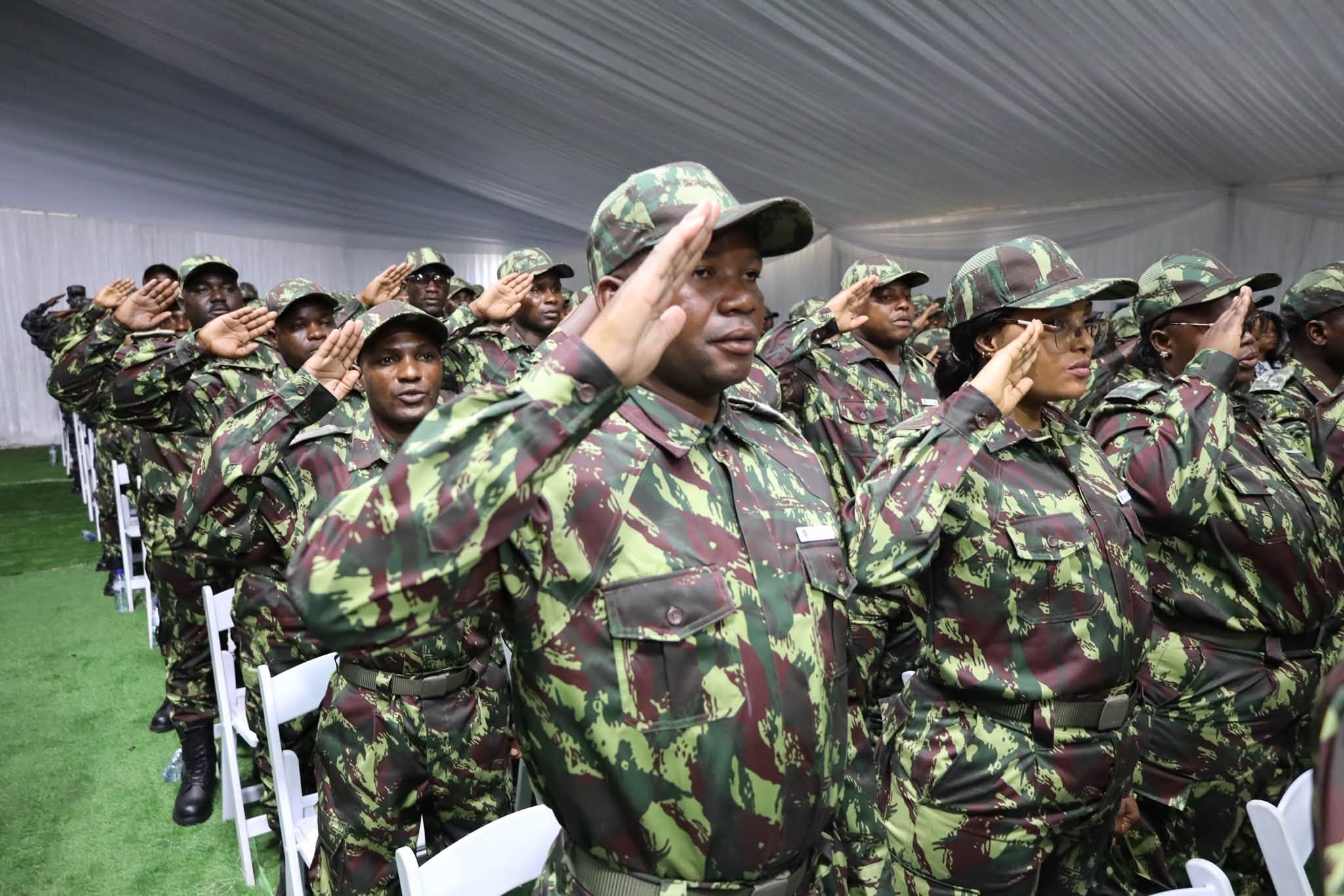
The operational pressure comes from Cabo Delgado, where the Mozambique Defence Armed Forces (FADM), Rwandan troops and local forces have fought an Islamic State-linked insurgency since October 2017. Chapo said the main towns once held by insurgents are now under government control but warned that sporadic attacks continue. “We are not saying there is no more terrorism in Cabo Delgado. We are simply saying that today we are better off than we were before,” he said, and credited Rwandan forces with improving security. The insurgency produced what Unmanned Africa has described as Africa’s first documented case of insurgent drone use, with Mozambique’s interior minister telling parliament as early as 2020 that the armed groups used drones for reconnaissance.
Mozambique’s own unmanned inventory is small and largely imported, as its profile on the Africa Drone Intelligence database shows, and commercial types have filled gaps in several regional forces, as covered in DJI commercial drones fill gaps in five African armed forces. Southern Africa’s industrial base remains concentrated in South Africa, as set out in Southern Africa’s drone fleets.
What would make it real
Other African states have taken the same route through a military research institute or a state industrial body, from Nigeria’s partnerships with local drone firms to Ethiopia’s DAVI and Mali’s home-built designs shown at BAMEX 2026. For Mozambique the tests are practical: a funded ISEDEF centre, a named foreign technology partner and a first prototype in FADM hands. Until those appear, the speech sets a direction rather than a programme.
