
EBRD: Morocco’s drone component exports rose 60% before factory push
Morocco was already a growing supplier of drone parts before its first military drone factories were announced. The European Bank for Reconstruction and Development (EBRD) says Moroccan exports of inputs used to build drones grew 1.6 times between the 2019 to 2021 average and 2024, a rise of 60 per cent. The figure appears in the bank’s Transition Report 2026-27, titled Frontiers of competitiveness, published on 17 November, and was first picked out by Bladi.net.
The EBRD measured the trade with CEPII customs data, covering components that go into both civil and military drones. Morocco’s growth matched Slovenia and Slovakia. Bulgaria doubled its exports over the same period, and Serbia’s rose 3.2 times.
Turkey leads heavy drone exports
The same chapter puts Turkey at 41 per cent of global exports of heavy military drones, the largest share of any country, a figure carried by bne IntelliNews and Trade Finance Global. Bladi.net’s reading of the report places the United States second at 21 per cent, with Israel and China at 11 per cent each. In small, mainly commercial drones China dominates with 65 per cent of world exports, ahead of the Netherlands at 7 per cent and Malaysia at 6.7 per cent.
Defence startups in the EBRD’s regions “tend to be younger and they tend to be disproportionately focused on drones,” said Beata Javorcik, the bank’s chief economist. Most of the bank’s economies still import the bulk of their military equipment, the report says, with Poland and Turkey the exceptions.
From parts to platforms
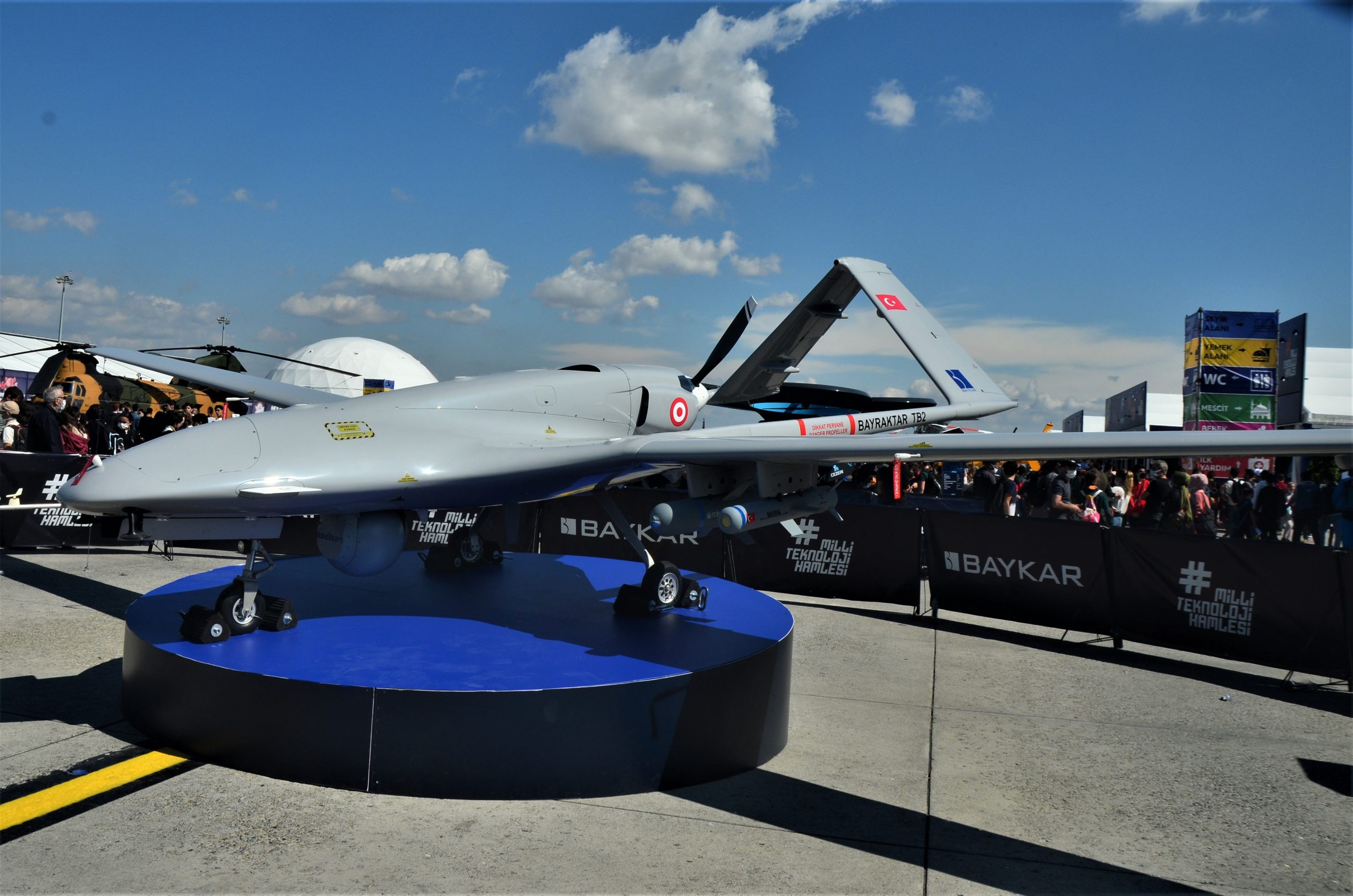
Morocco’s case is that Turkish link. Baykar is building a factory at Benslimane, east of Casablanca, to produce and maintain the Bayraktar TB2 and Akinci, after Rabat bought 13 TB2s for about $70 million in 2021 and took its first Akinci deliveries in 2025, as Military Africa reported. Israel’s BlueBird Aero Systems and local firm Aerodrive Engineering Services are also in Benslimane, and Morocco licensed 10 drone projects worth more than $260 million in 2025, according to Africa Defense Forum.
The newest project is French. At the Marrakech Air Show in October, Morocco and Harmattan AI announced IRIFI, an autonomous deep-strike system to be developed and built in the kingdom, with ranges of up to 2,000 km reported by Reuters. Mohammed Bellatig, president of the aerospace industry group GIMAS, told Reuters at the show that Moroccan aerospace exports of about $3 billion in 2025 could approach $5 billion a year within three years, and that drone production would draw on the materials, assembly and engineering skills the civil sector already has.
The EBRD data stop in 2024, before any of these lines produce aircraft. They show the supply base the factories will draw on. Morocco already ranks among Africa’s largest drone holders: Unmanned Africa found it takes over half of Israel’s African military drone exports, and the Africa Center for Strategic Studies lists it among six African states with more than 100 military drones. The next EBRD count, covering 2025 and 2026, will show whether Benslimane turns a component exporter into a drone exporter. Further coverage is on the Morocco and local production tag pages.

