
US and Moroccan troops test drone-hunting robot vehicles at Tan-Tan
United States and Moroccan soldiers have tested unmanned ground vehicles (UGVs) fitted with counter-unmanned aerial systems (C-UAS) at the Moroccan Multidomain Training Area in Tan-Tan, working with more than ten US defence companies, the US Army said on 19 November 2026. The evaluation, called NANO ACE II, ran from 3 to 14 October and is the first large test event the Army has described at the range since Rabat and US Africa Command agreed to turn it into a regional training and experimentation centre.
NANO ACE stands for Needs-Driven Acquisition for Near-Term Operations Accelerated Capability Event. The Army said the prototypes combined autonomous platforms with different payloads, mission management software and communications, and were judged on whether they could operate on their own over unimproved terrain while surviving a contested electronic warfare environment. The aim was semi-autonomous capability sets that extend counter-drone coverage beyond fixed sites.
What was tested
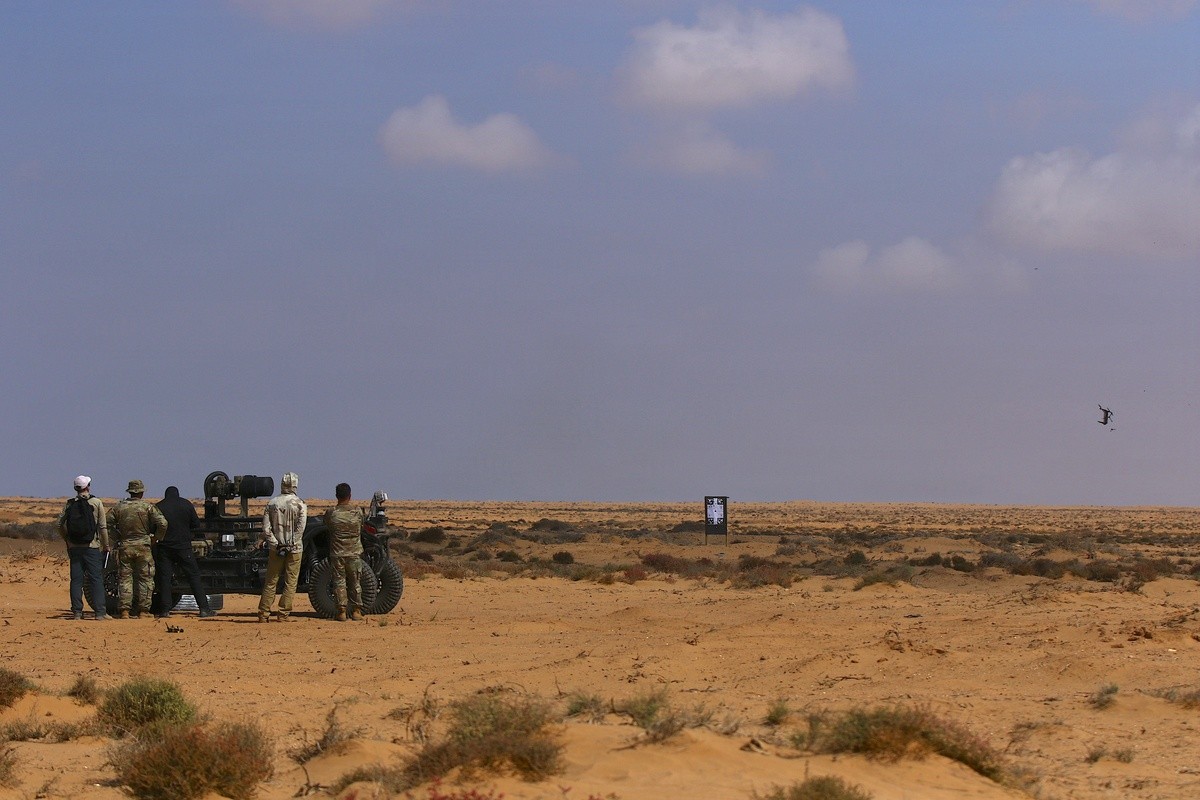
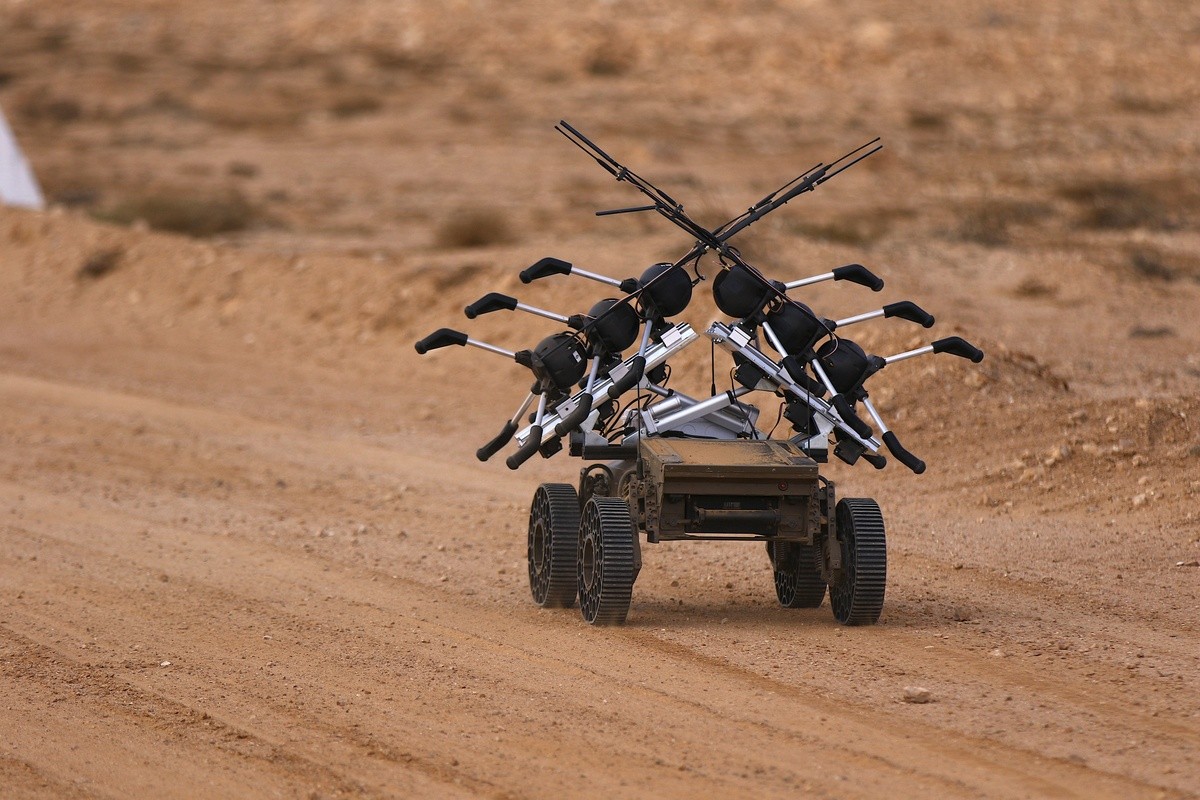
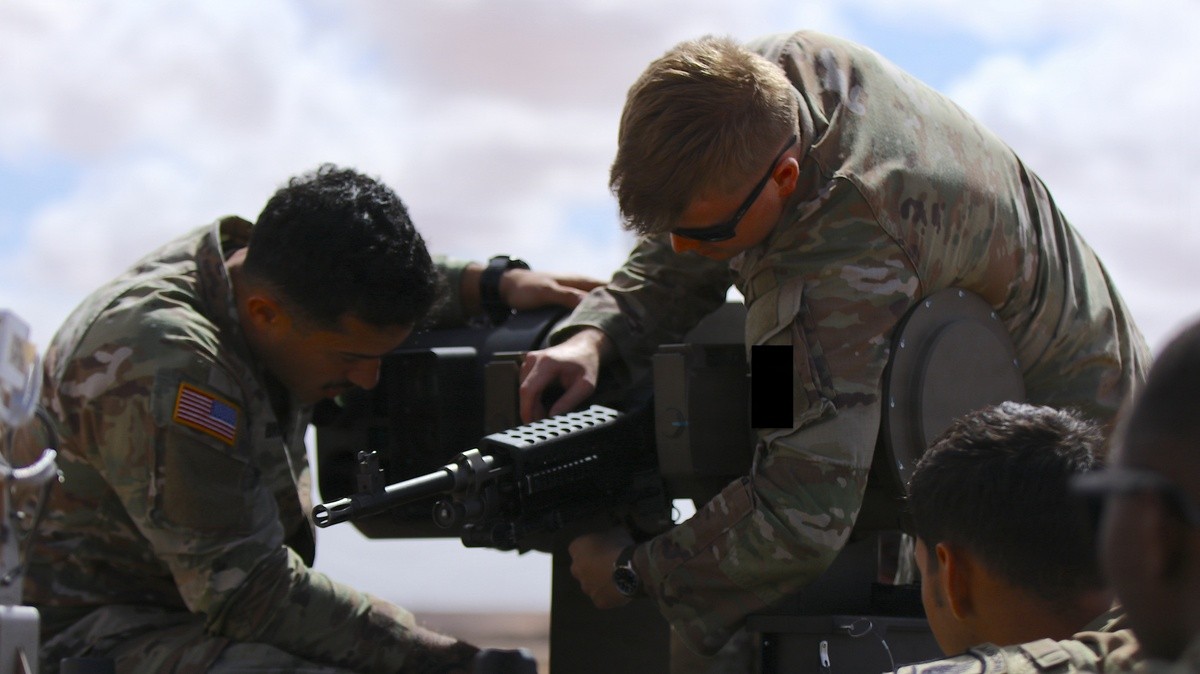
Army photographs from 9 October show US and Moroccan soldiers running an autonomous UGV with drone-sensing equipment, a machine gun being mounted on a ground robot, and a joint US-Moroccan team defeating a drone with what the Army calls an “autonomous counter-unmanned aircraft system”. US troops flew Group 1 drones, the smallest military class, as targets. The Army did not name the vehicles, the sensors or the companies involved, and gave no results.
Nine organisations took part, including the Army’s Global Tactical Edge Acquisition Directorate (G-TEAD), the Army Test and Evaluation Command (ATEC), an unnamed tactical division, US Army Central, US Africa Command (AFRICOM) and US Army Southern European Task Force, Africa (SETAF-AF). Preliminary assessments were completed in Yuma, Arizona, in September before the systems were flown into Agadir on 5 October.
“With the various organizations here, in one place we are able to test, evaluate, validate and procure, so we can put this capability in the hands of warfighters,” said Lieutenant Colonel Corbett Baxter, SETAF-AF deputy director of the Africa Multi-Domain Training and Experimentation Center (AMTEC). Major Kyle Rau, a counter-UAS evaluator with ATEC, said the capability set “can stop them from having to go into that kill zone”, and that the tests would give senior leaders a recommendation on how and when to deploy it.
From Jailbreak to the Moroccan range
NANO ACE grows out of Operation Jailbreak, an Army effort to force vendors to open their system interfaces so radars, drones, effectors and command software can share data. According to the Army Pathway for Innovation and Technology, only companies that have published their interfaces to the Army’s API Marketplace may compete, soldiers hold 51 percent of the votes on evaluation panels, and the first NANO ACE went from launch to contract awards in 128 hours, with mobile ground-sensing and kinetic-effector prototypes ready to ship by 21 August.
Tan-Tan is where the Army wants to repeat that model for Africa. On 13 July 2026 the Royal Moroccan Armed Forces and AFRICOM signed a memorandum of understanding in Stuttgart for AMTEC, with three components: the multidomain training area, a drone academy and an innovation and experimentation centre. Military Africa reported that the academy is meant to train operators, planners and instructors from Morocco and other African partners. The Army says the range is still maturing and points to its open electromagnetic spectrum, uncongested airspace and difficult terrain as the attraction.
Ground robots have been on the range before. During African Lion 26, from 20 April to 8 May, troops of the 173rd Airborne Brigade used autonomous ground platforms at Cap Draa to carry rocket-propelled line charges and launch aerial strikes, the Army reported, while engineers trained on the Bumblebee V2 interceptor at Agadir.
The 2027 counter-drone event
NANO ACE II is a forerunner of a larger counter-drone push. SETAF-AF and G-TEAD plan their first accelerated capability event at Tan-Tan in spring 2027, with a soldier-led demonstration in February and March and an operational assessment during African Lion 2027 in April and May. Up to 15 solutions will be validated across five categories: an integrated fly-away kit, small-drone detection, kinetic defeat, non-kinetic defeat and passive protection, all feeding the Army’s Integrated Battle Command System-Maneuver. The aim is to put proven kit in soldiers’ hands within 180 days. Unmanned Africa set out the prize competition behind the fly-away kit in US Army upgrades Africa base-defence kits, seeks portable counter-drone systems.
For Morocco, the arrangement brings its forces into hands-on testing of US autonomy and counter-UAS systems while its own unmanned industry grows, from Aerodrive Engineering Services’ 500-unit loitering munition order to Baykar’s Atlas Defence plant in Benslimane. Its drone purchases now span six supplier countries, as shown in Morocco’s drone buying spreads across six supplier countries.
What to watch
The Army has not said which NANO ACE II systems passed, whether any will be bought, or whether Moroccan units will receive any of the equipment. The next markers are the February 2027 soldier demonstration at Tan-Tan and African Lion 2027, where the first counter-drone kits chosen under the 180-day timeline should appear. Whether African forces beyond Morocco gain access to the test results, or to the drone academy, will show how far AMTEC becomes a shared regional facility rather than a US test range on Moroccan soil.
