
China’s drone parts licensing takes effect, touching African buyers and builders
Chinese exporters have needed a licence since 18 November 2026 to ship long-range drones and a range of drone components abroad, including engines, high-power electric motors, speed controllers, autopilots and onboard radios. The rules, set out in Announcement No. 49 of 2026, were issued on 19 October by the Ministry of Commerce (MOFCOM), the General Administration of Customs and the Equipment Development Department of the Central Military Commission, Quwa reported. For Africa, where China is the largest supplier of military drones by number, the change reaches both governments that buy Chinese aircraft and the growing number of African firms that build drones with Chinese parts.
What now needs a licence
The announcement revises dual-use export controls across 13 categories covering propulsion, flight-control electronics, communications, software and manufacturing technology. Covered aircraft include drones capable of beyond-visual-line-of-sight flight for between 30 minutes and three hours in gusts of 46.3 km/h or more, drones that fly for three hours or longer, and drones with a range of 300 kilometres or more, Militarnyi reported.
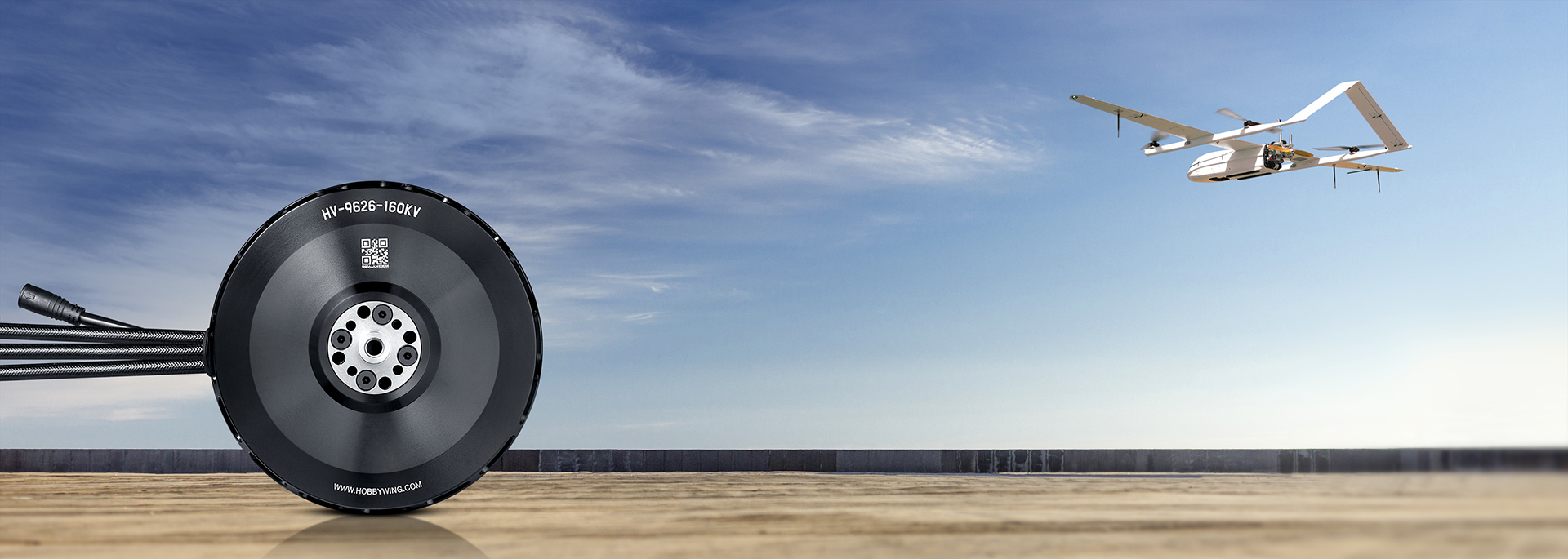
Component thresholds are specific. Brushless motors are covered at 48 volts or more, with power of at least 3 kW and a power density of at least 3 kW per kilogram, together with their electronic speed controllers. Carbon-fibre propellers with blades of at least 762 mm from the centre of rotation, drone engines above 16 kW, turbojets producing 400 newtons of thrust or more, engines designed for flight above 15,420 metres and specially designed autopilots are also listed. The technology entries extend to the coordinated operation of multiple drones, DroneLife reported. Exporters must give customs the technical specifications, intended use and end-user of covered items, and shipments can be held where declarations are in doubt.
Licensing, not a ban
MOFCOM said applications that meet the requirements will be approved, and cited national security, non-proliferation obligations and supply-chain stability as its reasons. Some items were eased. Agricultural spraying drones with tanks below 80 litres and ranges under 300 km are exempt, up from a previous 20-litre threshold, and drones in the lower control tier can ship after registration, while exporters with clean compliance records can apply for general licences, Drone U reported. Conventional five- and seven-inch first-person-view (FPV) drones generally fall below the propulsion thresholds, as do batteries and cameras.
The harder line is reserved for the United States. Under Announcement No. 34 of 5 August 2026, controlled drone items bound for the US already face case-by-case review, and the new facilitation measures do not apply to American buyers. African customers are not singled out, but every shipment of a listed item now carries paperwork, end-user declarations and potential delay.
Africa’s dependence on Chinese drones and parts
China has supplied 587 drones to 20 African countries, most of them since 2020, with Egypt, Haftar’s Libyan National Army, Nigeria, Ethiopia and Algeria the largest customers, according to the Military Africa procurement dataset. The Wing Loong II now flies with six African operators and CASC’s Rainbow CH-4 with seven, while the LNA alone bought 60 Chinese VTOL drones in three years. Many of these long-endurance and long-range types sit squarely inside the new aircraft thresholds, as do the spare engines, datalinks and autopilots their operators need to keep them flying.
African manufacturers are exposed through their supply chains. Egypt’s Arab Organization for Industrialization (AOI) said in February that some subsystems of its Hamza-3 loitering munition were imported from China, though it expects to localise full production, Breaking Defense reported, and its Hamza-2 was developed with China’s Norinco. The pattern is wider than Egypt. Africa’s drone market has splintered across 46 manufacturers, many of them young firms building tactical and VTOL aircraft. Those that source high-power motors, controllers, autopilots or radios from China now face licensing lead time and cost on every import of a covered part.
An opening for other suppliers
Competitors are positioning for the gap. Indian drone makers are pushing to localise components, with the Drone Federation India estimating that 80 to 90 percent of flight controllers used in Indian drones are imported, and firms such as Yaanendriya designing products free of restricted foreign technology with Africa and Southeast Asia in view, Business Standard reported on 18 November. Turkish, Emirati and European suppliers already sell complete systems and components across the continent, as shown in China moves African sales from rifles to drones and air defence.
What to watch
The first test will be how quickly MOFCOM approves licences for African end users, and whether state-to-state programmes such as Wing Loong and CH-4 sustainment move through general licences or case-by-case review. African builders that rely on Chinese propulsion and flight-control parts will need to stock ahead, qualify alternative suppliers or bring production of motors and autopilots in-house. Those that manage it will be better placed to sell to governments that want drones without supply-chain risk attached.
