
Burkina Faso’s drone fleet rests on one supplier: Baykar
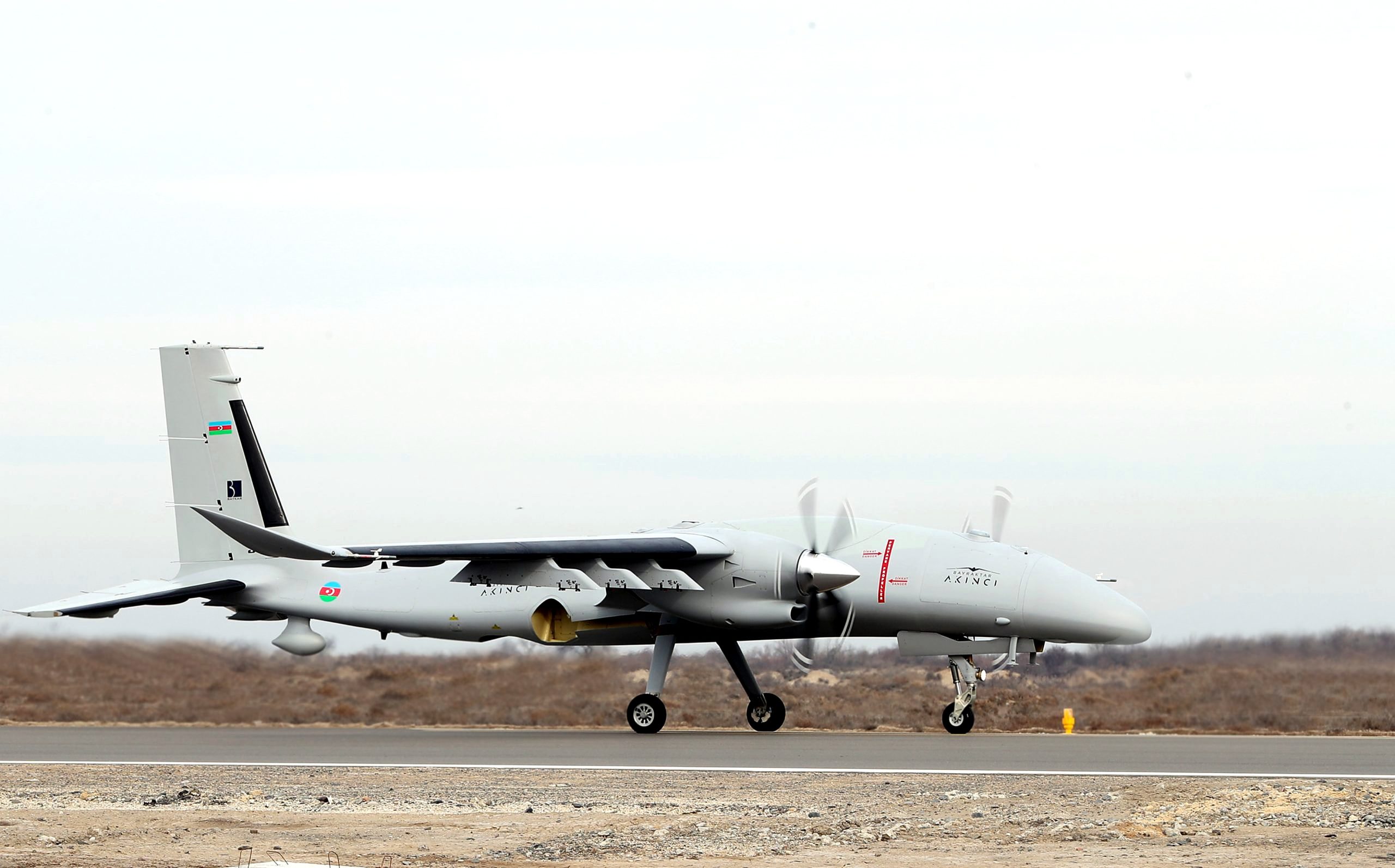
Burkina Faso has bought every one of its recorded military drones from a single Turkish company. The Africa Drone Intelligence database lists 16 units in two entries, 10 Bayraktar TB2 aircraft for 2022 and six Akinci for 2024, all built by Baykar. It is one of four African states whose recorded drones all come from Baykar, and its fleet is the largest of the four.
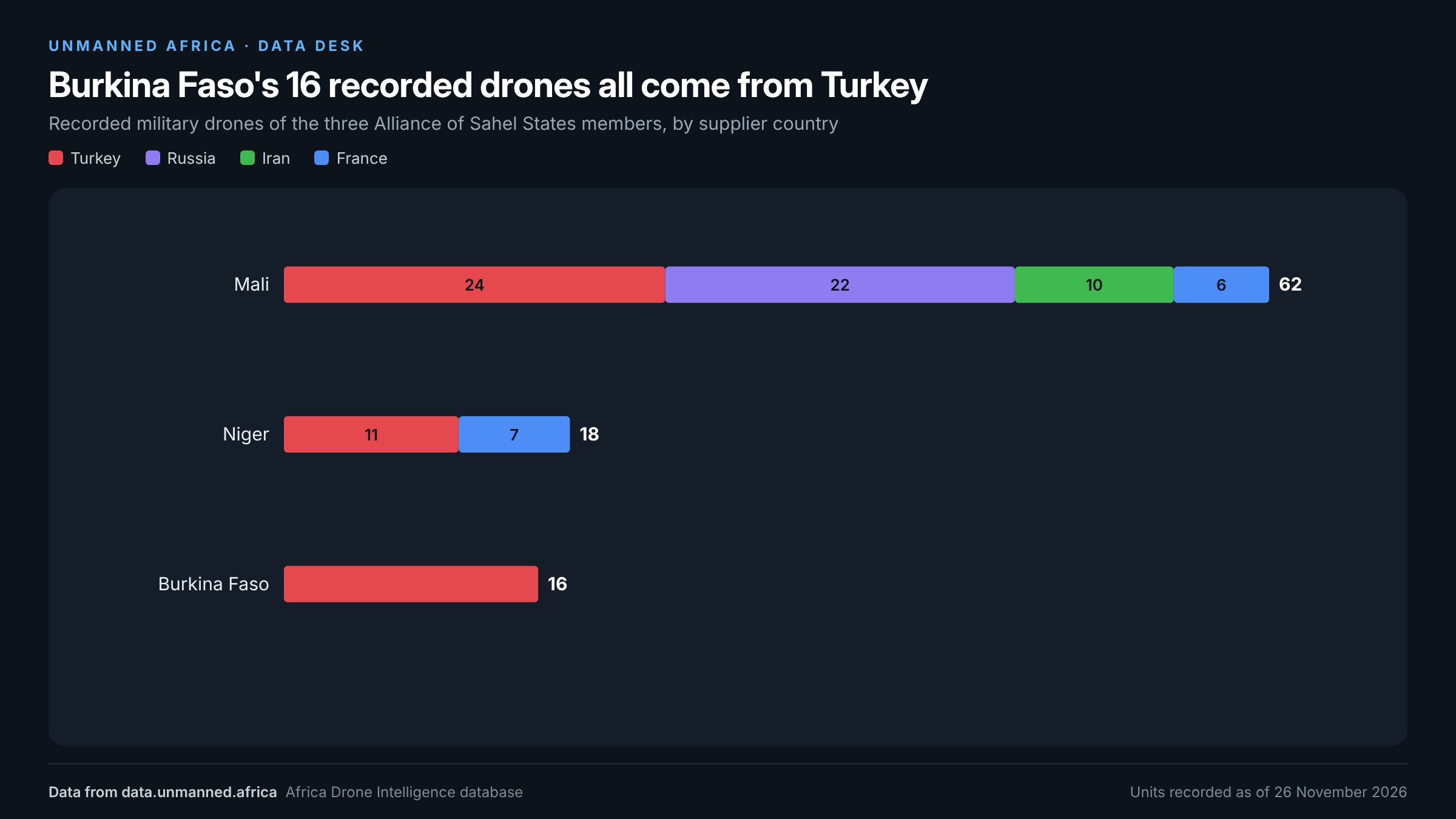
That makes Burkina Faso the odd one out among the three juntas of the Alliance of Sahel States (AES). Mali‘s 62 recorded drones come from four supplier countries: 24 from Turkey, 22 from Russia, 10 from Iran and six from France. Niger‘s 18 split between 11 Turkish and seven French aircraft. Burkina’s 16 are Turkish and armed, and all sit in the database’s Class 3 category of large, long-endurance drones. Unmanned Africa traced the other two fleets in Mali’s drone fleet: Turkish aircraft, Russian-flown munitions and Niger’s drone fleet turns from France to Turkey.
Measured by the Herfindahl-Hirschman index on units by origin, Burkina scores the maximum of 10,000. Nine other African states share that score, among them Djibouti with six units, Somalia with six and Togo with three, which also fly only Baykar aircraft. Among the nine West African buyers in the database Burkina ranks sixth by units, behind Nigeria’s 247, Mali’s 62, Senegal’s 40, Ghana’s 36 and Niger’s 18. Unmanned Africa compared supplier dependence across the continent in Where Africa’s armies buy their drones, and who they rely on.
Two purchases, two governments
The two entries match two stages of Burkina’s recent politics. The first TB2s arrived under Lieutenant Colonel Paul-Henri Sandaogo Damiba, who took power in January 2022. Military Africa reported in September 2022 that Burkina had bought five TB2s from Turkey, delivered in April and May that year at about €4.5 million each. The aircraft were commissioned in March 2023, Military Africa later reported, and one TB2 crashed near Tenkodogo in June 2023.
The second purchase came under Captain Ibrahim Traoré, who replaced Damiba in September 2022. On 8 April 2024 Traoré received what the presidency called a dozen Turkish drones, according to AFP’s report carried by Le360. Imagery of the handover showed two Akinci and three TB2s, Janes reported, while Military Africa counted two Akinci and five TB2s, along with Turkish guided bombs and small munitions. Burkina24 reported that the aircraft had been paid for in part through contributions from Burkinabè citizens to the war effort. The defence minister, Kassoum Coulibaly, said at the time that the final phase of the strategic equipment plan behind the purchase had yet to be completed.
Two Baykar types
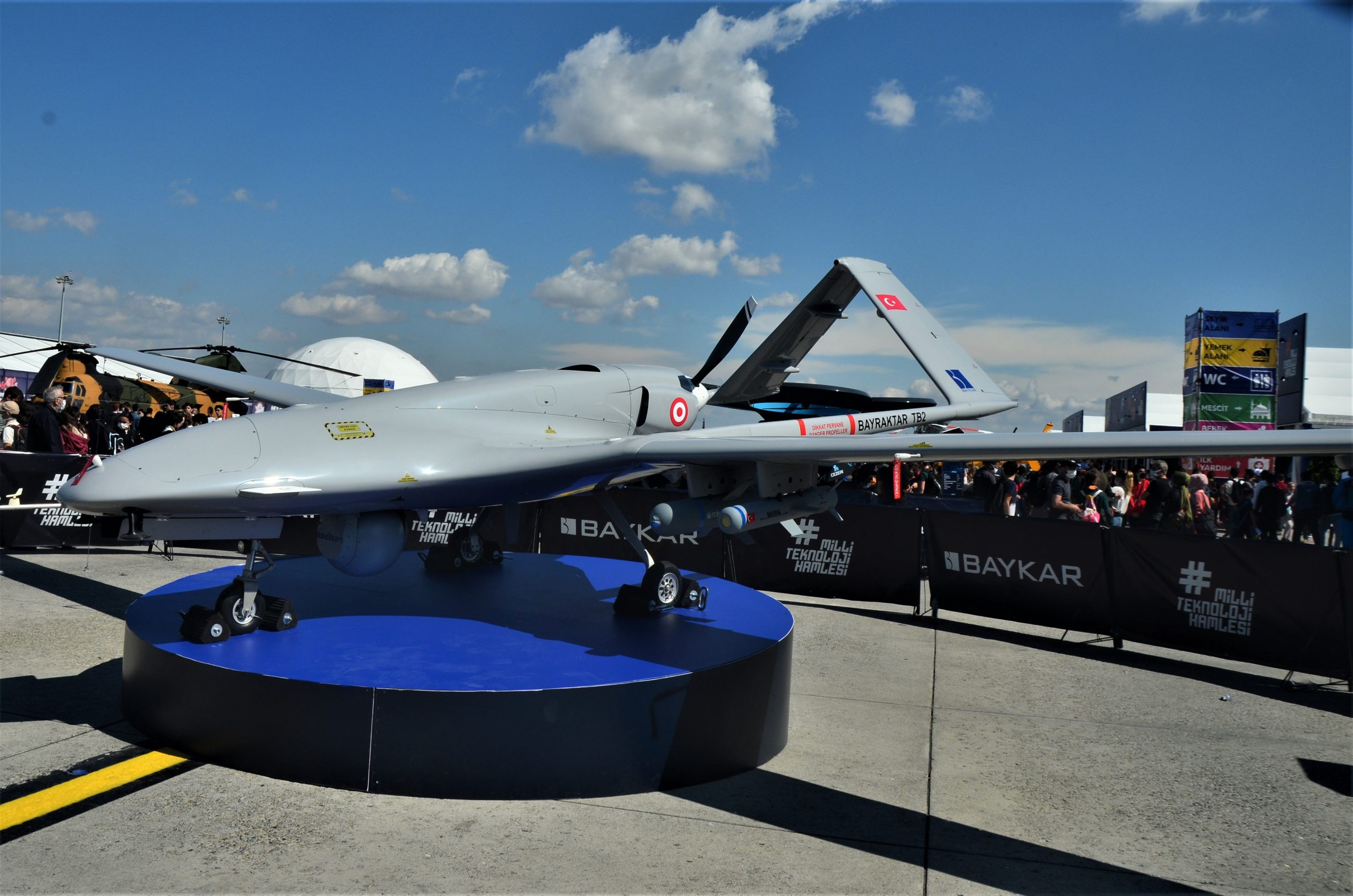
The two types sit at different points in Baykar’s range. The TB2 is a medium-altitude aircraft with a maximum take-off weight of 700 kg, a 150 kg payload, a service ceiling of 20,000 ft and an endurance of more than 18 hours, according to Baykar’s specifications. The twin-turboprop Akinci is more than eight times heavier, with a maximum take-off weight of 6,000 kg, a 1,500 kg payload, a 40,000 ft ceiling and an endurance of more than 20 hours, Baykar says. Burkina is one of eight African operators of the Akinci in the database, as covered in Baykar’s Akinci now flies with eight African operators, and one of 11 TB2 operators, set out in Bayraktar TB2 in Africa: 11 operators and 135 aircraft.
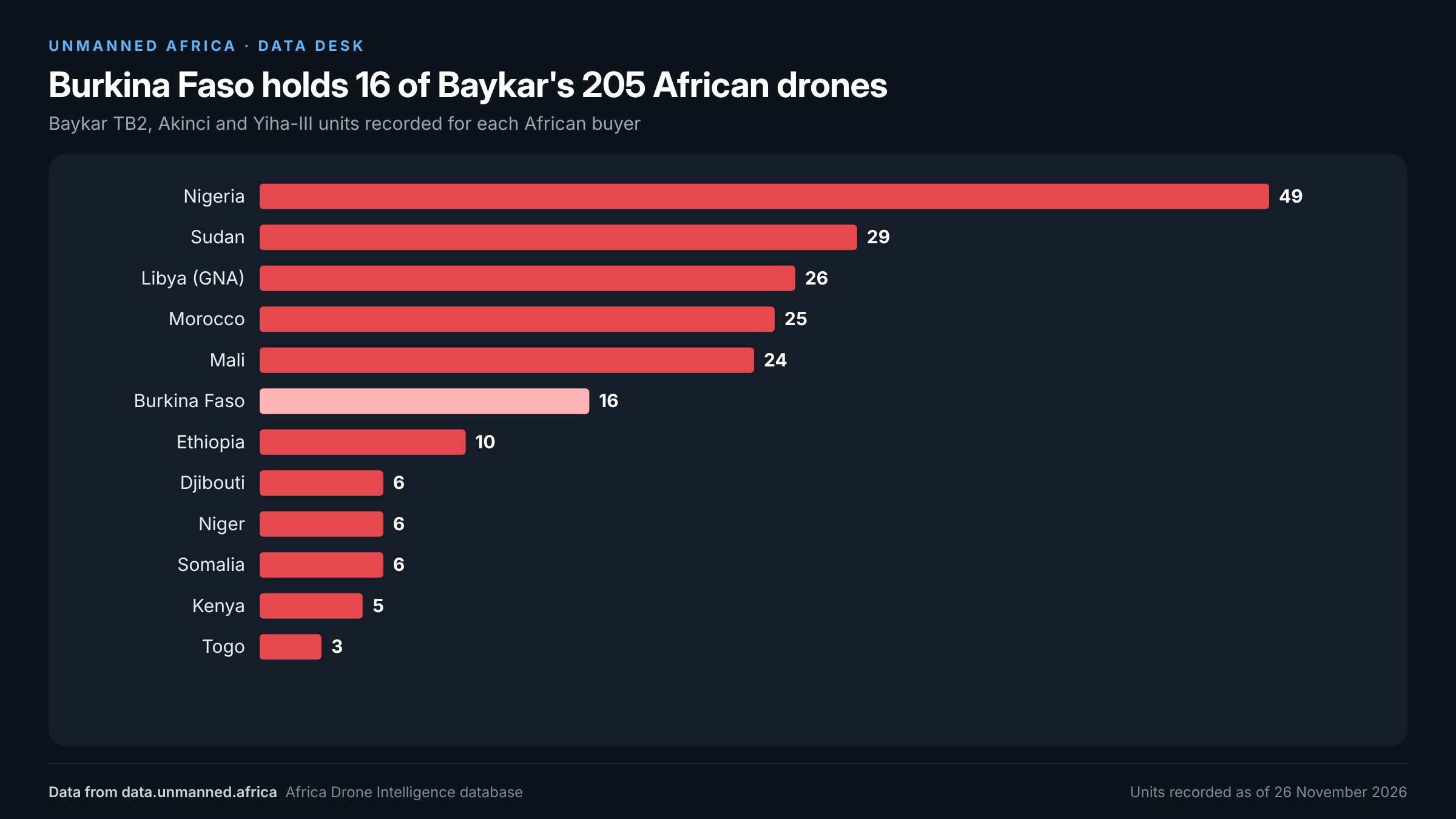
For Baykar, Burkina is a mid-sized African customer. Its 16 units are 7.8% of the 205 Baykar drones recorded in Africa and rank sixth among Baykar’s 12 African buyers, behind Nigeria with 49, Sudan with 29, Tripoli’s Government of National Accord with 26, Morocco with 25 and Mali with 24. Baykar reported export revenue of $1.8 billion in 2024, 90% of its income, and said the Akinci had been delivered to 10 countries, according to a company statement in February 2025. Turkey’s wider sales on the continent are covered in Turkey’s drone exports to Africa reach beyond Baykar.
Ties with Ankara
The purchases rest on agreements that predate both juntas. Burkina signed a counter-terrorism accord with Turkey in April 2019, and in September 2021 the Council of Ministers approved a defence industry agreement covering the production, purchase and maintenance of defence equipment, Benin Web TV reported. In May 2025 Turkey’s deputy foreign minister, Burhanettin Duran, signed a political consultations memorandum with Burkinabè officials. At the first round of those consultations, in Ankara on 20 October 2026, Turkey said it wanted a formal defence and security agreement, Sidwaya reported. Nothing has been signed.
Burkina has also tried to build its own pool of operators. It opened a drone training centre in October 2024, Military Africa reported. No public source describes a Turkish maintenance or training presence in the country, and no Chinese, Russian or Iranian drone has been reported in Burkinabè service. The only Chinese counter-drone item seen with Burkinabè troops is a handheld jammer, Military Africa reported in January 2025.
Money sets the pace. The 2026 budget adopted in December 2025 gives defence and security 707.89 billion CFA francs, 24.87% of domestic resources and slightly less than in 2025, according to AllAfrica. Mali, its AES partner, has asked Ankara for technology transfer rather than more finished aircraft, as Unmanned Africa reported in Mali wants Turkish drone know-how, not just more drones.
Data limits
Outside reporting does not match the database’s split. Every source found for this report gives five TB2s for 2022, not 10. The April 2024 handover included both TB2s and Akinci, but the database records only Akinci for that year, and no source confirms six Akinci: Janes and Military Africa both counted two. Five TB2s in 2022, three to five more in 2024 and at least two Akinci in 2024 would give 10 to 12 visible aircraft, against the database’s 16. Military Africa’s own procurement report also gives Burkina 16 Turkish Class 3 drones, without naming models or years, so it may rest on the same underlying data. The TB2 lost in 2023 is not reflected in the totals.
What to watch
The first question is whether the defence and security agreement Turkey proposed in October is signed, and whether it brings maintenance or training on Burkinabè soil. The second is whether Ouagadougou follows Mali and Niger in adding a second supplier country, or stays with Baykar alone. A further handover would also show whether the final phase of the equipment plan named in 2024 has been delivered.
