
Kenya explores drone and counter-drone training with Jordan at SOFEX
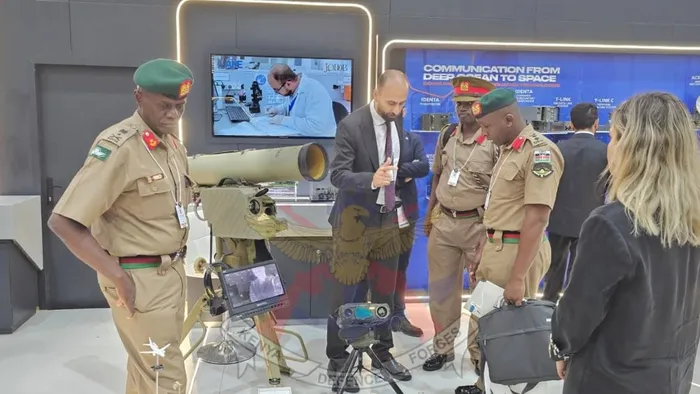
The Kenya Defence Forces (KDF) and the Jordanian Armed Forces are exploring specialised training in drone operations, counter-drone capabilities and counterterrorism, Kenya’s Ministry of Defence said in a statement on 4 November 2026. The talks took place in Aqaba between Kenya’s Deputy Army Commander, Major General John Nkoimo, and the Joint Chief of the Jordanian Armed Forces, Major General Majdi Al-Harasis. No agreement, timeline or course numbers were announced, Kenyans.co.ke reported.
The meeting was held on the sidelines of the 15th Special Operations Forces Exhibition and Conference (SOFEX) and the Middle East Special Operations Commanders Conference, which ran from 26 to 29 October. The ministry said the event drew more than 400 official delegations from over 75 countries and 350 exhibiting companies, showing unmanned aerial vehicles, counter-drone systems, cyber defence tools and battlefield management systems. Nkoimo praised Jordan’s locally developed defence technology, including systems to detect and counter aerial threats, and stressed “innovation and self-reliance in addressing evolving security threats”.
Building on existing ties
Kenya and Jordan already train together in Exercises Swift Eagle and Eager Lion and through the International Warrior Competition. Drone and counter-drone courses would extend that relationship into the area where the KDF’s needs are growing fastest. Jordan used SOFEX to show more than 49 locally developed defence products, including drone-related and counter-drone systems, according to Kenyans.co.ke.
A fleet that has turned to armed drones
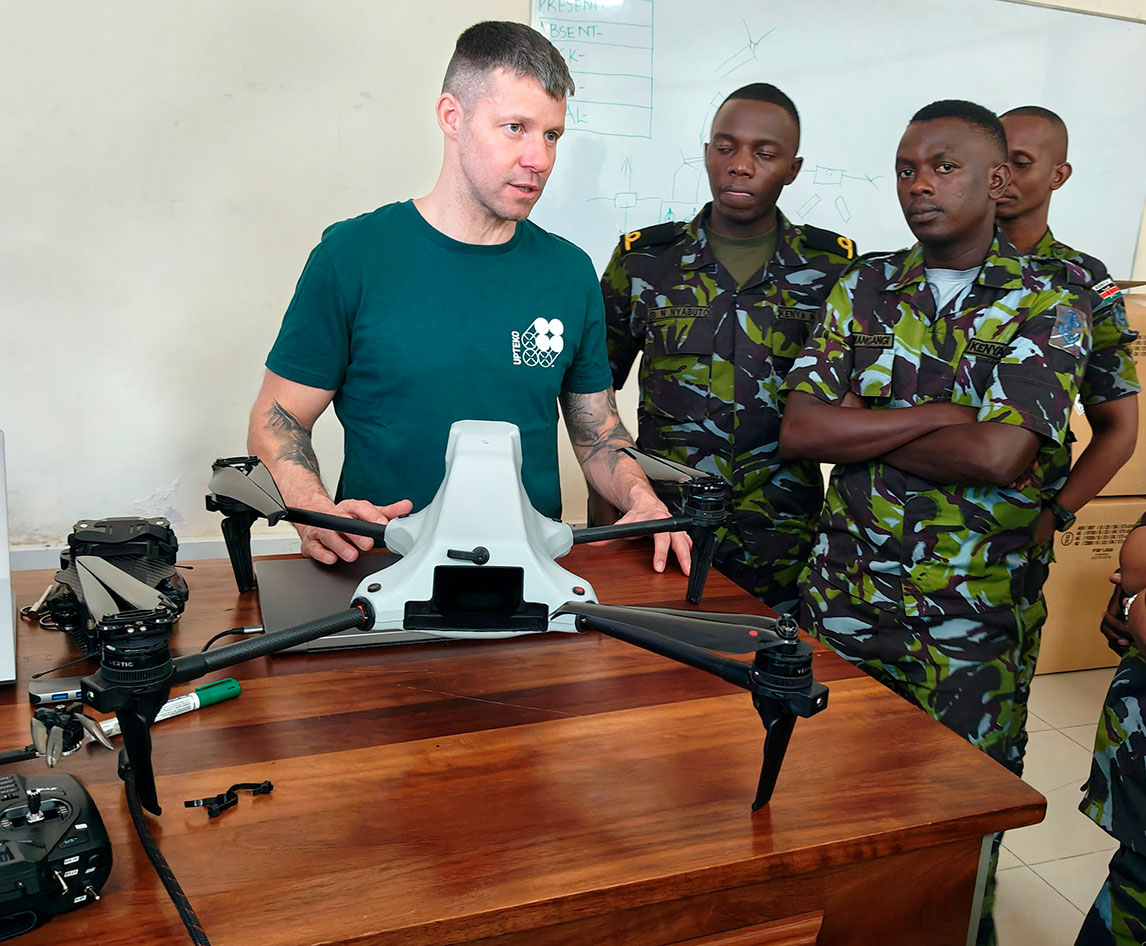
Training is the gap. Kenya’s drone inventory has shifted from small American surveillance types to armed Turkish aircraft since 2020, as set out in Kenya’s drone fleet turns from American to Turkish suppliers. At least six Bayraktar TB2s were seen in Kenyan markings in late 2024, Military Africa reported, after operator training in Türkiye. In February 2026 Denmark donated two types of UPTEKO drones to the Kenya Navy, one for base and installation security and a smaller tactical type for special forces patrols in the mangrove and swamp country along the Somali border, Defence Command Denmark said. “Knowledge of drone application is a prerequisite for countering drone threats,” said Commander Senior Grade Kjeld Gaard-Frederiksen, Denmark’s liaison officer to the Kenya Navy.
On the defensive side, the KDF took delivery of Israel’s SPYDER air defence system in December 2025, a layer aimed at aircraft, missiles and larger drones, and the Kenya Navy has been briefed by Saab on radar and anti-drone technology at Mtongwe Naval Base. Kenya is also a test ground for foreign unmanned systems: ARX Robotics’ GEREON ground robot fed targets to the British Army during Exercise Haraka Storm, covered in ARX GEREON robot feeds British targeting network in Kenya. The Kenya Navy is watching the cooperation between Yemen’s Houthis and al-Shabaab with concern, the Danish statement said, a link Unmanned Africa examined in Why has al-Shabaab not launched an armed drone attack?
Jordan as a training partner
Jordan offers Kenya a partner with a domestic industry building counter-drone systems and long-standing joint training ties. It would add to a training mix that already includes Türkiye for the TB2, the United States through AFRICOM programmes and Denmark through UPTEKO. Spreading training across several suppliers fits a fleet that draws on several countries, but it also raises the question of common doctrine across Kenyan units.
What to watch
The next step would be a signed training arrangement or a first course for Kenyan drone or counter-drone personnel in Jordan. Also worth tracking is whether Jordanian counter-drone products shown at SOFEX enter Kenyan trials, and how drone and counter-drone training feeds into the Association of African Air Forces exercise that Kenya will host in 2027. More coverage is on the counter-UAS tag page.
