
Belarusian jet drones reach Africa through Goma and Benghazi
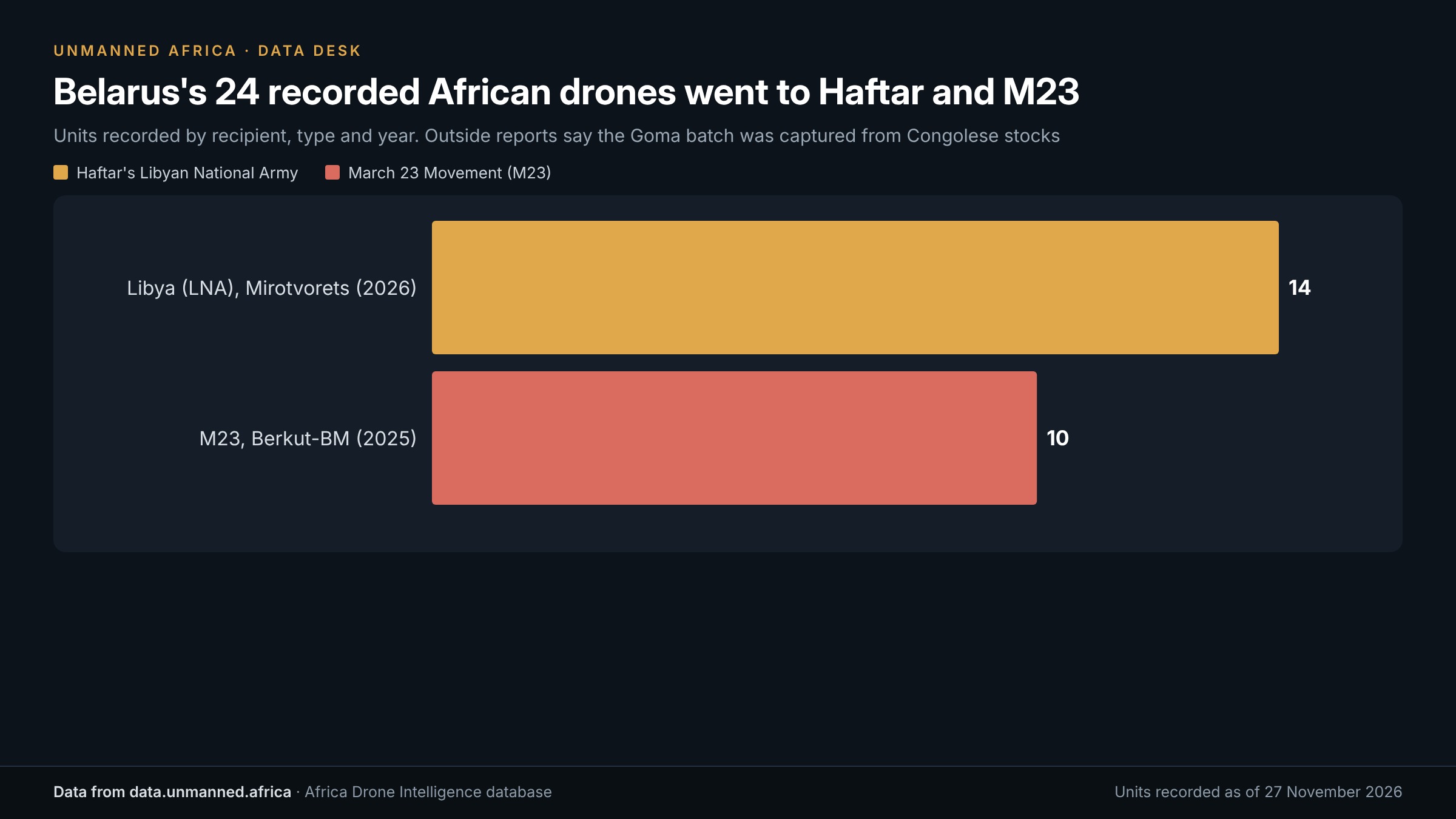
Belarus has become the largest single source of loitering munitions recorded in Africa since 2024, and both of its recorded customers are forces outside internationally recognised governments. The Africa Drone Intelligence database lists 24 Belarusian drones on the continent: ten Berkut-BM credited to the March 23 Movement (M23) in eastern DR Congo in 2025, and 14 Mirotvorets with Khalifa Haftar’s Libyan National Army in 2026. All 24 are jet-powered one-way attack drones from the same Belarusian design line.
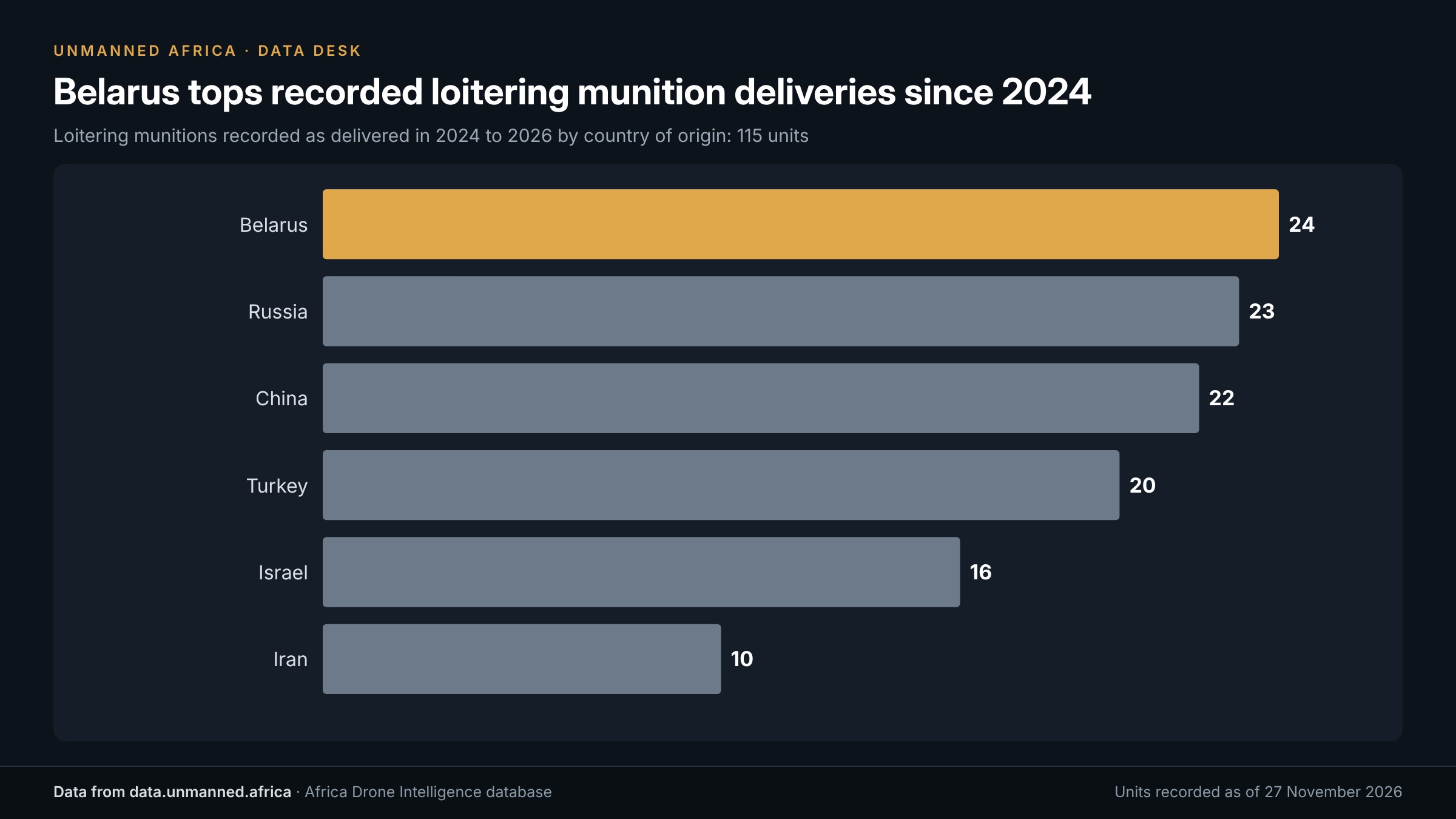
Of the 115 loitering munitions the database records for 2024 to 2026, Belarus accounts for 24, ahead of Russia with 23, China with 22, Turkey with 20, Israel with 16 and Iran with 10. Belarus has no other drone sales recorded in Africa, so its share of all 2,047 units is only 1.2 percent. Its weight in the newest and fastest-growing category is much larger, and outside reporting suggests one of its two entries needs correcting.
From aerial target to strike drone
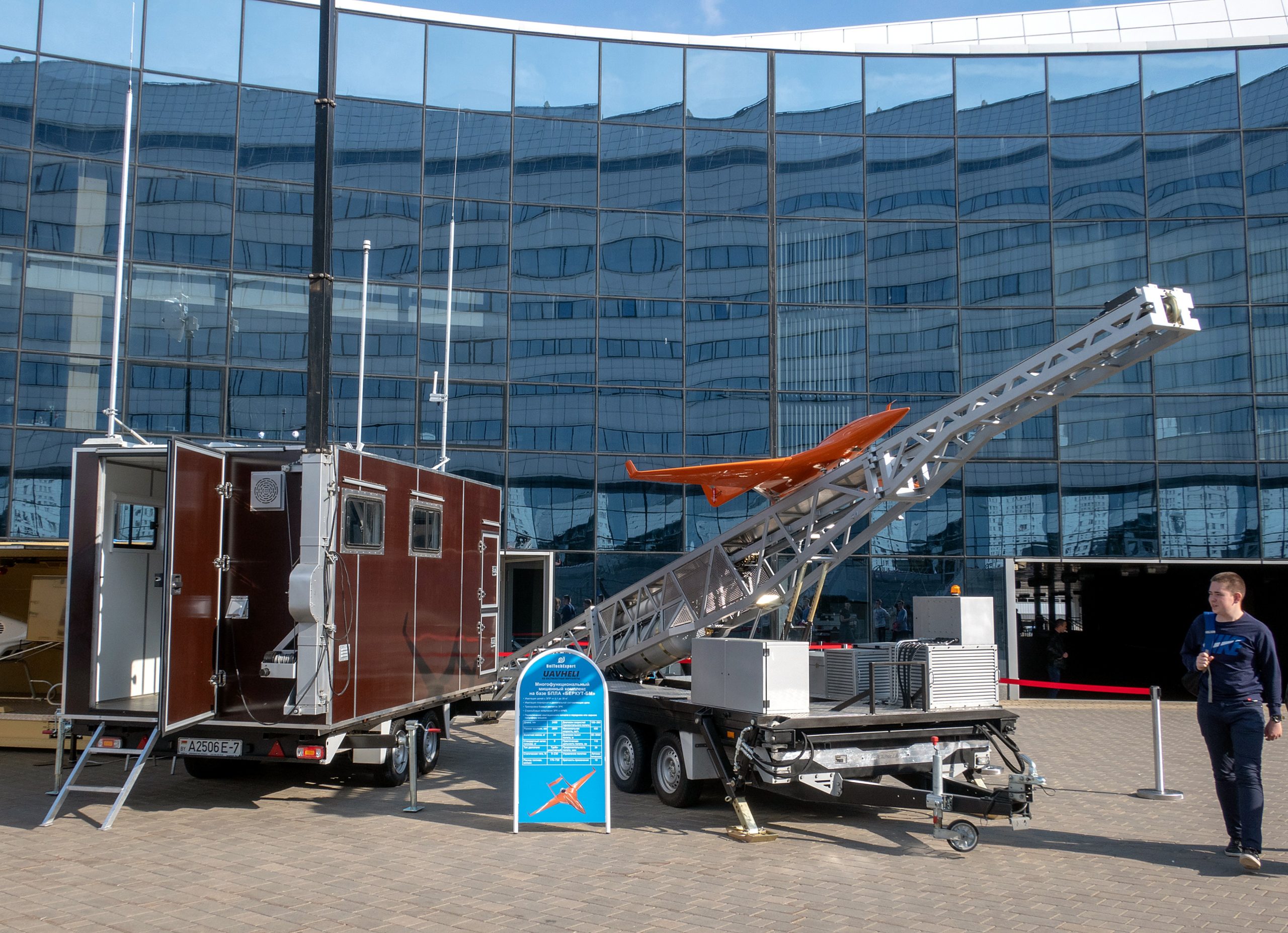
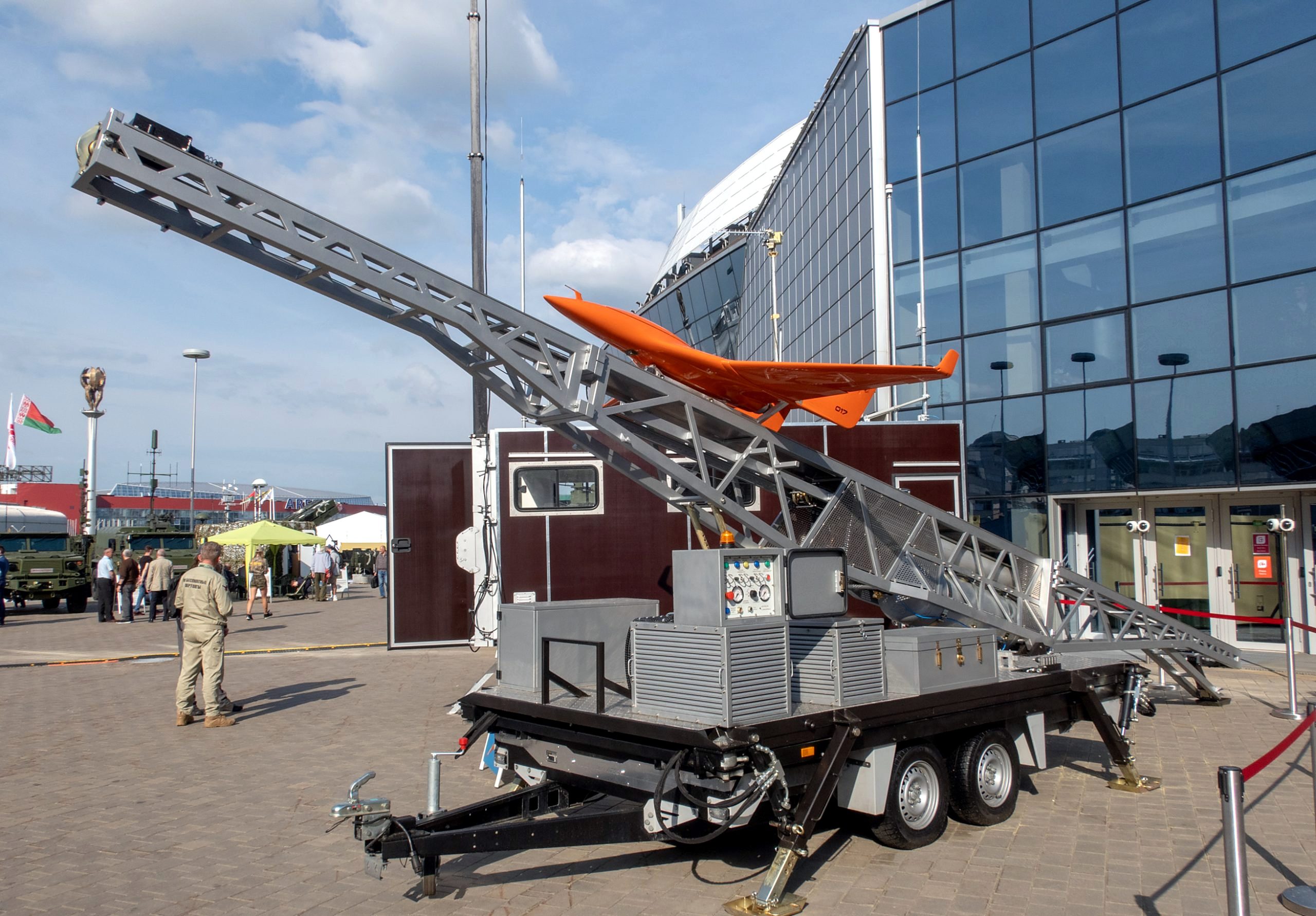
The Berkut-BM began as a jet-powered aerial target for air defence training, built by the Belarusian firm Indela. A strike version was shown at the MILEX exhibition in Minsk in 2021 as part of the Mirotvorets (“Peacemaker”) system, according to Janes. After Indela went bankrupt, its design team continued as the Design Bureau of Unmanned Helicopters, with another Belarusian company, UAVHeli, handling production, Militarnyi reported.
The Mirotvorets is 2.4 m long with a 2.8 m wingspan and weighs 46 kg at take-off. It is powered by a Chinese Swiwin micro turbojet, operates between 150 m and 6,000 m and is launched from a catapult, according to the same report. Published figures for its speed, range and warhead vary. Defence Blog gives a speed of up to 410 km/h and a range of about 150 km, while other reports cite up to 450 km/h, about 180 km and a 10 kg warhead. Its speed makes it harder to intercept than propeller-driven munitions such as the Shahed family, and its small size puts it in the database’s Class 1. Among the loitering munitions recorded in Africa since 2024, the Belarusian pair are the only jet-powered designs that can be identified. Mali’s Shahed-131, Lancet and Kub-BLA, Sudan’s Yiha-III, Morocco’s SpyX and Egypt’s ASN-301 all use propellers, and the six RSF munitions recorded from China’s Poly Technologies are not identified by type.
Goma: whose drones were they?
The M23 entry rests on events at Goma airport. When the Rwanda-backed group took Goma International Airport in January 2025, footage released by the Rwanda Broadcasting Agency on 30 January showed at least one Berkut-BM-type jet drone in a container in a hangar, next to a Congolese Su-25 ground-attack aircraft, as our report on the Libyan deliveries noted. Janes headlined its report as Congolese rebels capturing a Belarusian attack drone. Belarusian outlets Nasha Niva and Motolko described new Berkut-BM drones in wooden crates and about 20 cargo containers seized in the hangars.
Those reports point to the drones having been delivered to the Congolese armed forces (FARDC) and captured by M23, not bought by the rebels. The database’s entry credits M23 as the buyer in 2025. If the outside reporting is right, the ten Berkut-BM belong in DR Congo’s procurement history, possibly with an earlier date, and M23’s record reflects captured stock rather than a supply line from Minsk. The database has no separate M23 country page in its sitemap, and the quantity of ten is not confirmed by the published footage. The wider drone war in the Kivus, including what Janes assessed in March 2026 to be M23 use of YIHA-III loitering munitions, is covered in our M23 report and our report on the FRN offensive.
Benghazi: a supply line to Haftar
The Libyan case is a direct purchase. Haftar’s forces showed Mirotvorets drones with their special operations units in Benghazi in mid-October 2026, in photographs released by the LNA’s General Command, including one aircraft carrying serial number 074, Militarnyi reported. Italy’s Agenzia Nova described the drones at the LNA parade in Benghazi on 16 October. The database records 14 units for 2026. Unmanned Africa’s earlier report counted at least ten in the published images, so the database figure is plausible but not confirmed by the photographs alone.
Belarus is not new to Libya’s arms trade. Four Mi-24P attack helicopters reached Libya from Belarus in 2014 by way of the UAE, according to analyst Babak Taghvaee as cited by Militär Aktuell. The drone purchase follows a period of closer ties between the Haftar family and Minsk. Saddam Haftar, one of the commander’s sons, visited Belarus in October 2024, according to Charter 97, and Haftar himself was received in Minsk by Alexander Lukashenko, Agenzia Nova reported. Libyan analysts quoted by the agency described Belarus as an extension of Russian policy, which has long supported the LNA. All of this sits under a UN arms embargo that Reuters found Haftar has continued to work around with Chinese and Turkish combat drones.
The Mirotvorets adds a fast one-way strike weapon to an LNA fleet of 120 recorded drones, 81 of them Chinese, including 60 VTOL surveillance aircraft bought from five Chinese makers in 2022 to 2024, as set out in our LNA fleet report. Russia’s own drone sales to the LNA, Mali and Ethiopia are covered in our Russia report.
Other customers outside the database
Belarus has sold the design beyond Africa. An Indian company announced in June 2026 that it had completed delivery of 100 Mirotvorets drones and six training systems to the Indian army under a contract with Belarus’s state exporter, according to Nasha Niva. Defence Blog lists Russia and Sudan’s Rapid Support Forces among other Berkut-BM operators, and Unmanned Africa’s earlier report noted claims of sales to Sudan and Algeria. None of those African claims appears in the database, which records the RSF’s drones as Chinese and Serbian.
What the records leave out
The two Belarusian entries carry more uncertainty than most. The database’s sitemap has no drone pages for the Berkut-BM or the Mirotvorets, no manufacturer pages for either Belarusian firm and no country page for M23, so the records cannot yet be checked on the platform itself. The M23 entry conflicts with outside reporting on who bought the drones. The source field is empty on every record. Quantities for both entries rest on images that show only part of what was delivered.
What to watch
Three questions follow. The first is whether the database moves the Goma drones to DR Congo, which would make the Congolese government, not a rebel group, Belarus’s first recorded African customer. The second is whether the LNA uses the Mirotvorets in combat, and against whom, given the ceasefire that has held in Libya since 2020. The third is whether Belarus finds a buyer in the Sahel, where Russian-backed governments already field Russian and Iranian loitering munitions and where a fast jet-powered munition would add a new layer to their arsenals.
