
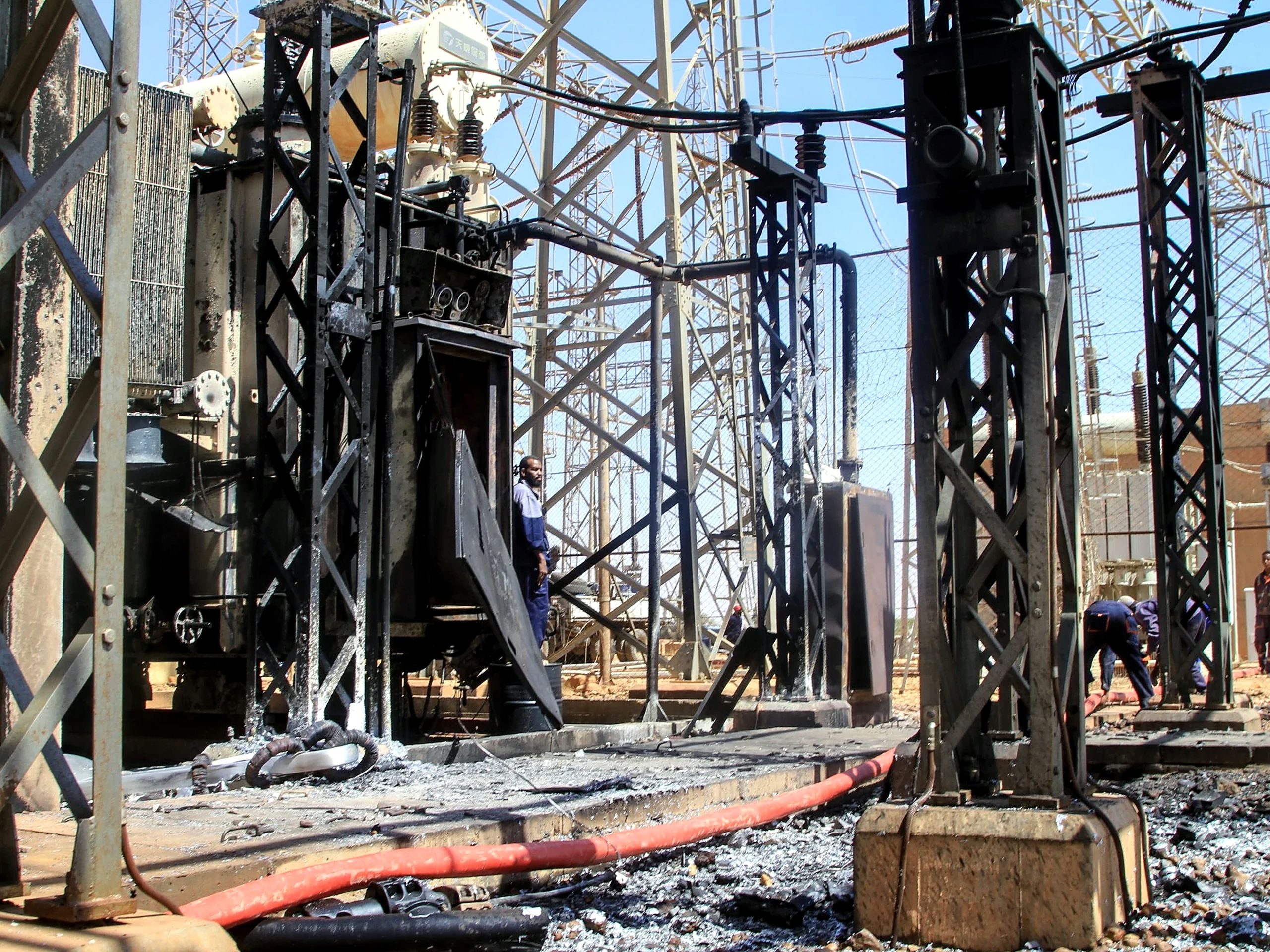
Sudan says 187 drones launched from Ethiopia hit its infrastructure
Sudan’s government has accused Ethiopia of allowing at least 187 one-way attack drones to be launched from its territory against Sudanese power stations, military positions and towns, in formal complaints lodged with the United Nations Security Council (UNSC) and the African Union Peace and Security Council (AU PSC) on Sunday 1 November 2026. Khartoum says the strikes, which it attributes to the paramilitary Rapid Support Forces (RSF), breach Article 2(4) of the UN Charter, which bars states from the threat or use of force against the territorial integrity of another state.
The figures come from a report prepared by Sudan’s Ministry of Foreign Affairs with military intelligence and from a separate account compiled by the Transitional Sovereignty Council, the body led by de facto head of state General Abdel Fattah al-Burhan. “Since February 2026, armed drones have taken off from Ethiopian soil … to strike Sudanese cities and civilians,” the council’s report states, Al Jazeera reported on 2 November. None of the numbers has been independently verified, and Addis Ababa rejects the accusations.
Seventy attacks, three alleged launch sites
According to the Sudanese report, 70 separate attacks involving 187 one-way attack drones were launched from Ethiopian territory between February and October 2026. Khartoum says the tempo has risen sharply: October alone saw 28 attacks using 97 drones, more than half of the total for the whole period. The Sovereignty Council’s account names three launch sites in Ethiopia: Asosa Airport in the western Benishangul-Gumuz region, the Kurmuk-Gizen border area facing Sudan’s Blue Nile state, and the Bahir Dar airbase in the Amhara region.
Sudan has not said which drone types were used. Long-range one-way attack drones have become a defining weapon of the war, as Unmanned Africa documented in the proliferation of long-range delta-wing drones in Sudan. Such aircraft fly pre-programmed routes over hundreds of kilometres and need no runway, which makes launch points hard to pin down without wreckage analysis or radar tracks.
The Sudanese authorities say 14 electricity distribution stations in nine states have been damaged. Between 15 February and 27 October, they say, drone attacks killed 176 soldiers of the Sudanese Armed Forces (SAF) and 484 civilians. Among the deadliest incidents cited were a strike on displaced families at Wad el-Mahi, near the Ethiopian border, on 3 October that killed 26 women and four children, and an attack on Nyala in Darfur on 26 October that killed at least 21 people and wounded at least 40, Al Jazeera reported.
A grid under sustained attack
The complaint came as the campaign against Sudan’s electricity network intensified. On Monday 2 November, drones struck substations at New Halfa and Aroma in eastern Kassala state and the al-Ghazali substation in Northern State, bringing the number of strikes on the power network to 18 in a single week, according to Al Jazeera and Anadolu Agency. More than 90 per cent of power stations in Sudanese cities are reported to be out of service, cutting water pumping, hospitals and communications in areas held by the army.
Sudanese border affairs specialist Abdul Kareem Al-Almin Ahmed told Al Jazeera that the range of the drones pointed to outside help. “They are mysterious drones, drones that reach long distances, and almost all Sudanese lands are currently violated by these drones,” he said. He added that tension in the army had reached the point where “some voices inside the Sudanese army and the forces allied with it demand that Sudan declare war on Ethiopia”.
The army also says that RSF fighters who surrendered in Damazin, the capital of Blue Nile state, gave information about the running of operations there, including “Ethiopian support” for the paramilitary group. Unmanned Africa has tracked the escalation of Sudan’s air war in its running account of the drone war between the SAF and RSF and in its report on how SAF Akincis armed with the Eren munition keep downing Chinese drones. Sister site Military Africa has covered the clash between rival AKINCI drones over Sudan in May, the SAF’s downing of an RSF Chinese-made CH-95 drone in July and Turkish air defence missile wreckage found in August.
Not the first accusation against Addis Ababa
The complaint builds on claims the Sudanese army first aired in May. At a press briefing on 4 May 2026, it accused Ethiopia and the United Arab Emirates of “direct aggression”, saying drones had flown from an airport at Bahir Dar to strike White Nile, Blue Nile and the Kordofan states on 1 March, and that a further drone from Bahir Dar targeted Khartoum International Airport from 1 May, Geeska reported. The army said a drone shot down north of El Obeid on 17 March carried serial number S88 and, after contact with its manufacturer, was found to belong to the UAE. Sudan then recalled its ambassador from Addis Ababa, allAfrica reported. Ethiopia’s Foreign Ministry called those accusations “baseless”. None of these claims has been independently verified.
Addis Ababa denies, analysts divided
Ethiopia denies backing the RSF and has in turn accused Khartoum of supporting rebels linked to the Tigray People’s Liberation Front (TPLF). The quarrel sits on top of older disputes, including the Grand Ethiopian Renaissance Dam (GERD) on the Blue Nile, which Sudan and Egypt see as a threat to their water security, and the closer ties between the Sudanese army and Cairo. Ethiopia has also strengthened its own air arm this year, and Washington has just removed Ethiopia from the International Traffic in Arms Regulations (ITAR) embargo list.
Sudanese analysts are split on the strength of the case. Qureshi Awad questioned whether Khartoum had produced enough evidence to prove that the drones were launched from Ethiopian soil, while Suhaib Hamid described the complaints as a diplomatic step meant to put pressure on Addis Ababa and its partners rather than a prelude to military action. Professor Badr Hassan Al-Shafei, an expert in African studies and conflict resolution, argued in a study for the Al Jazeera Centre for Studies that fear of a wider war is holding both governments back. “Khartoum fears that providing military support to Tigray will lead to an explosion of the situation on its borders,” he wrote.
UN Secretary-General António Guterres said on Saturday 31 October that he was “appalled” by the use of drones in Sudan’s war and condemned the toll on civilians. The conflict between the SAF and the RSF, which began in April 2023, has displaced about 13 million people and left large areas at risk of famine.
The risk of a second front on the Blue Nile
Whether the Security Council or the AU acts on Khartoum’s complaints will depend on evidence that has yet to be made public, such as wreckage analysis, flight-path data or intercepted communications linking specific strikes to the three named sites. Until then, the accusation adds a new cross-border dimension to a drone war that has already reached almost every corner of Sudan, and it puts fresh pressure on the SAF to extend its counter-drone defences to the eastern border. If the SAF decides to strike suspected launch areas across the frontier, the conflict could spill into Ethiopia’s Benishangul-Gumuz and Amhara regions, where Addis Ababa faces insurgencies of its own, and turn a civil war into a confrontation between two of the Horn of Africa’s largest armies.
