
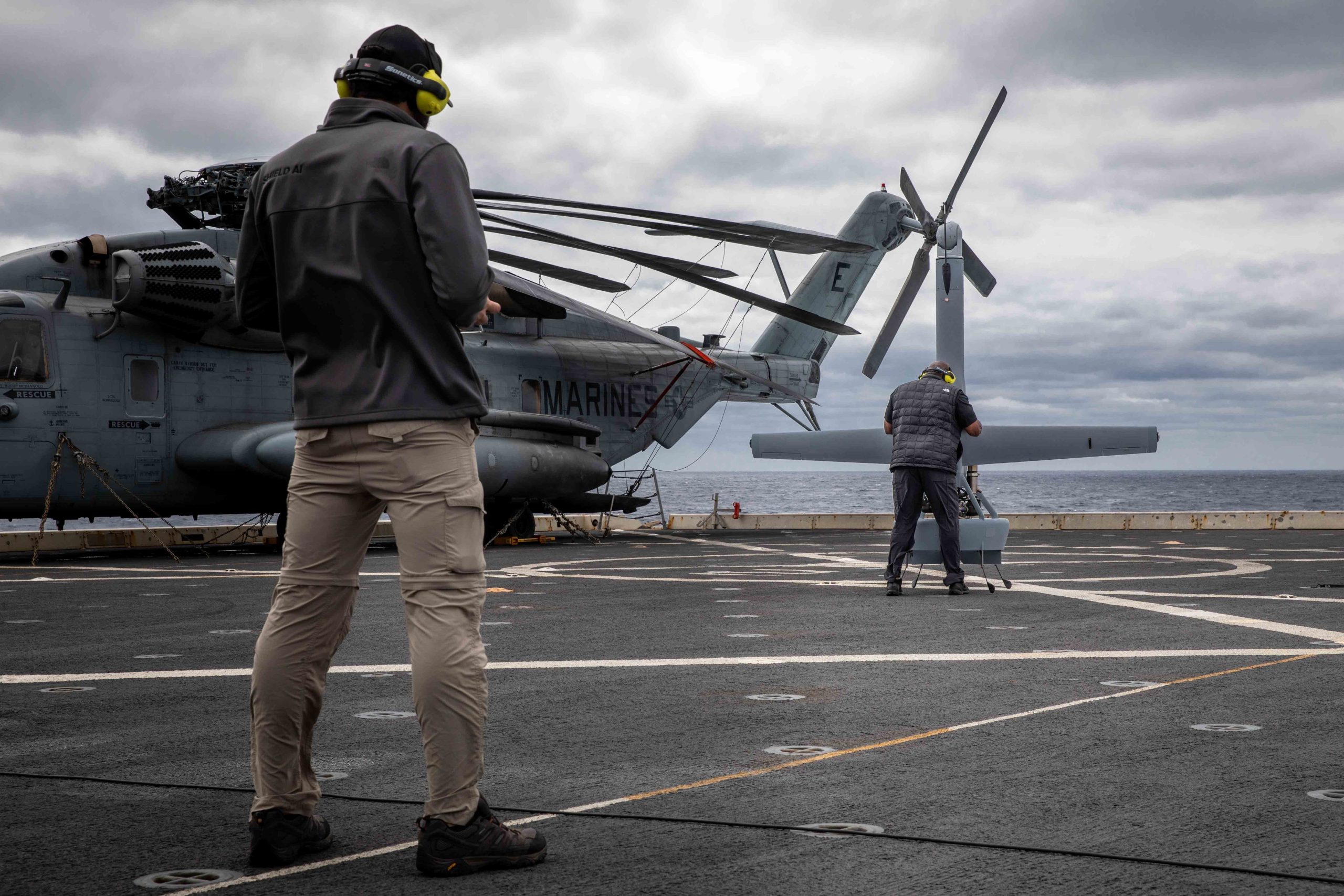
Ghana Navy adds US V-BAT drones to a six-country fleet
Updated on 18 November 2026 with the Ghana Navy’s planned acquisition of six V-BAT drones.
The Ghana Navy is to acquire six V-BAT vertical take-off drones from the American firm Shield AI, Janes reported. The deal would make the United States the seventh country to supply drones to the Ghana Armed Forces. The armed forces announced the plan in mid-October, and the aircraft are meant for fisheries enforcement and the protection of offshore infrastructure, Military Africa reported on 4 November. No contract value or delivery date has been published.
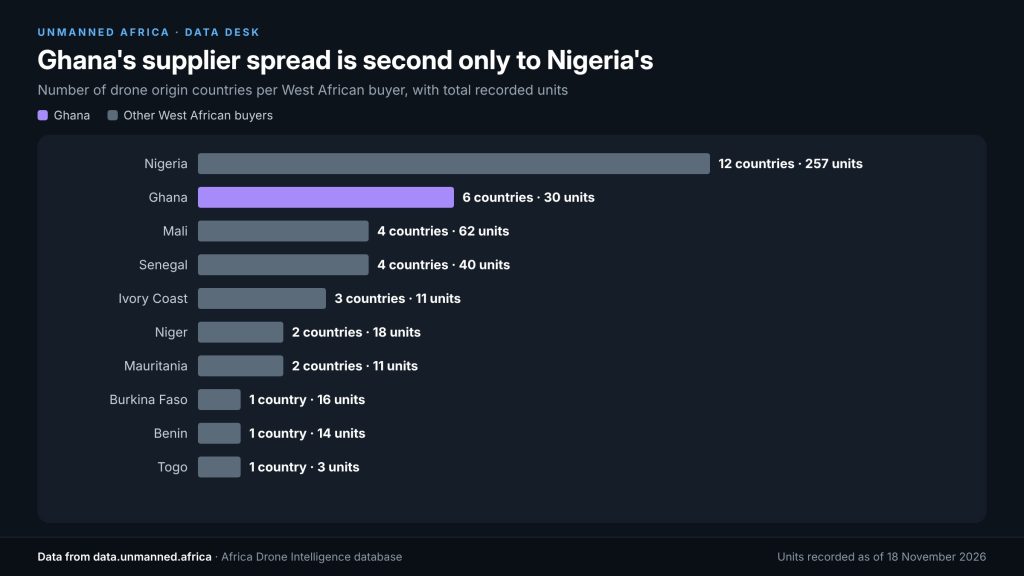
The order lands on a fleet already drawn from more countries than almost any in West Africa. The Africa Drone Intelligence database records 30 drones for Ghana from six countries in six deals between 2022 and 2026: 10 from Ukraine, six built in Ghana, five each from France and Latvia, and two each from China and the Netherlands. Only Nigeria draws on more supplier states in the region.
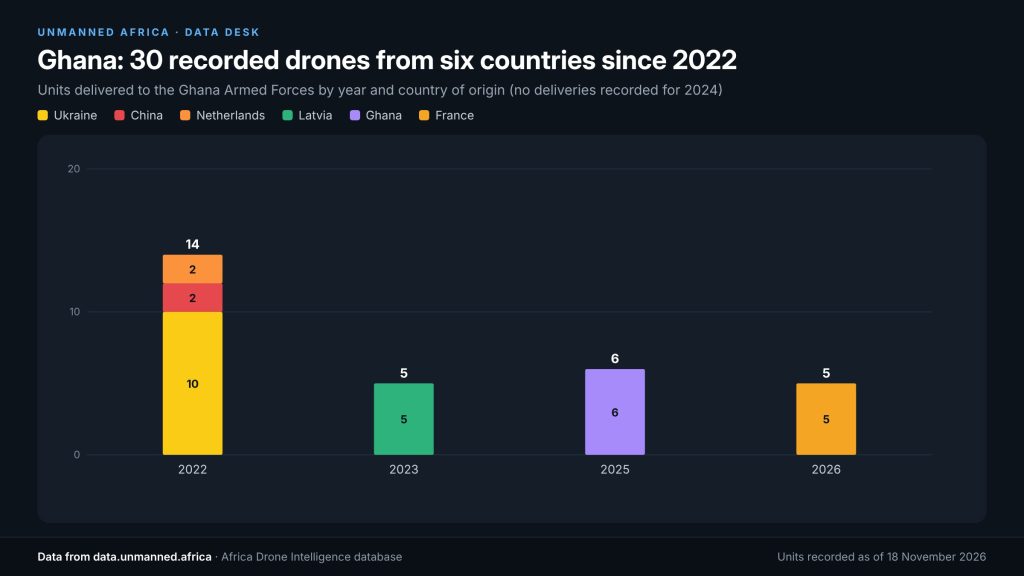
That spread makes Ghana the least concentrated drone buyer in West Africa. Its Herfindahl-Hirschman index on units, a standard measure of supplier dependence where 10,000 means a single source, is 2,156. Nigeria scores 2,488 and Senegal 3,175. Burkina Faso, Benin and Togo each rely on one supplier. Six V-BATs would take Ghana’s fleet to 36 aircraft from seven countries and lower its score to 1,775.
Volume is another matter. Thirty drones puts Ghana fourth in West Africa, far behind Nigeria’s 257 and below Mali’s 62 and Senegal’s 40. Every recorded aircraft is a small tactical type. There are no armed medium-altitude drones on Ghana’s list, unlike the Bayraktar TB2 fleets of Nigeria, Mali, Burkina Faso, Niger and Togo.
Ghana is also a late starter. Its first recorded drone delivery is the 2022 batch, while Nigeria’s records begin in 2006 and Senegal’s in 2011. All 30 Ghanaian aircraft arrived within five years.
A ship-capable drone for the Navy
The Ghana Navy is acquiring aerial intelligence and reconnaissance capabilities with the acquisition of six V-BAT vertical take-off and landing (VTOL) unmanned aerial vehicles (UAVs). According to Adm Bessing, the Ghana Navy has approximately 320 n miles of coastline to monitor, so it is procuring unmanned systems to improve maritime domain awareness and has evaluated several systems before deciding on the V-BAT, which is also referred to as the MQ-35A.
The V-BAT is a step up from anything Ghana flies today. It is a tail-sitter: it takes off and lands vertically on a single ducted fan, then tips over to fly on its wing. Shield AI lists an endurance of more than 12 hours with an electro-optical and infrared payload, a maximum take-off weight of 75 kg, a payload of up to 18.1 kg and a 3.8 m wingspan. It burns JP5 heavy fuel, the same fuel used aboard warships. The company says it needs a landing zone of 4.6 m by 4.6 m and can launch and land unassisted from a ship moving at 10 knots in winds of up to 25 knots, with a line-of-sight datalink range of 130 km to 180 km depending on the radio.
Those numbers matter for the Navy’s mission. A drone that can fly from a patrol vessel’s deck lets a single ship watch far more of the Exclusive Economic Zone than its own radar and lookouts can cover. Military Africa reported that the V-BATs will come alongside 30 riverine boats planned for the Navy.
“If we are able to deploy these assets and then we know exactly where the threat is, and if there’s the requirement for us to support this with our surface vessels, then we know exactly where we are going,” Adm Bessing explained.
Adm Bessing posits that the V-BAT would also contribute to wider national security objectives, asides maritime surveilance, He specifically identified concerns regarding instability coming southward from the Sahel.
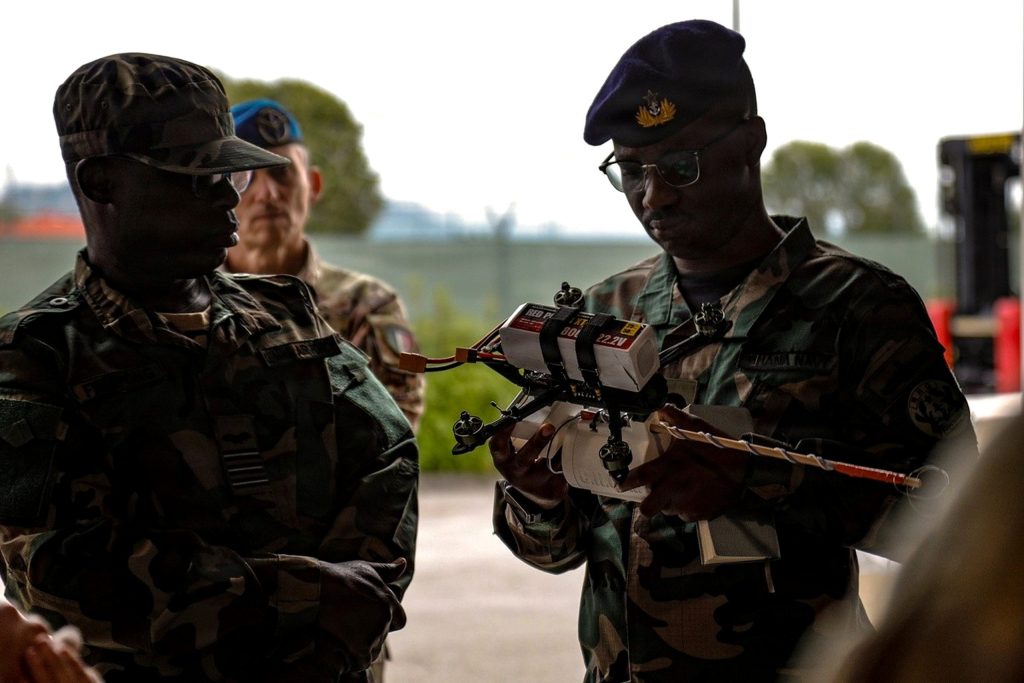
The Navy’s drone experience so far is short-range. In March 2022 it received ZMO-120 surveillance drones donated by Omnicad Group, with an endurance of 60 minutes and a range of 40 km, after training 13 naval officers to fly them over the Exclusive Economic Zone, Graphic Online reported. The database records two ZMO-120s for Ghana in 2022. The V-BAT’s quoted endurance is about 12 times that of the ZMO-120.
The type is widely flown outside Africa. The US Navy, Marine Corps units and Coast Guard operate it, the Netherlands has bought 12 systems and India’s army placed an emergency order in January 2026. No African operator appears in the Africa Drone Intelligence database or in the type’s published operator lists, so Ghana would be the first on the continent. It would also be a rare American sale: US makers delivered only four of the 503 drones the database records for Africa in 2023 to 2026, all MQ-9s for Morocco, a decline Unmanned Africa tracked in US share of African drone deliveries falls below one percent.
What arrived, and when
Almost half the recorded fleet came in one year. In 2022 the database records 10 PD-2 fixed-wing VTOL drones from Ukraine’s Ukrspecsystems, the two ZMO-120 from China’s Omphobby and two DeltaQuad Pro from the Dutch firm Vertical Technologies.
Five Fixar 007 aircraft from Latvia’s Fixar followed in 2023. Ghanaian reports described the type as a fully autonomous VTOL drone bought for intelligence, surveillance, border monitoring and search and rescue, the Daily Mail Ghana reported, without giving a quantity. The database files it as a rotary type, while the maker markets it as a fixed-wing VTOL design.
Then came local production. Six AeriusPro drones from Aerius UAS are recorded for 2025, the first Ghanaian-built aircraft in the database. Unmanned Africa reported in August that newly certified army operators were flying the AeriusPro over the volatile northern border, where it had been in operational use since January.
The latest recorded entry is five CK 23 VTOL drones from France’s Cavok UAS, logged for 2026. The type was shown at the Land Combat Fire Demonstration at Bundase Battle Training Camp on 30 October, as Unmanned Africa reported when Ghana acquired the CK 23. Neither the CK 23 nor the V-BAT has a page on the database yet.
Borders on land and at sea
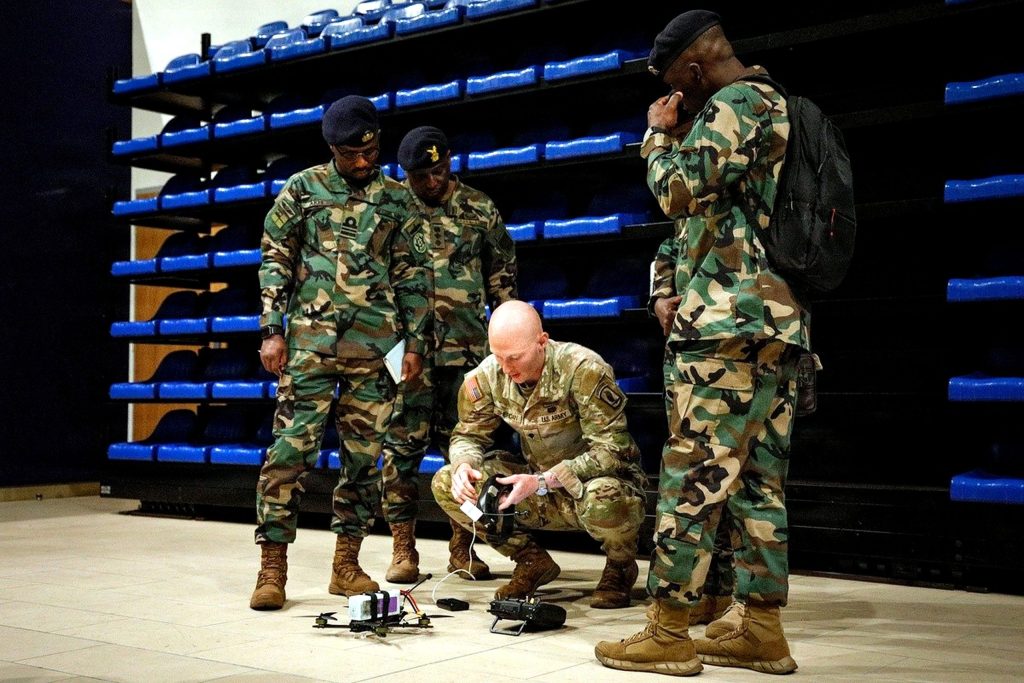
Ghana’s northern frontier with Burkina Faso is a growing security concern, and Russia’s Africa Corps now operates on the Burkinabe side, Euromaidan Press noted in its account of Accra’s talks with Kyiv. Ghana’s defence budget has passed $500 million, the same report said. The V-BAT order adds a maritime strand to buying that has so far focused on the land border.
The Kyiv talks may decide what comes next on land. Foreign Minister Samuel Okudzeto Ablakwa met President Volodymyr Zelenskyy in Kyiv on 25 February 2026, the first standalone visit by an African foreign minister since Russia’s full-scale invasion. The two sides are negotiating a first defence cooperation agreement at technical level, and Ghana wants Ukrainian drone technology for border surveillance, Euromaidan Press reported. Zelenskyy first raised the idea after a July 2025 call with President John Mahama, who offered to finance Ukrainian drone production. A presidential summit is expected to settle the deal.
Ukraine already supplied a third of Ghana’s recorded fleet with the PD-2 order of 2022. Europe is another source of support. The EU’s European Peace Facility has funded a EUR 50 million package of non-lethal military equipment for the Ghana Armed Forces, according to the EU delegation in Accra, though the delegation’s account does not list drones. In July 2026 the United States handed over 84 pallets of equipment, much of it radar, radios and boarding gear for the Navy, MyJoyOnline reported. That report did not mention drones.
Seen across the region, Ghana’s buying is modest. West African forces have 287 drones recorded since the start of 2022, and Ghana’s 30 are about a tenth of them. Turkey supplied 123 of the 287 and China 60. France (23), Russia (22), Spain (17) and Ukraine (10) follow. Ghana is the only West African buyer with Latvian or Dutch drones on record, and the only one besides Nigeria with a home-built type.
How Ghana compares
Only Nigeria draws on more countries, with 12 origins among its 257 recorded drones, which made it the subject of Unmanned Africa’s piece on Africa’s most diversified military drone fleet. Senegal is closer to Ghana’s model. It bought small types from Spain, France and China in 2023 after years of Israeli purchases, as our Senegal profile showed.
Ghana’s recorded mix is mostly European: 22 of its 30 drones come from Ukraine, Latvia, France and the Netherlands. Only Senegal matches that, also with 22 European-built drones recorded since 2022. That is unusual in a region where Turkey supplies most recorded aircraft, and it fits the wider return of French small drones to African armies through VTOL deals. For the wider question of single-supplier dependence across the continent, see where Africa’s armies buy their drones.
Spreading orders this thin has a cost. Six types from six countries already means six training pipelines and six spares chains for a fleet of 30 aircraft. The V-BAT adds a seventh, with its own heavy-fuel engine and shipboard routine.
The timeline also shows how irregular the buying has been. After the 14 aircraft of 2022, Ghana took five in 2023, none in 2024, six in 2025 and five so far in 2026. Each later deal brought a new type from a new maker, so the force has never reordered a design it already flies, at least on the database’s record.
What to watch
The V-BAT deal still needs its details: the contract value, who is paying, when the six aircraft arrive and which ships will carry them. The Kyiv talks are the other test. If a summit in Accra or Kyiv produces a contract, Ukrainian types could overtake every other source in Ghana’s fleet. Watch too for further AeriusPro deliveries, which would test whether Aerius UAS can supply in quantity, and for a confirmed CK 23 number from the army.
The database has gaps to close. The V-BAT, Shield AI, the CK 23 and Cavok UAS have no pages, the DeltaQuad Pro page shows no data, and the Fixar 007 entry may carry the wrong airframe type.
