
Aeronautics Defence Systems sold Africa 29 drones, then stopped
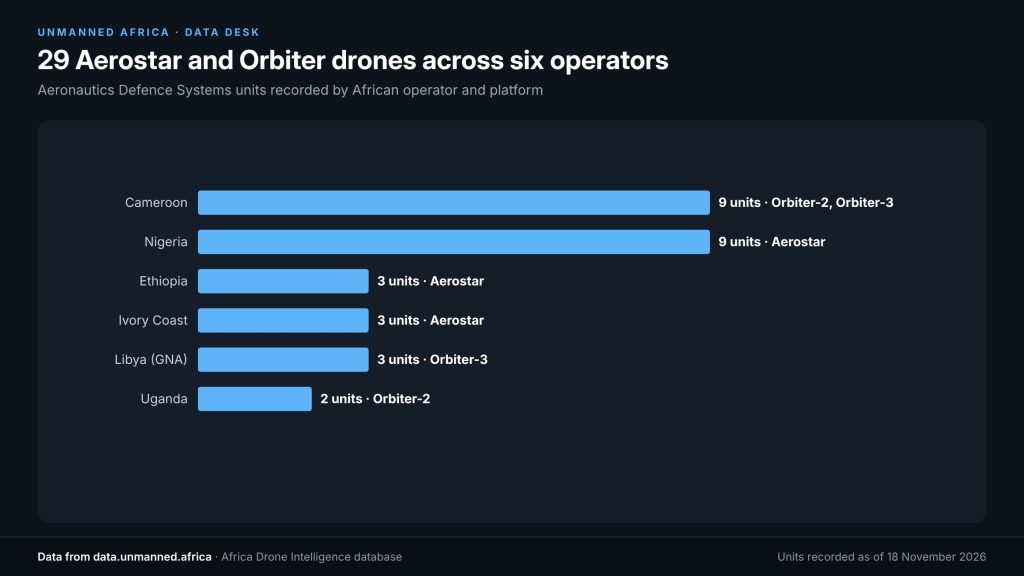
Israel’s Aeronautics Defence Systems supplied 29 drones to six African operators between 2003 and 2018, and the Africa Drone Intelligence database records no African sale by the company since. Its seven deals ran from three Aerostar aircraft for Ivory Coast in 2003 to five Orbiter-3 drones for Cameroon in 2018.
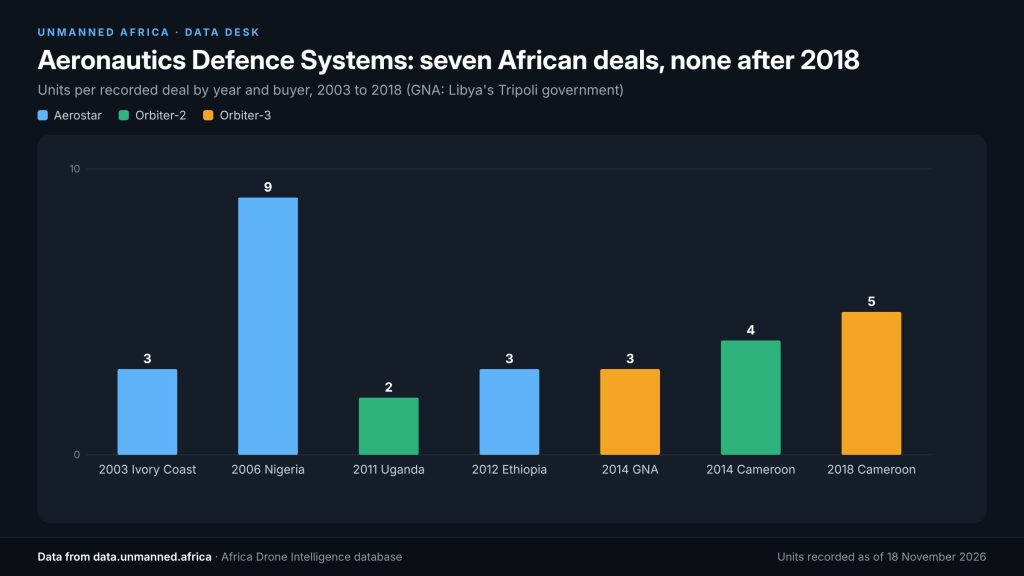
Those 29 aircraft are 9.0% of the 322 Israeli-made drones on record in Africa, the smallest share of Israel’s four drone exporters to the continent. The tactical Aerostar accounts for 15, split between Nigeria (9), Ivory Coast (3) and Ethiopia (3). The rest are small Orbiter drones: eight Orbiter-3 and six Orbiter-2. Cameroon and Nigeria each received nine aircraft, more than anyone else.
For a time the company was one of Israel’s two main drone exporters to Africa. Between 2000 and 2018 the database records 102 Israeli drones delivered to African buyers. BlueBird supplied 31, Aeronautics 29, IAI 24 and Elbit 18. The average Aeronautics deal was small, about four aircraft, and every type it sold was a fixed-wing surveillance drone.
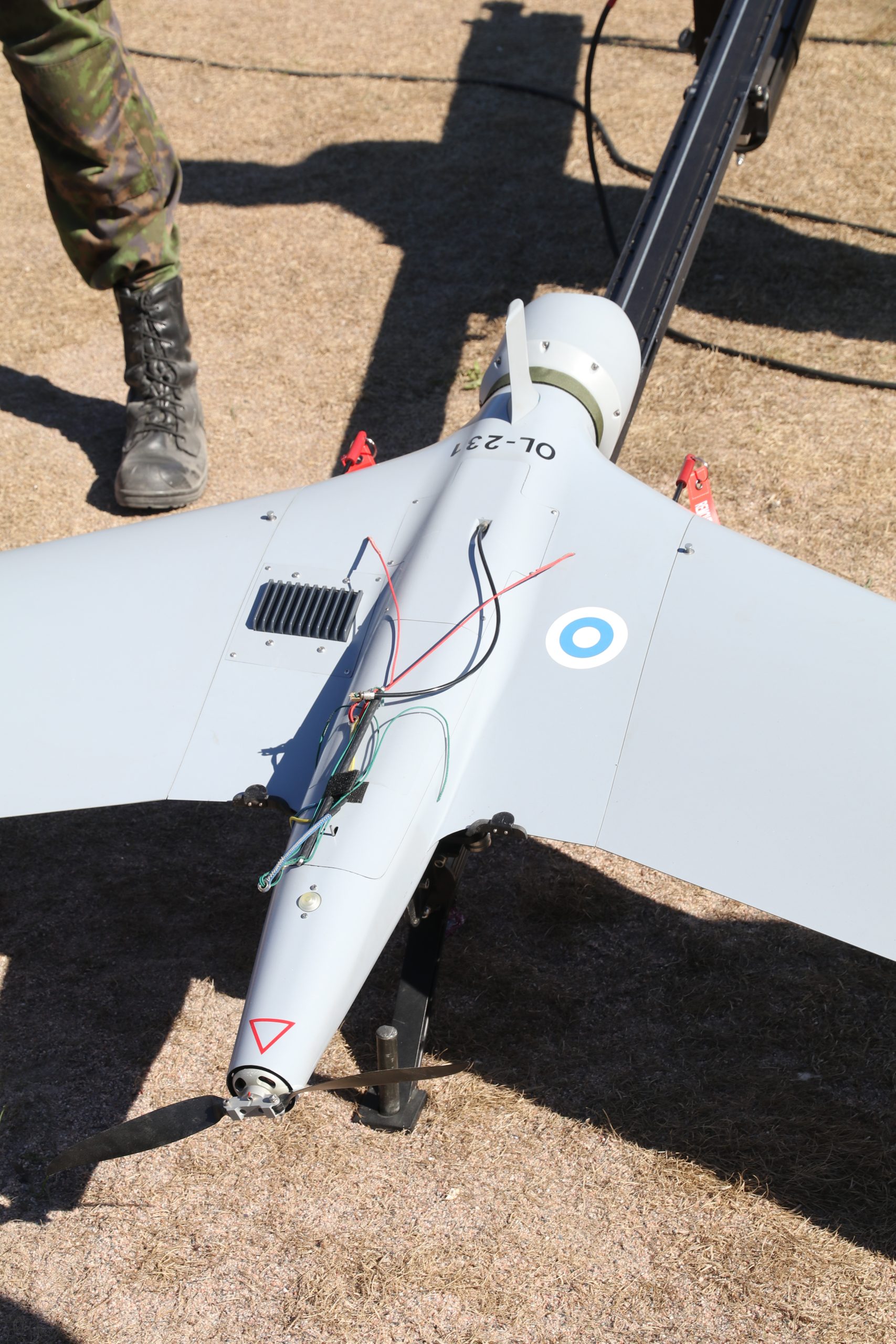
Aerostar: oil, war and a denial
Nigeria’s order was the largest. On 2 May 2006 FlightGlobal reported that Aeronautics had won a $260 million contract to supply unmanned air vehicles and unmanned patrol boats to Nigeria, of which the Aerostar systems were worth $100 million and would carry Controp optical payloads, according to company president Avi Leumi. The deal was aimed at protecting the oil-producing Niger Delta. The database records nine Aerostars for Nigeria in 2006, while FlightGlobal’s report gave no aircraft count.
Published figures for the Aerostar give a 230 kg maximum take-off weight, endurance of up to 12 hours and a 250 km range, according to the company profile on Wikipedia, which flags those numbers as poorly sourced.
The Ivorian sale came during a civil war. In November 2004, after Ivorian forces attacked French troops, the French broadcaster TF1 accused Israeli mercenaries of operating spy drones in Ivory Coast. Israeli security sources denied that, but confirmed that a private Israeli company had supplied drones to Ivorian forces, JTA reported. The database’s three Aerostars for 2003 fit that account. Ethiopia’s three Aerostars followed in 2012, part of a fleet that Unmanned Africa found draws on seven countries and its own industry.
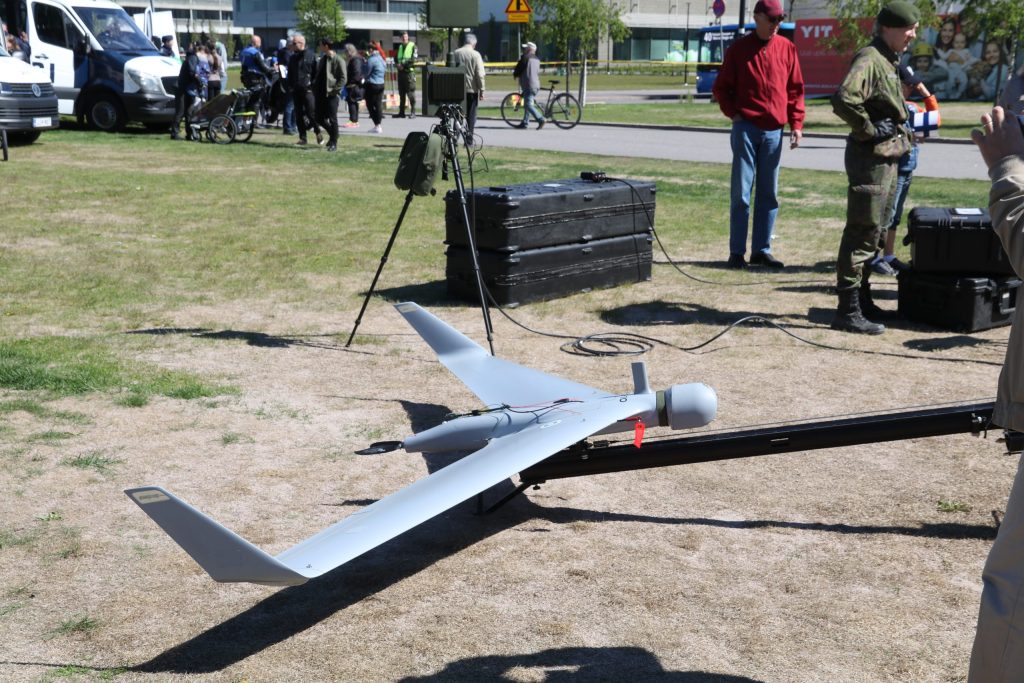
Ethiopia’s Aerostars arrived at the end of a short Israeli buying spree. Between 2009 and 2012 Addis Ababa took Boomerang and SpyLite drones from BlueBird Aerosystems, WanderB mini-drones from IAI and the three Aerostars, 31 Israeli aircraft in four years. It has bought no Israeli drone since, according to the database.
Orbiter: small drones for small wars
The Orbiters went to forces fighting insurgents. Uganda received two Orbiter-2s in 2011, its first recorded drones and a year ahead of a batch of American Ravens, as recorded in our Uganda profile. The authorities in Tripoli, recorded in the database as the GNA, took three Orbiter-3s in 2014, part of the older Israeli base under Tripoli’s Turkish fleet.
Cameroon bought twice: four Orbiter-2s in 2014 and five Orbiter-3s in 2018, as its forces fought Boko Haram in the Far North. The Orbiter 3 is electrically powered, weighs up to 30 kg and flies for about seven hours with a 100 km range, according to the same Wikipedia profile. Cameroon’s later records turn to other suppliers, with six Slovenian Bramor C4EYE drones in 2021, a shift traced in Cameroon fights Boko Haram with commercial and Israeli drones.
Why the orders dried up
The database records what was delivered, not why sales stopped. The company’s own history offers part of an answer. In August 2017 Israel’s Defense Export Controls Agency suspended Aeronautics’ permit to export the Orbiter 1K loitering munition to Azerbaijan after reports that company staff had carried out a live-fire demonstration against Armenian forces. Prosecutors later charged the company and three senior employees with breaching defence export law, in December 2021.
Ownership changed in between. In September 2019 Rafael Advanced Defense Systems bought half of Aeronautics in a deal that valued it at NIS 850 million ($240 million), with businessman Avichai Stolero holding the other half, The Defense Post reported. At the time Aeronautics’ drones served militaries and security agencies in 15 countries.
African buyers had also moved on. Nigeria’s later records are dominated by 43 Turkish Bayraktar TB2 aircraft in 2022, Ethiopia turned to Chinese and Turkish suppliers, and Uganda to Elbit. Israel’s African sales after 2018 came mostly from BlueBird, to Morocco, and from Elbit’s Hermes line.
Apart from Uganda’s Hermes purchases, none of its six customers has bought an Israeli drone since. After 2018 Cameroon’s only recorded delivery is Slovenian, Ivory Coast’s are French and Chinese, and the GNA’s 30 are all Turkish. Nigeria has bought from 10 foreign countries and its own industry since 2019, with Turkey supplying 99 aircraft and China 51.
The wider Israeli numbers follow the same arc. Israeli makers supplied 25.9% of Africa’s recorded drones in 2000 to 2009 and 34.9% in 2010 to 2014, the years when Aeronautics was most active. Their share fell to 9.7% in 2015 to 2019. It rose again to 25.7% in 2020 to 2022 on Morocco’s BlueBird orders, then dropped to 5.0% in 2023 to 2026.
What to watch
Aeronautics is now half-owned by Rafael, so a return to African tenders would come under different ownership. Any new Orbiter deal would be the first recorded for the brand in Africa since 2018. The database could also be tightened: FlightGlobal’s 2006 Nigeria report gave a value but no aircraft count, so the figure of nine Aerostars rests on the database alone.
