
Drones give M23 a regular army’s reach in eastern DR Congo
Drones have given the M23 rebel movement in eastern Democratic Republic of the Congo (DRC) the reach of a regular army, while government forces have expanded their own fleets of Turkish and Chinese unmanned aircraft, according to an analysis by the Institute for Security Studies (ISS) published on 23 November 2026. The study by ISS consultant Karen Allen, published in ISS Today and carried by allAfrica, warns that the strategic value of drones to both sides is making de-escalation harder.
Since 2022 the Armed Forces of the DRC (FARDC) and the Rwanda-backed M23 have both been building up drone fleets. Many experts believe M23’s capture of Goma in January 2025 and Bukavu a month later would have been impossible without an extensive arsenal of unmanned aerial vehicles (UAVs). “[More] drones have been used in this past year than in all the previous years,” said John Ngono of the Armed Conflict Location and Event Data project (ACLED).
Loitering munitions on the M23 side
Several reports, including from the United States ambassador to the United Nations, Mike Waltz, say M23 used attack drones and Rwanda-supplied artillery when it briefly seized Uvira near the Burundi border in December 2025. The drones have been reported as Turkish-made YIHA-III long-range loitering munitions. Media aligned with the DRC government said the FARDC shot down three such one-way attack drones during an M23 offensive in October 2026. Military Africa reported earlier this year that the YIHA-III had also appeared in Sudan’s war.
M23 also adapts commercial drones. “We have also seen M23 using civilian or commercial drones and modifying them for their use,” Ngono said. The UN Group of Experts’ final report, released in June 2026, says M23 used kamikaze drones in its February 2026 attack on Kisangani airport, about 400 km from the front line, damaging the control tower and runway. Former South African brigadier general Peter Sereko, who commanded an infantry unit in the DRC, told ISS that a decade ago “it was just small calibre weapons”, but by 2024 “the M23 had the capability of a regular army.”
Turkish and Chinese drones for the FARDC
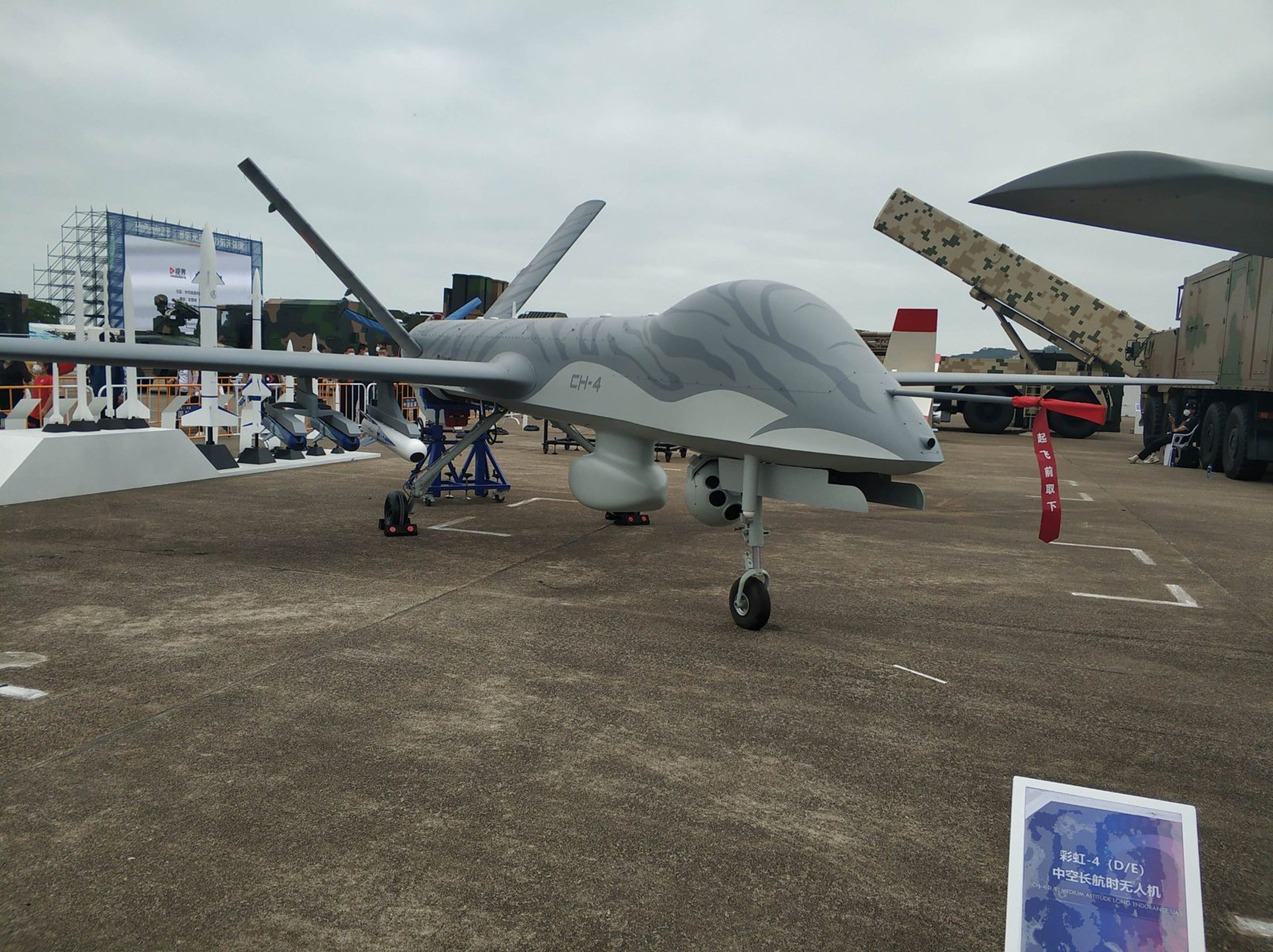
The same UN report says the FARDC has flown Turkish long-endurance drones with “external technical or operational assistance” and Chinese CH-4 and CH-5 drones, and that Burundi has reportedly bought drones for use in the DRC. The CH-4 is the most widely spread Chinese drone on the continent, with seven African air forces including the DRC, and China supplies most of the recorded drones in Central Africa’s fleets. FARDC sources say the army has struck rebel-held mining sites such as Rubaya, which produces around 15% of the world’s coltan and earns M23 an estimated US$800,000 a month, according to UN experts. Media reports also link the army’s air campaign to private contractors. The loss of an armed Cessna 208 near Minembwe on 22 November, which rebels claim to have shot down, showed how far those contractors are involved: Military Africa reported that the aircraft was reportedly flown by contractors for the FARDC.
Ngono believes M23 now relies less on Rwandan trainers, though it may still receive intelligence and mobile air defence support from Rwanda. UN estimates in December 2025 put Rwanda Defence Force numbers at up to 10,000 in South Kivu and 8,000 in North Kivu. Kigali justifies its military presence in the DRC as protection against the Democratic Forces for the Liberation of Rwanda (FDLR) militia. The drone war in the Kivus has also drawn in other armed groups, as Unmanned Africa reported when Congolese forces and the FRN rebels traded drone attacks along the RN3.
A drone arms race in the Great Lakes
The pattern is not limited to the DRC. The Africa Center for Strategic Studies says 80% of Africa’s major armed non-state actors “have now used small unmanned systems to drop mortars or conduct kamikaze attacks,” and drones with fibre-optic control and AI-enabled targeting are harder to detect and defeat. ISS and the Africa Center urge African governments to take a risk-based approach to importing drones and parts and to invest in counter-drone systems. With China, Türkiye, the United Arab Emirates and, according to unconfirmed reports, Ukraine all suppliers with a stake in the conflict, the eastern DRC has become one of the continent’s most intense drone battlegrounds, alongside Sudan. For Kinshasa the next procurement question is less about adding strike drones than about defending bases and airports such as Kisangani against cheap one-way attack types.
