
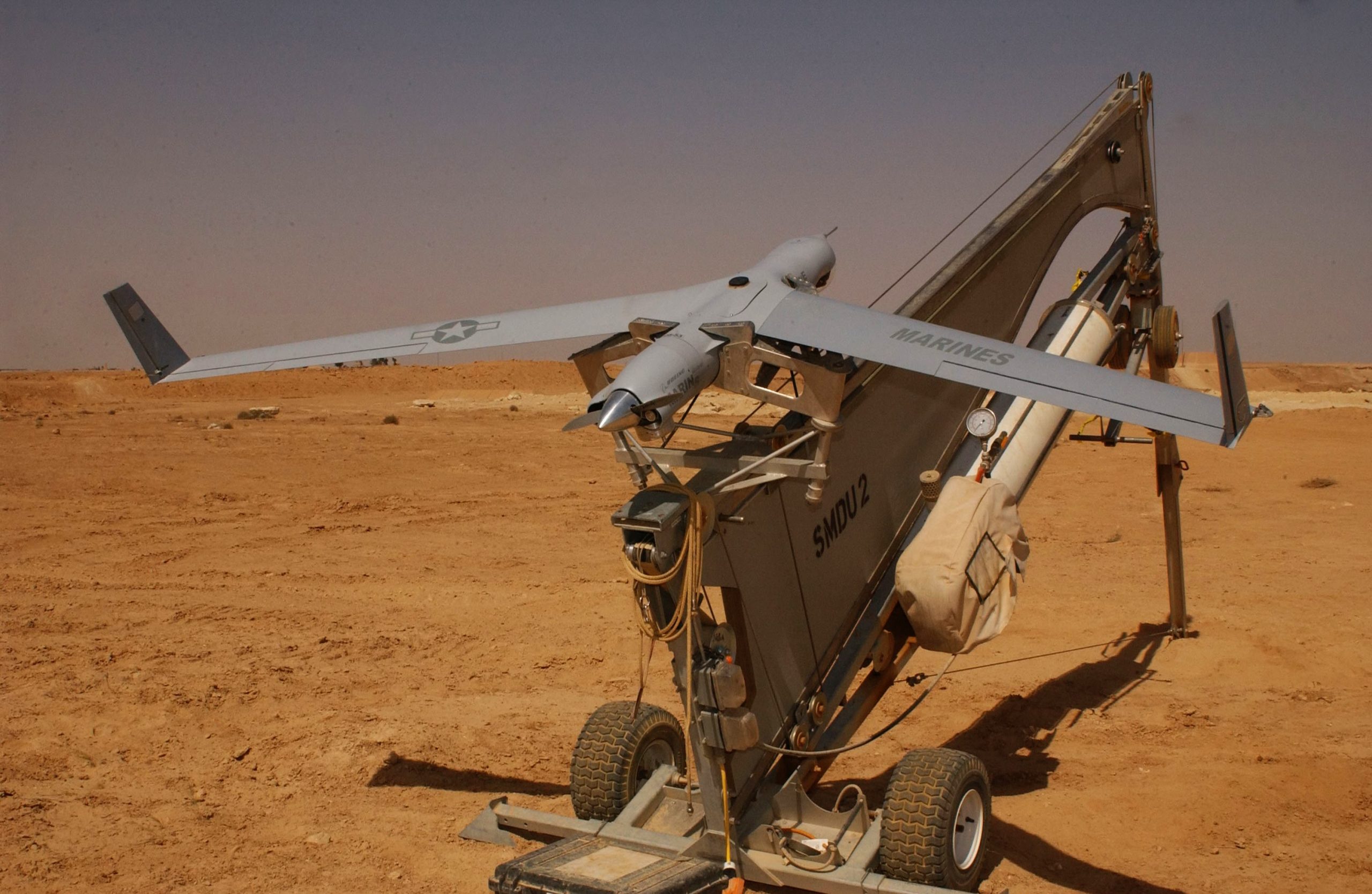
ScanEagle’s African operators: Tunisia, Cameroon and Kenya
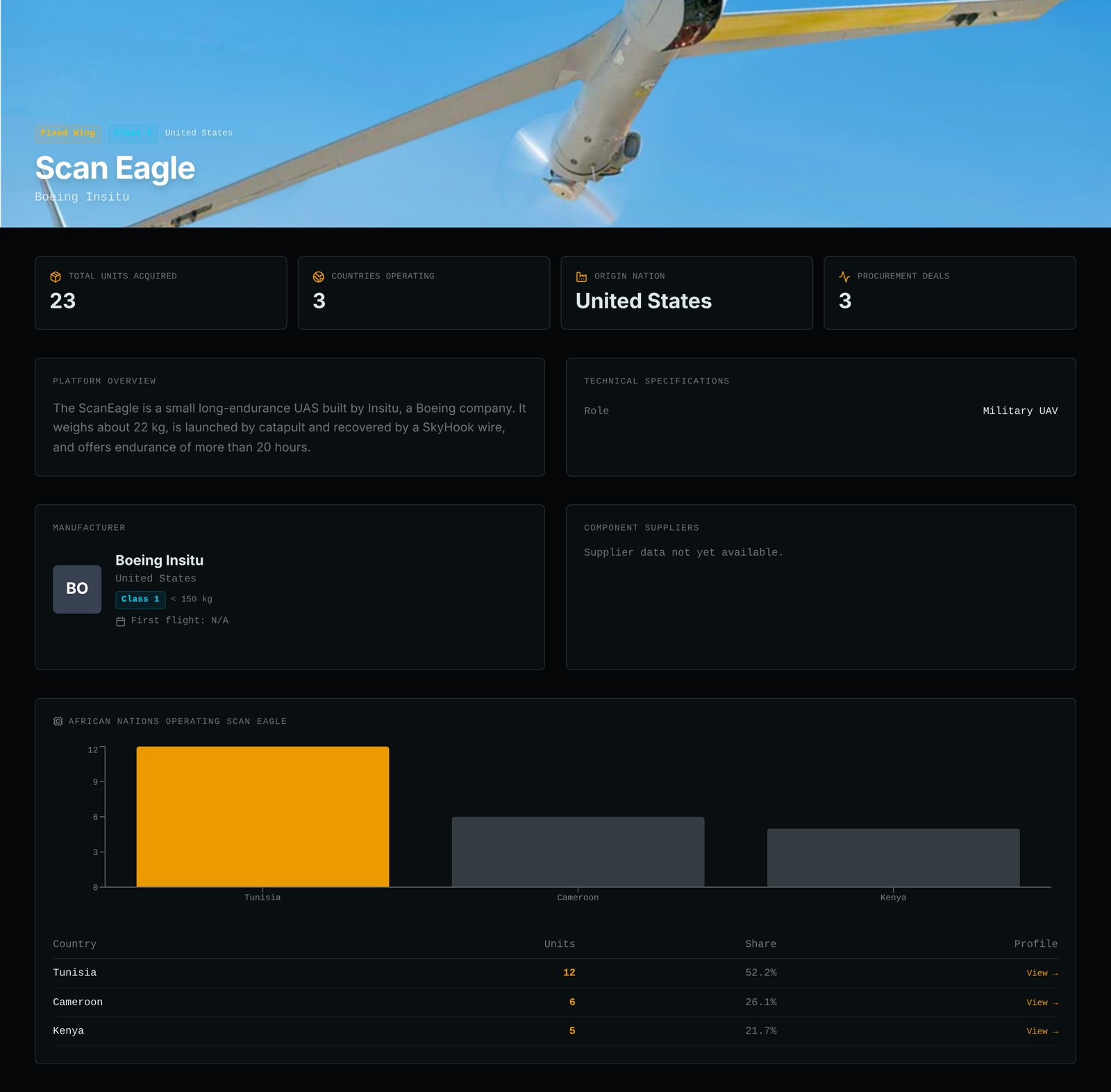
Three African armies bought Boeing Insitu’s ScanEagle inside two years. Nobody on the continent has bought one since. The Africa Drone Intelligence database records 23 units: 12 for Tunisia in 2016, six for Cameroon in 2015 and five for Kenya in 2015.
A counter-terrorism surveillance tool
The ScanEagle is a catapult-launched, skyhook-recovered surveillance drone with an endurance of more than a day in some configurations. It needs no runway, which suits forces operating from remote bases. All three African buyers were fighting jihadist groups when their aircraft arrived: Tunisia on its Algerian and Libyan borders, Cameroon against Boko Haram in the Far North, and Kenya against al-Shabaab.
The aircraft formed part of a wider set of American surveillance systems for those countries. Tunisia also received four MQ-1 Predator in 2010 and eight RQ-20 Puma in 2020, and Kenya eight RQ-11 Raven in 2012. The pattern is set out in Unmanned Africa’s analysis of AeroVironment’s small drones in six African armies.
Replaced by other suppliers
None of the three ScanEagle operators has bought another Boeing Insitu product since. Tunisia moved on to Turkish ANKA-S and Chinese VTOL drones, Kenya to Turkish ANKA-S and Bayraktar TB2, and Cameroon to Slovenia’s Bramor C4EYE. It is the wider collapse in American drone sales in miniature, a story told in US share of African drone deliveries falls below one percent.
Tunisia’s 12 make it Africa’s largest ScanEagle operator. Are any of these fleets still flying? Nobody has said. Small tactical drones of this generation typically need sustained spare-parts support from the manufacturer, and none of the three buyers has announced follow-on support contracts in open sources.
