
Haftar’s LNA fields Belarusian Mirotvorets jet-powered strike drones
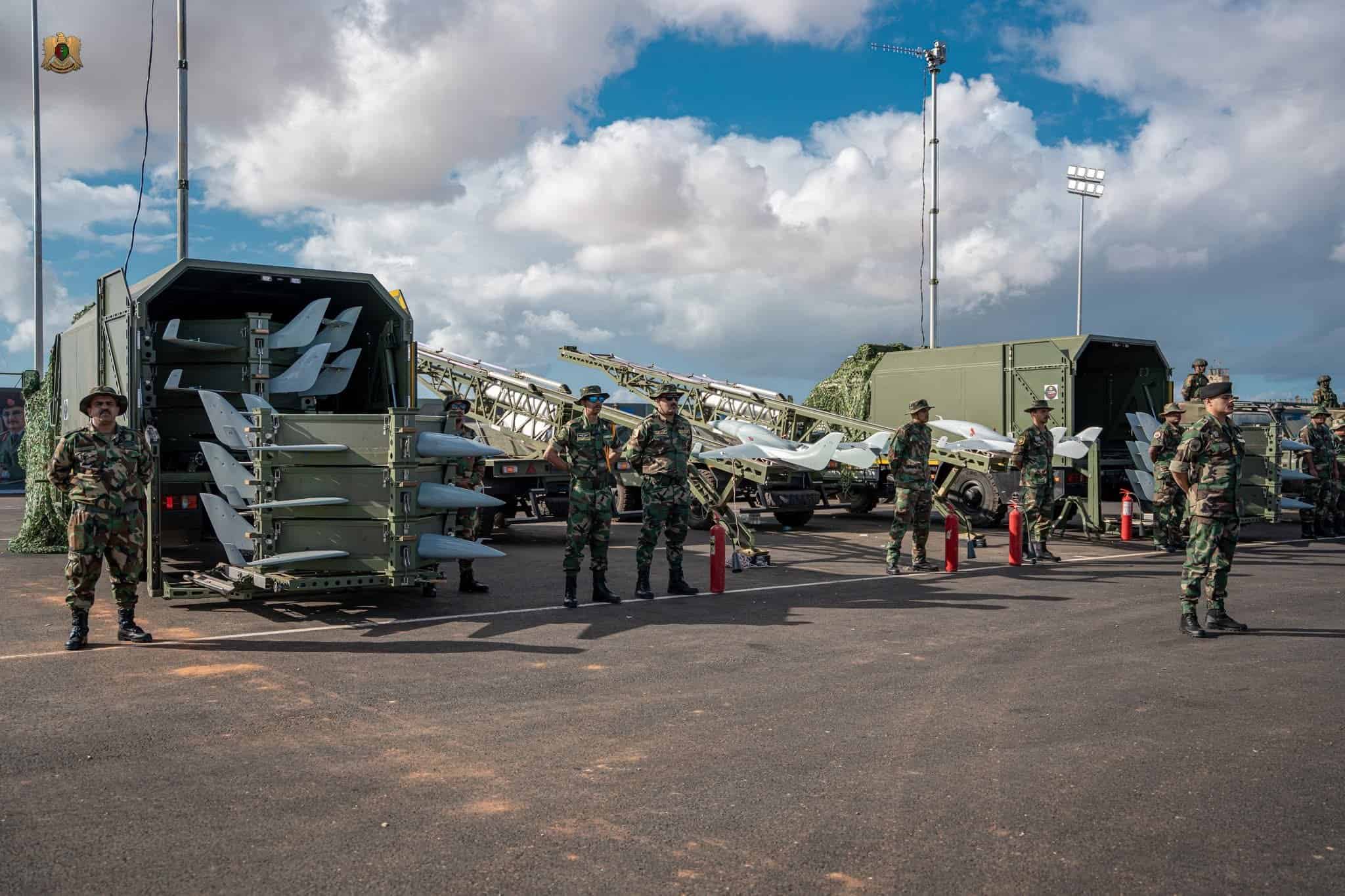
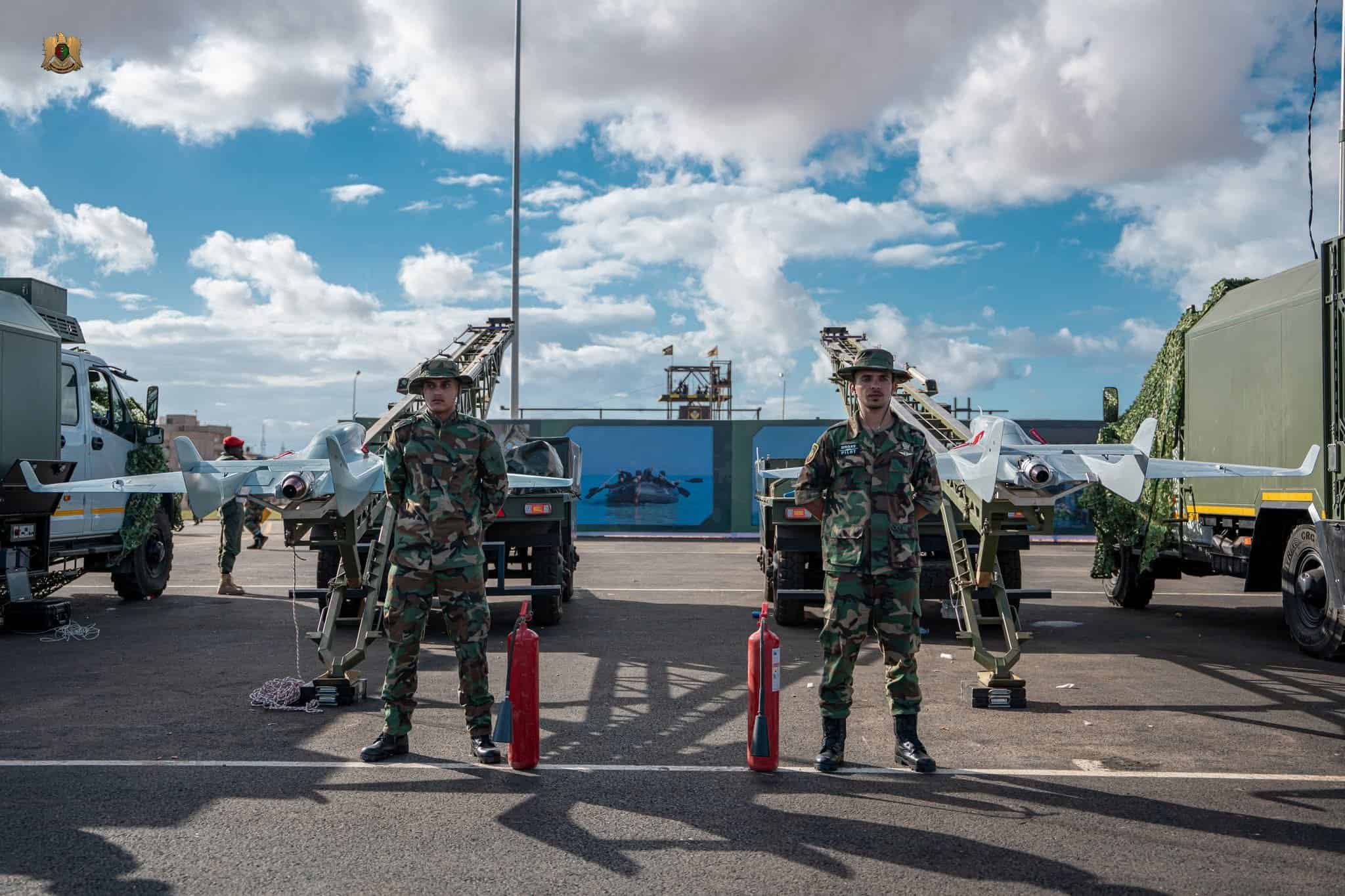
Khalifa Haftar’s Libyan National Army (LNA) has acquired Belarusian-made Mirotvorets (“Peacemaker”) jet-powered strike drones, showing at least ten of them with its special operations units in Benghazi in mid-October 2026. Photographs released by the LNA’s General Command, and first reported on 18 October by Militarnyi and The Defense News, show the drones alongside catapult launchers, antenna-fitted support vehicles and a mobile control station. Russia’s TASS news agency described the display as part of a military parade rehearsal in Libya.
The Mirotvorets is a one-way attack drone derived from the Belarusian Berkut-BM jet-powered target drone. It is credited with a top speed of up to 450 km/h (280 mph), a range of about 180 km (112 miles) and a 10 kg (22 lb) warhead. The Berkut-BM family has reportedly been exported to Congo, India, Sudan and Algeria, and its appearance in eastern Libya points to another export destination, and a new supplier in a theatre already crowded with foreign drones.
Unmanned Africa has tracked how Haftar’s forces have widened their unmanned inventory despite the United Nations arms embargo, most recently in our report on how Libya’s arms embargo frays as Haftar eyes new drones. The Mirotvorets adds a new class to that inventory: a fast, expendable jet strike drone rather than another propeller-driven surveillance and strike aircraft.
What the Benghazi photographs show
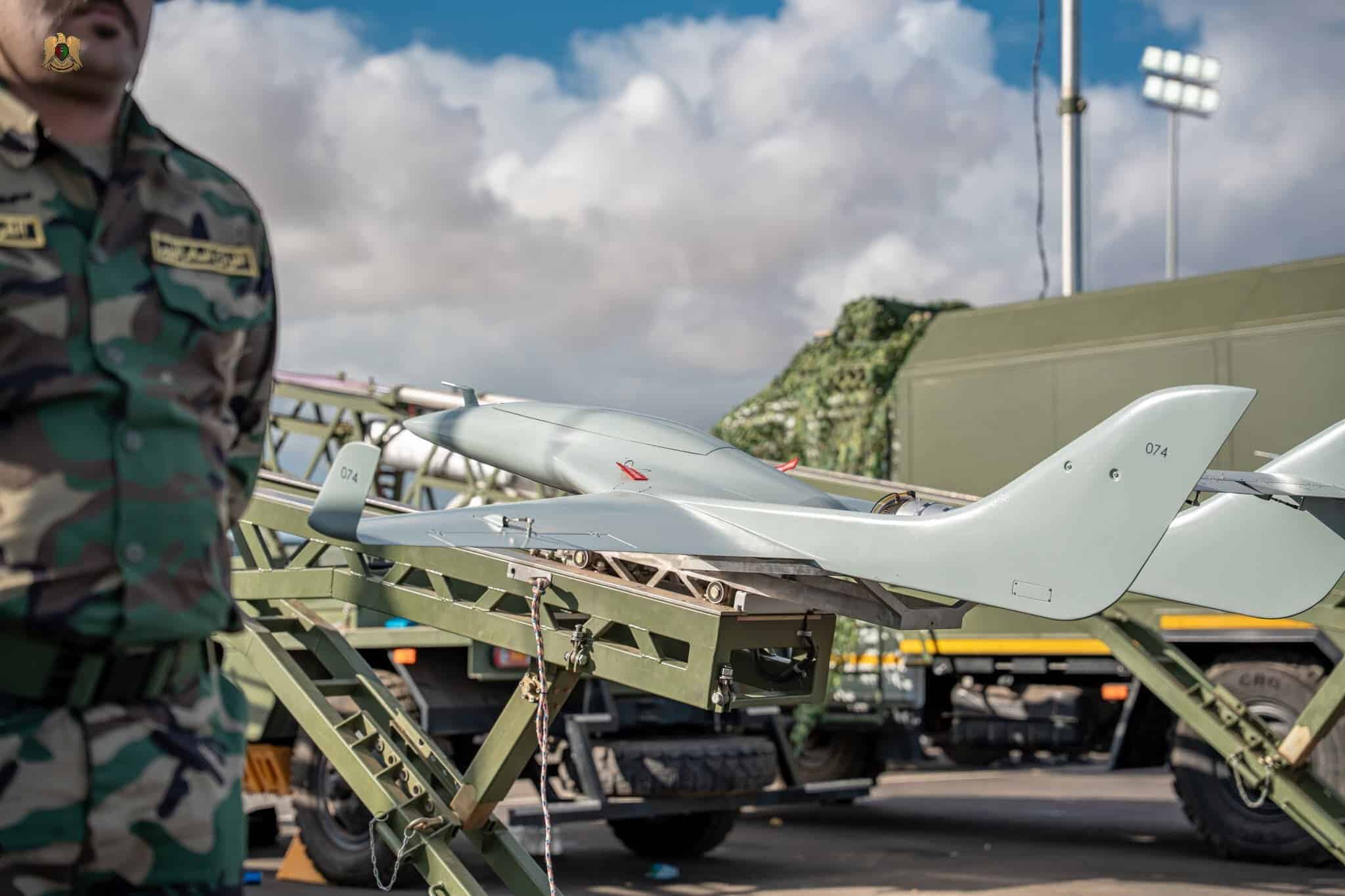
The General Command images show at least ten complete airframes in the hands of LNA special operations units. One aircraft carries the serial number “074”, which suggests the production run is larger than the batch on display, though the photographs do not establish how many were delivered, when they arrived or whether any have been used in combat. Italian news agency Agenzia Nova reported that the drones were first flagged by open-source analysts tracking the Benghazi parade preparations.
The ground equipment matters as much as the airframes. A complete Mirotvorets system comprises the drones, a transport-loading vehicle or module, a catapult launch unit and a mobile control station, according to manufacturer data cited by Militarnyi. All of these elements appear in the photographs, which indicates the LNA received an operational system rather than display samples.
From target drone to strike weapon
The Berkut-BM began life as an aerial target used to train air defence crews. Its first strike derivative was shown at the MILEX exhibition in Minsk in 2021 as part of a Mirotvorets counter-drone system, Janes noted, and the Mirotvorets name has since passed to the ground-attack version. The design originated at Indela, a Minsk drone maker that went bankrupt. Its team continued the work at the Design Bureau of Unmanned Helicopters, while a second Belarusian company, UAVHeli, handles production. Investigative reporting cited by Militarnyi links the project to entities associated with retired Colonel General Viktor Sheiman, who serves as President Alexander Lukashenko’s special envoy for projects in Latin America and Africa.
Published figures describe a small, fast aircraft. The Mirotvorets is 2.4 metres long with a 2.8-metre wingspan and a maximum take-off weight of 46 kilogrammes. A Chinese-made Swiwin micro-turbojet mounted between its twin tails drives it to a maximum speed of 450 km/h. It carries 15 litres of fuel, giving an endurance of up to 45 minutes and a range of up to 180 km at 6,000 metres, falling to 120 km at a cruise altitude of 300 metres. It operates between 150 and 6,000 metres. Its 10 kg high-explosive fragmentation warhead is light compared with the 40 to 50 kg of a Shahed-136, but its speed makes it a much harder target for guns and short-range air defences.
The drone is launched from a catapult and navigates by coordinates. It can fly a fully autonomous pre-programmed route or fly under automated operator control, with a communications range of up to 100 km, according to TASS. The manufacturer lists its intended targets as command posts and communications hubs, surface-to-air missile systems at their deployment sites, multiple-launch rocket systems and artillery at firing positions, and enemy reconnaissance and electronic warfare systems. Belarusian state agency BelTA has also described light armoured and motorised columns and personnel as targets. For comparison with the propeller-driven loitering munitions used elsewhere on the continent, see our explainer on how high African-owned military drones can fly.
An export trail that runs through Africa
Libya is not the type’s first African destination. In January 2026 Militarnyi, citing earlier Belarusian export records, listed Russia, Venezuela, Algeria, the Democratic Republic of the Congo (DRC) and Sudan’s Rapid Support Forces (RSF) among previous Berkut-BM customers. The Congolese case is the best documented. When Rwanda-backed M23 rebels seized Goma International Airport in eastern DRC in January 2025, footage released by the Rwanda Broadcasting Agency on 30 January showed at least one Berkut-BM-type jet drone in a shipping container in a hangar, next to a Congolese Su-25 ground-attack aircraft.
The Sudanese link fits a wider pattern. The RSF has drawn on Belarusian equipment, including Groza-S jamming systems, as Unmanned Africa described in its account of Sudan’s drone war between the SAF and RSF, and long-range one-way drones have spread rapidly in that conflict, as we reported in the proliferation of long-range delta-wing drones in Sudan. UN experts and media investigations have reported eastern Libya, under Haftar’s control, as a transit route for supplies to the RSF.
Outside Africa, India is the largest reported buyer. Reports in January 2026 said the Indian Army had bought several dozen Berkut-BM drones, and later reporting described a contract for about 100 units through the Indian firm SMPP Ammunition, where the type is known as “Peacekeeper” or “Agniveg”, Reform.news reported. Russian interest may follow. Denis Fedutinov, a leading Russian unmanned aerial vehicle expert, told TASS on 23 October that “it cannot be ruled out that the Mirotvorets drones may also be in demand by the Russian Armed Forces.”
Minsk, Benghazi and the UN embargo
Belarus has courted Haftar openly. Khalifa Haftar led an official delegation to Minsk in February 2025, where the two sides spoke of strategic cooperation, and Poland’s Centre for Eastern Studies (OSW) noted in September 2025 that Minsk was stepping up contacts with Libya. Agenzia Nova reported that flight reconstructions confirm a logistics route between Minsk and eastern Libya, although the experts it consulted did not link specific flights to the drone transfer.
Any such transfer runs into the UN arms embargo imposed on Libya in 2011 under Security Council Resolution 1970, which requires UN approval for weapons deliveries. In April 2026 Reuters reported satellite imagery of at least three drones at Al Khadim airbase, about 100 km east of Benghazi, assessed by weapons experts as a Chinese Feilong-1 and two Turkish Bayraktar TB2s. Reuters could not determine who supplied them, or whether any exemption had been sought. Haftar’s forces have depended heavily on Chinese systems, as shown in our analysis of where Africa’s armies buy their drones and who they rely on. A Belarusian jet drone widens that supplier base.
What a 180 km jet drone changes for Libya
Libya’s front lines have been largely frozen since the 2020 ceasefire, but both camps have kept building their drone forces. A catapult-launched jet drone with a 180 km reach and a mobile control station can be moved and fired from improvised sites without a runway, which makes it harder to find than a medium-altitude long-endurance (MALE) drone parked at an airbase. Its speed also leaves little warning time for the guns and short-range systems that most Libyan units rely on. The trade-off is a small warhead and no ability to loiter and search: the Mirotvorets is a precision weapon for fixed or pre-located targets such as air defence sites, radars and command posts.
The questions now are how many aircraft serial 074 implies, whether further batches follow, and whether the UN Panel of Experts on Libya addresses the transfer in its next report. Sudan’s war has already shown how quickly cheap one-way drones spread once a supply line exists, and our coverage of Russia’s long-range drone war in Mali shows the same pattern further west. If Minsk can supply Benghazi, its jet drones may follow the same corridors into the wider Sahel and the Horn of Africa.
