
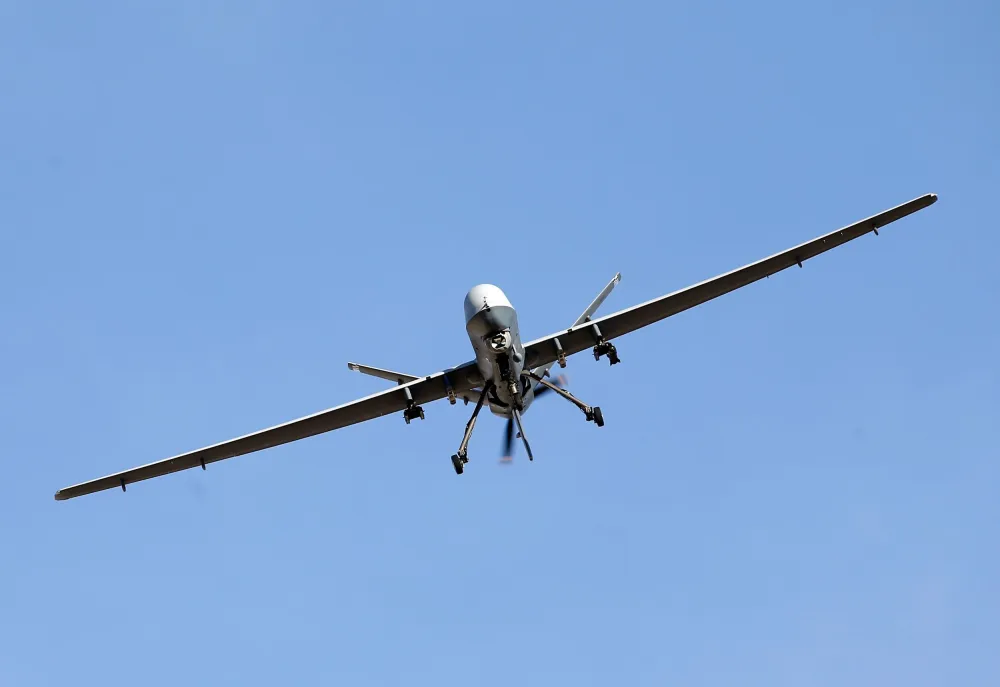
Sudan downs long-range drone from Ethiopia over Blue Nile
The Sudanese Armed Forces (SAF) say their air defences shot down a long-range drone over the Dandaro area of Blue Nile state on Friday 13 November 2026, and that the aircraft had crossed the border from Ethiopia. In a statement posted on the army spokesman’s Facebook page, the SAF described it as a “hostile strategic drone”, the term it uses for the larger, long-range types flown against its bases and the power grid, Sudan Tribune and Youlyou reported. The army did not name the drone type, release wreckage images or say who operated it.
The shootdown came twelve days after Khartoum filed complaints with the United Nations Security Council and the African Union Peace and Security Council accusing Addis Ababa of letting the paramilitary Rapid Support Forces (RSF) launch drones from Ethiopian territory. As Unmanned Africa reported, Sudan says 187 one-way attack drones were launched from Ethiopia in 70 attacks between February and October, and names Asosa Airport, the Kurmuk-Gizen border area and the Bahir Dar airbase as launch sites. Ethiopia denies the accusations and in turn accuses the Sudanese army of backing rebels linked to the Tigray People’s Liberation Front (TPLF).
Sixteen dead at Bani Shako
On the same day, local authorities moved wounded civilians to Ed Damazin, the state capital, after an RSF drone strike on displaced people at Bani Shako, in the Keili area of Kurmuk county. Kurmuk governor Abdel-Ati Al-Faki, who visited the wounded, said the death toll had risen to 16, with six injured and several people still missing, according to Sudan Tribune. He had reported nine dead on Tuesday 10 November, when the strike hit people travelling towards Ed Damazin, a figure also carried by Anadolu Agency. The RSF did not comment.
Kurmuk county borders Ethiopia and has been held for several months by the RSF and its ally, the Sudan People’s Liberation Movement-North (SPLM-N) led by Abdelaziz al-Hilu. The alliance captured the Sali military base near Kurmuk on 3 November, the Council on Foreign Relations’ conflict tracker noted, citing Sudans Post. Border villages have been hit repeatedly, pushing residents towards Ed Damazin.
A pattern of cross-border shootdowns
Friday’s claim is at least the fourth of its kind this year in Blue Nile. On 23 May the army said it downed a drone that had crossed from the Ethiopian side near Ed Damazin and released command-post video of the interception, Darfur24 reported. On 13 September the 4th Infantry Division said it shot down a “strategic” drone over the Bulang garrison, about 130 kilometres south-east of Ed Damazin, after it entered from the direction of the Ethiopian border (Sudan Tribune). On 3 November the army announced another interception in Blue Nile, and residents of Ed Damazin reported hours of anti-aircraft fire against drones overnight into 4 November, Ultra Sudan reported. None of these claims has been independently verified, and in each case the army has not identified the aircraft.
The RSF’s long-range fleet has included Chinese-made FH-95 drones and several one-way attack types, Sudan Tribune has reported, and Unmanned Africa has tracked the use of long-range delta-wing drones in Sudan. The SAF answers with ground-based air defence and its own Turkish Akinci aircraft, which have downed RSF drones with the Roketsan Eren munition, as covered in our report on the Akinci-Eren intercepts and in the running account of the drone war between the SAF and RSF. Sister site Military Africa has documented the SAF’s downing of an RSF CH-95 in July.
Evidence still missing
The Ethiopian launch-site claim has circulated since February, when Reuters reported that Ethiopia was hosting a camp to train RSF fighters and had upgraded Asosa airport for drone operations; Ethiopia did not respond to Reuters at the time, and has since called Sudan’s accusations “baseless”. A recovered airframe from Dandaro would be the first chance in this round for Khartoum to put physical evidence before the Security Council: a type identification, serial numbers and flight-controller data could show where the drone was built, who supplied it and, if navigation logs survive, where it took off.
Until the army publishes that material, the shootdown adds to a record built on official statements. For the SAF, the more immediate problem is coverage: Blue Nile’s long border with Ethiopia gives drones short flight times to Ed Damazin, the Roseires Dam and the army’s 4th Infantry Division, and a single interception does little against a campaign the government itself counts in hundreds of aircraft. Whether the SAF can extend layered counter-drone defences along that frontier will decide how much of the state’s infrastructure stays in service through the dry season.
