
China moves African sales from rifles to drones and air defence
China is no longer selling Africa mainly rifles and trucks. Armed drones and air defence systems are now near the top of what Beijing delivers, and three West African buyers show the shift: Ivory Coast with the Wing Loong II medium-altitude drone, Mali with Norinco’s Yitian-L short-range air defence system and Burkina Faso with a variant of Norinco’s Sky Dragon. The South China Morning Post set out the trend at the start of November, and sister site Military Africa examined it on 11 November.
The market numbers back it. China supplied 17 percent of Africa’s major arms imports in 2021 to 2025, close behind the United States at 19 percent and ahead of Russia at 15 percent, according to Stockholm International Peace Research Institute (SIPRI) data cited by Military Africa. South of the Sahara, China was the largest supplier, with 22 percent. Hudson Institute senior fellow Liselotte Odgaard told the Post that the new systems point to “a broader product catalog”, though she said armoured vehicles, trucks and artillery probably still make up most deliveries by volume. SIPRI researcher Katarina Jokic said price, maintenance costs included, weighs heavily in the choice of Chinese equipment.
Ivory Coast’s two Wing Loong IIs
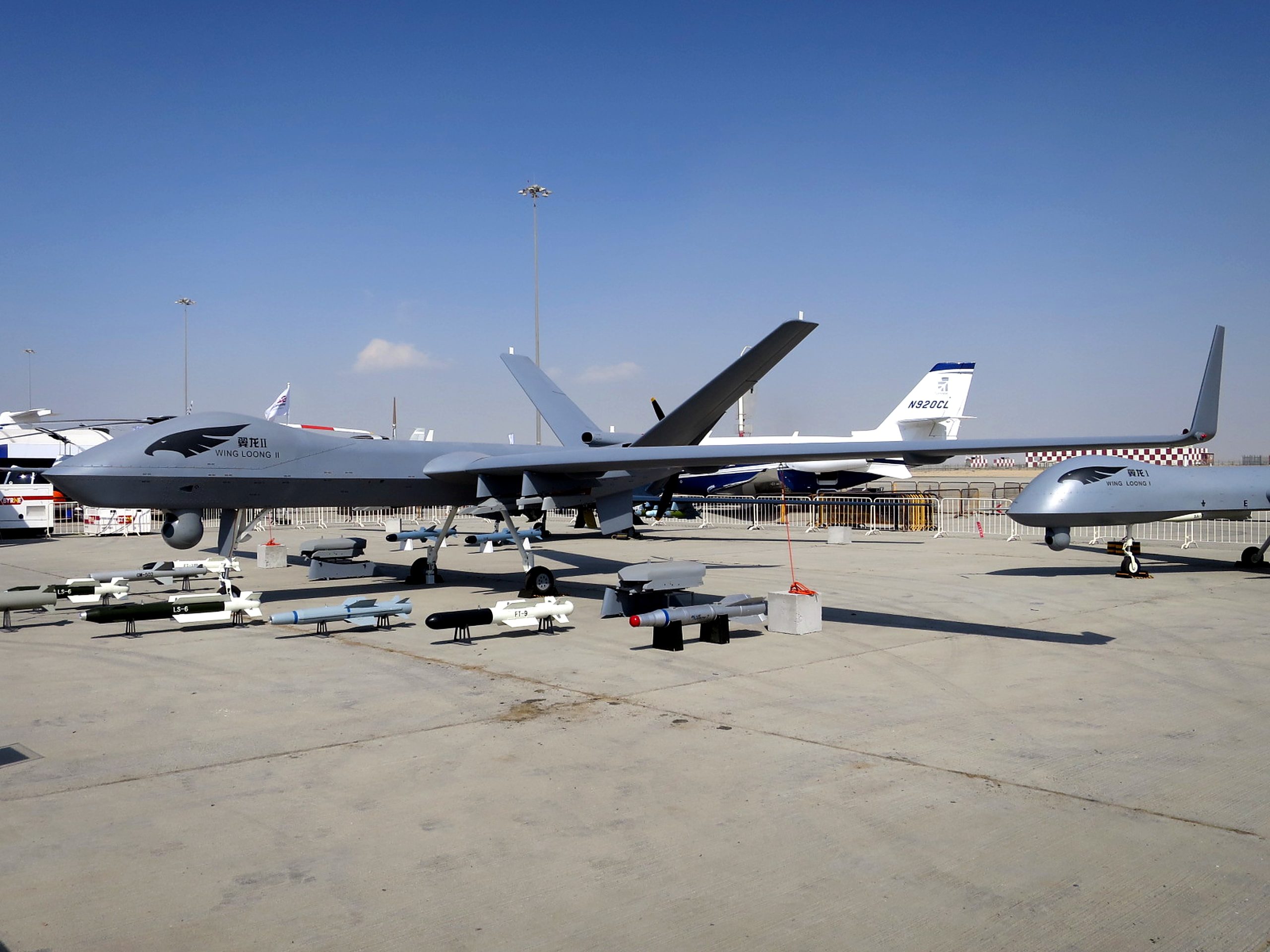
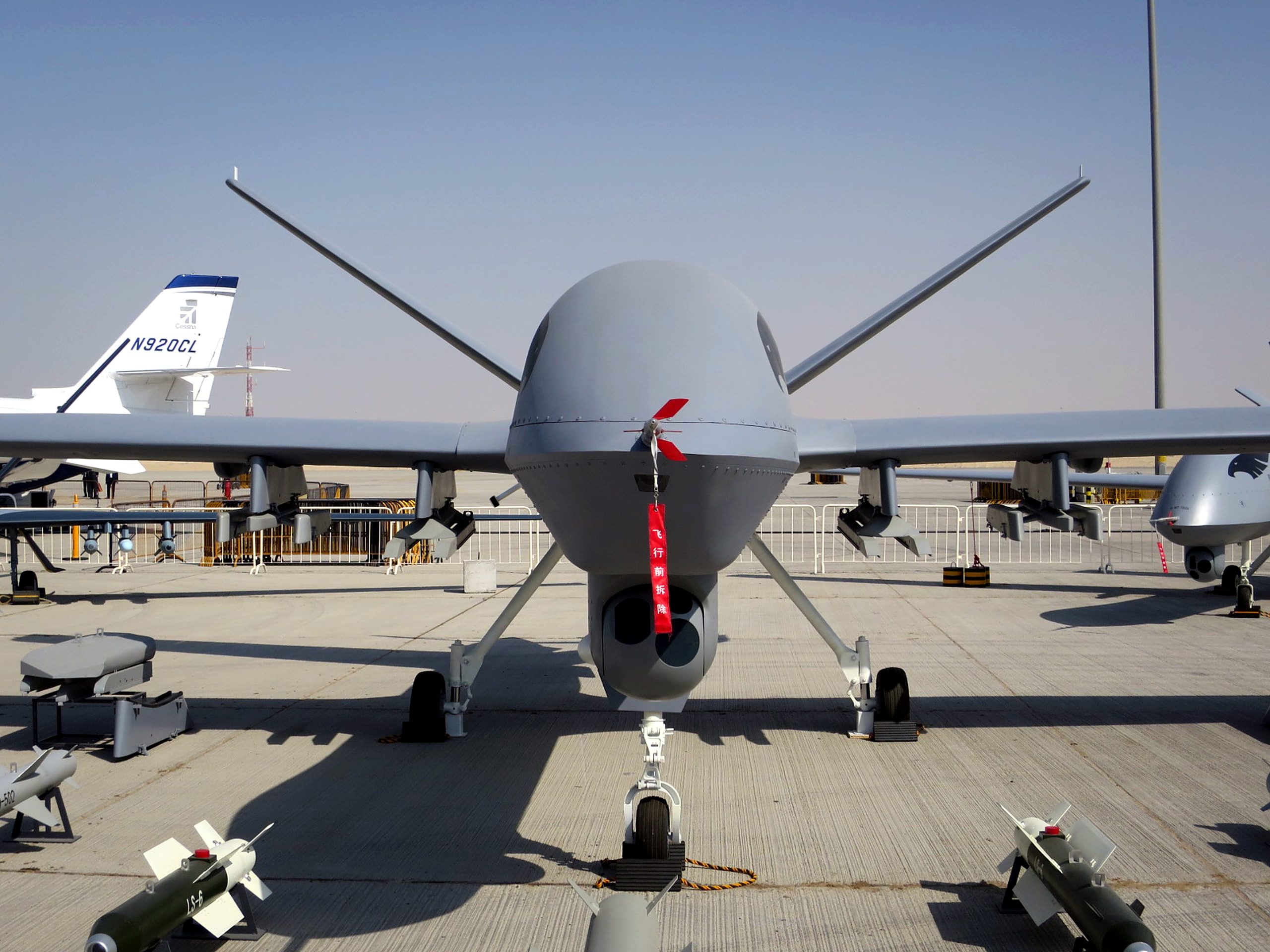
The drone half of the story is Ivorian. A television commentator covering the independence day parade on 7 August 2026 said the air force had acquired Wing Loong IIs, though none flew past. On 10 August the Armed Forces of Côte d’Ivoire (FACI) settled it, releasing video of two of the aircraft on the ground, Military Africa reported. Analysts placed the footage at Bouaké air base in the centre of the country. One aircraft appeared to carry a communications intelligence pod, Janes noted. The air force gave the type a wingspan of more than 20 metres, an operating altitude of up to 9,000 metres and more than 20 hours’ endurance, and listed border surveillance, maritime monitoring and counter-terrorism as its missions, African Pilot reported.
The purchase goes back to a contract signed in Abidjan on 14 June 2024 between the Ministry of Defence, then led by Téné Birahima Ouattara, and the China National Aero-Technology Import and Export Corporation (CATIC), the trading arm of AVIC. The ministry described it at the time only as covering “latest-generation air vectors”, without naming a type or quantity. Reporting on the deal says it also covers three Hongdu K-8 jet trainers. Neither the ministry nor the air force has publicly tied the 2024 contract to the drones.
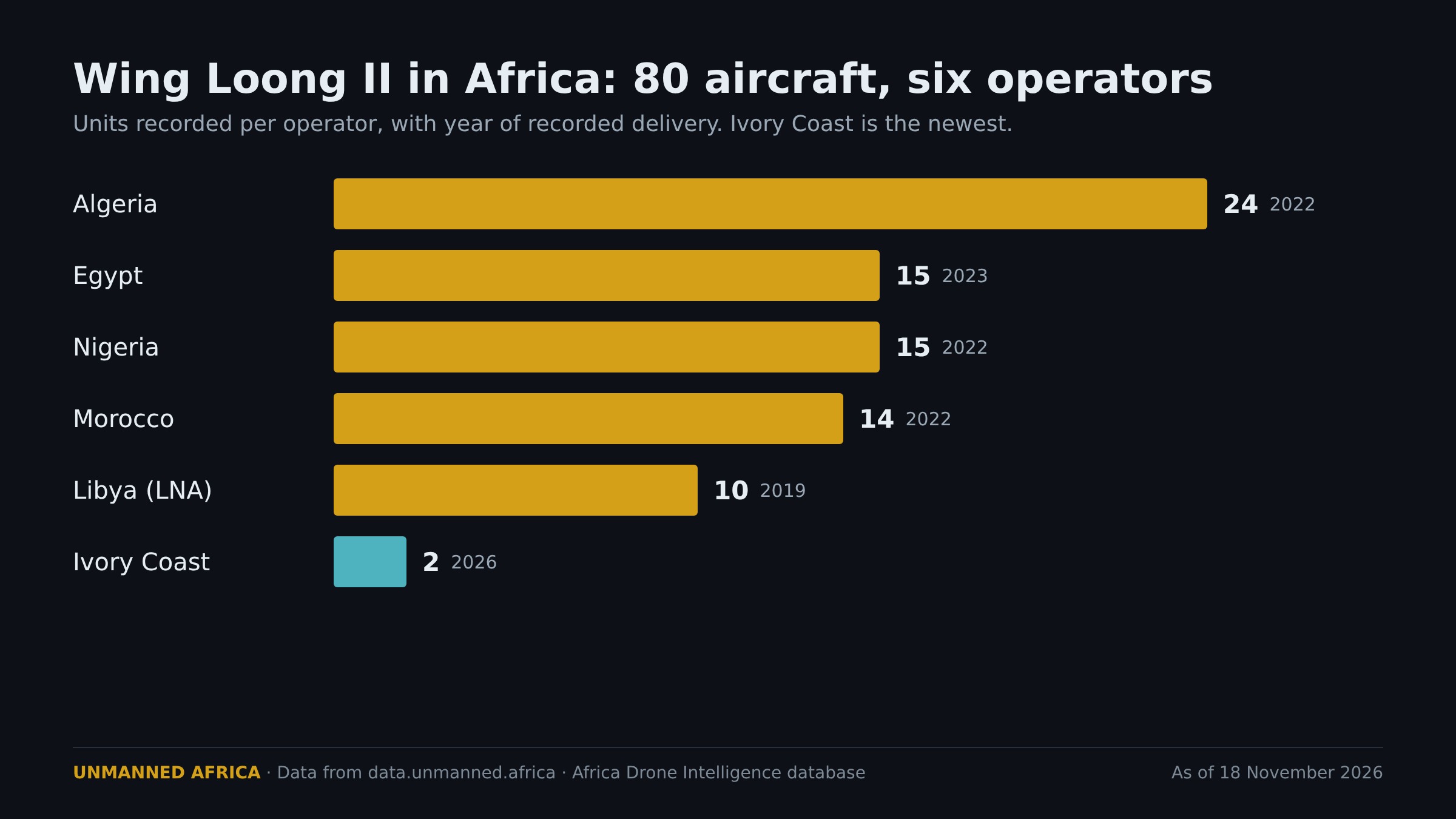
Two aircraft is a small fleet. It still makes Ivory Coast the second West African Wing Loong II operator after Nigeria, and the sixth on the continent. The Africa Drone Intelligence database records 80 of the type in Africa: 24 with Algeria, 15 each with Egypt and Nigeria, 14 with Morocco, 10 with Khalifa Haftar’s Libyan National Army and two with Ivory Coast, as Unmanned Africa set out in Wing Loong II now flies with six African operators. Only the Bayraktar TB2 is more numerous among Africa’s armed medium-altitude drones.
Abidjan has been buying from several directions. It ordered four DT26 surveillance drones from France’s Delair in 2021, and the database records three COMET L from ATECHSYS and three Tundra 2 from HEXADRONE for 2026, part of the return of French small drones to African armies. The Wing Loong II gives the air force something those aircraft cannot: day-long patrols over the northern border, where jihadist groups from the Sahel have pushed south, and the option of armed strikes. The type carries up to 480 kg of weapons on six hardpoints, according to the database.
Air defence for drone-era threats
Mali’s and Burkina Faso’s purchases sit on the other side of the drone fight. Janes identified four vehicles in a Malian military convoy in April as Yitian-L systems. The contract was signed in September 2024, with deliveries shipped through Guinea and running into early 2026, Military Africa reported. Mounted on a Dongfeng Mengshi 4×4, the Yitian-L carries four TY-90 infrared-guided missiles with a range of 500 metres to 6 km and an intercept altitude of 15 metres to 4 km. Its folding X-band radar detects fighter-sized aircraft at about 18 km, and a passive thermal and laser sensor suite lets crews engage without switching the radar on.
Burkina Faso’s presidency released video on 1 September 2026 of a radar-supported missile system firing, which Janes identified as Norinco’s Sky Dragon 30. Military Africa gives it a 30 km range, an 18 km engagement ceiling and the ability to engage 12 targets at once. It is the first radar-cued air defence system the Burkinabe armed forces have shown.
Neither junta faces an enemy air force. What both face are drones. Jama’at Nusrat al-Islam wal-Muslimin (JNIM) and the Azawad Liberation Front have used FPV and commercial drones against Malian bases and convoys, as Unmanned Africa described in its report on Mali’s long-range drone war. Missile-armed systems are an expensive answer to a cheap quadcopter, but they cover the larger threats that guns and jammers cannot.
AVIC and CASC already on the ground
Chinese drones are not new to Africa. The database credits AVIC with 184 units across eight African buyers, and CASC‘s Rainbow CH-4 is recorded with 45 units across seven forces, as covered in CASC’s Rainbow CH-4 spreads to seven African air forces. What has changed is the buyer list. Most early Chinese drone customers were in North Africa. The newer ones are in West and Central Africa, including Chad and the small fleets of Central Africa, and they increasingly combine Chinese drones with Chinese air defence and armour.
Russia’s absence explains part of it. Mali, Burkina Faso and Niger buy from both Moscow and Beijing, but Russian industry is tied up by the war in Ukraine. Russia supplies aircraft and the Africa Corps. China supplies much of the wheeled armour and air defence, Military Africa observed. Western suppliers have stepped back from the Alliance of Sahel States after the coups, and France has lost its bases there.
The sustainment test
Buying is the easy part. Radars, missile stocks and medium-altitude drones need years of spare parts, technicians and training in heat and dust. Norinco has opened a regional office in Dakar and a service centre in Bauchi State, Nigeria, for repairs and spares, the Post reported. No comparable AVIC support centre has been announced in Abidjan. How many hours Ivory Coast’s two Wing Loong IIs fly from Bouaké in their first year, and whether more follow, will say more about China’s place in West African air power than any contract announcement.
