
US Army upgrades Africa base-defence kits, seeks portable counter-drone systems
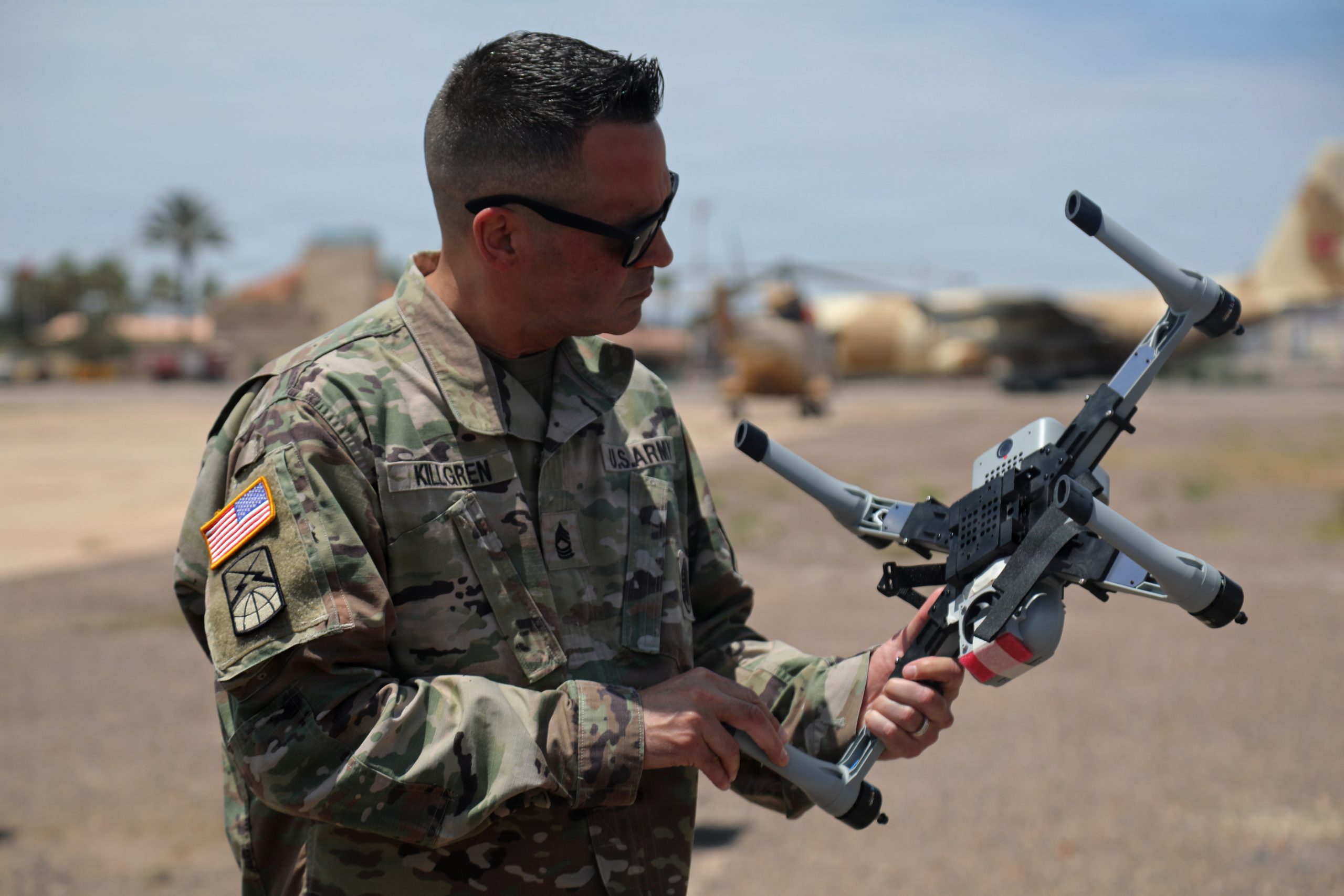
The United States Army is upgrading the 15 Integrated Base Defense-Kitting (IBD-K) systems that guard its bases in Africa and the Middle East, while bringing the same base-security system home to installations in the United States, Stars and Stripes reported on 18 November 2026. In parallel, the Army’s task force for Africa is running a prize competition for portable counter-unmanned aerial systems (C-UAS) that can protect small outposts with little infrastructure and no reliable satellite navigation.
The two moves point in the same direction. After more than a decade of protecting expeditionary bases in the areas of US Africa Command (AFRICOM) and US Central Command (CENTCOM), the Army is treating small drones as a threat to every location it holds, from desert outposts to bases in Virginia.
A base-defence network built in Africa and the Middle East
IBD-K is what the Army calls a system of systems: perimeter sensors, surveillance equipment, entry control, warning speakers and command-and-control data fusion, all feeding a single control station. It has protected US and coalition forces on expeditionary and enduring bases in CENTCOM and AFRICOM for more than 13 years, according to an Army statement issued on 17 November.
Product Manager Force Protection Systems, part of the Army’s Project Manager Aerial-Terrestrial Surveillance and Reconnaissance, completed the first IBD-K installation in the continental United States on 23 October 2026. The Army has not named the site, though its statement cites Fort Belvoir, Virginia, as an example of where the technology could be used, and says several more domestic installations will follow. “We cannot project power forward if we do not protect the force at home,” said Lieutenant Colonel Matthew Einhorn, the Army’s product manager for force protection systems.
For the kits still deployed overseas, the office is fielding an obsolescence and virtualisation upgrade to all 15 IBD-K sets in CENTCOM and AFRICOM. It replaces ageing operating systems and computer hardware with a virtualised host, which the Army says will cut cost, weight, power use, footprint and maintenance. Neither the Army nor Stars and Stripes named the African locations where the kits are deployed, and no costs were given.
A fly-away counter-drone kit for remote outposts
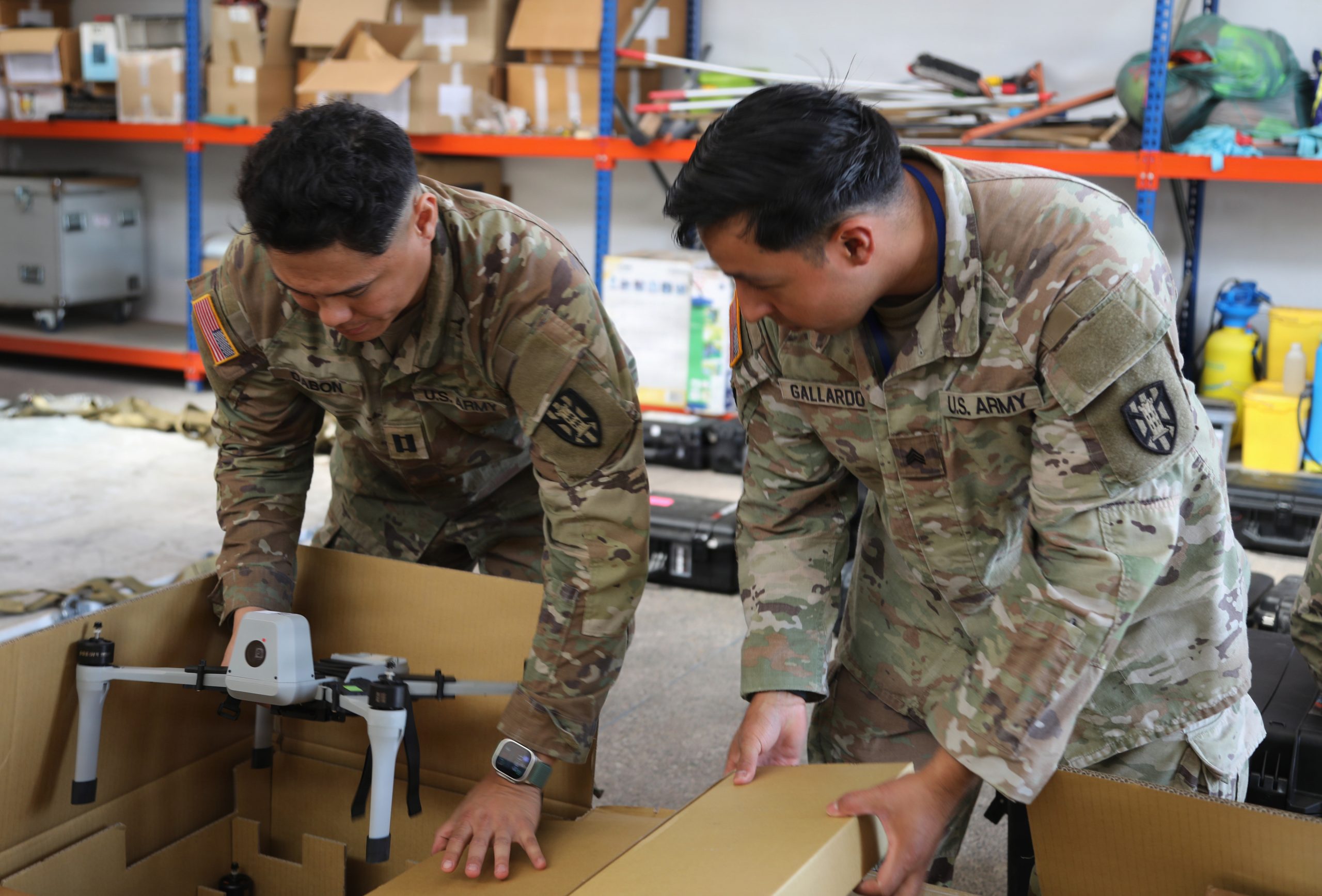
The counter-drone gap is being tackled separately. On 6 November, US Army Southern European Task Force, Africa (SETAF-AF), with the Army’s new Global Tactical Edge Acquisition Directorate (G-TEAD), opened a competition through the Army xTech programme for a C-UAS “fly-away kit”. Submissions closed on 17 November. The kit must detect, track and defeat drones in Groups 1 to 3, the smallest classes up to about 600 kilograms, at technology readiness level 6 or higher, according to the competition’s published terms.
The requirements read like a description of a Sahelian or Horn of Africa outpost. Kits must be small, rugged and quick to set up, run on generator, shore or solar power, and work with satellite navigation available, denied or spoofed, without hardware changes. They must also feed the Army’s air defence command networks and carry an emergency stop, with any lethal or jamming effects switched off by default.
Prize money totals up to $1 million. Up to 15 finalists receive $25,000 each, with a further $25,000 for those integrated into a soldier exercise from 15 to 26 February 2027, and up to five winners receive $50,000 each. Up to 15 companies can then win prototype agreements worth up to $5 million from March 2027, and winners may join African Lion 2027, the US military’s largest annual exercise in Africa, Stars and Stripes reported.
Morocco as the test range
SETAF-AF has made countering drones its top innovation priority, and Morocco is its proving ground. Stars and Stripes reported in October that the Army plans to evaluate equipment from more than a dozen suppliers at Tan-Tan and the Cap Draa Training Area in early 2027, with the aim of getting anti-drone systems to troops within 180 days. Morocco plans an Africa Multidomain Training and Experimentation Center at Tan-Tan by 2030, including a drone academy, under an agreement with AFRICOM. The kingdom’s own drone buying has widened sharply, as Unmanned Africa showed in Morocco’s drone buying spreads across six supplier countries.
Soldiers have already trained there with interceptor drones. During African Lion 26, which ran from 20 April to 8 May 2026 in Ghana, Morocco, Senegal and Tunisia, troops from the 7th Engineer Brigade spent three days learning the Bumblebee V2, which the Army describes as a “compact, agile interceptor capable of neutralizing small unmanned aerial threats”. AFRICOM is also testing Curtain Call, a commercial concept that uses swarms of up to 25 counter-drones and sensors as a protective barrier, Stars and Stripes reported in March.
Why small outposts worry planners
The drone threat around US positions in Africa now comes from several directions. In Somalia, United Nations monitors have reported Houthi engineers training al-Shabaab in drone modification, adding to the picture Unmanned Africa set out in Somalia: al-Shabaab, AFRICOM and a new IS rival in the sky. In the Sahel, separatists and jihadists have turned cheap first-person-view (FPV) drones on army convoys, as in how cheap FPV drones helped Azawad rebels retake Kidal. Jamming alone struggles against drones that fly pre-programmed routes or fibre-optic links, which is why the competition asks for kinetic, non-kinetic and passive options.
African armies face the same problem with far smaller budgets, and many are shifting money from buying drones to defeating them, as we described in African militaries shifting from drone procurement to counter-UAS. The AFRICOM commander, General Dagvin Anderson, toured BAMEX 2026 in Bamako this month and stopped at the stand of Turkish firm Turaç, whose Drone Kalkanı shotgun turret is aimed at the same close-range threat.
February 2027 at the soldier exercise
The next marker is the February 2027 soldier exercise, where finalists’ kits will be tested by troops before winners are named on 26 February and prototype agreements are signed in March. If the Army meets its 180-day target, portable counter-drone kits chosen in Morocco could be guarding US outposts in Africa by the second half of 2027, alongside the upgraded IBD-K networks. The test results will also be watched by African forces training alongside US troops at African Lion, many of whom are looking for the same light, cheap and GPS-independent defences.
