
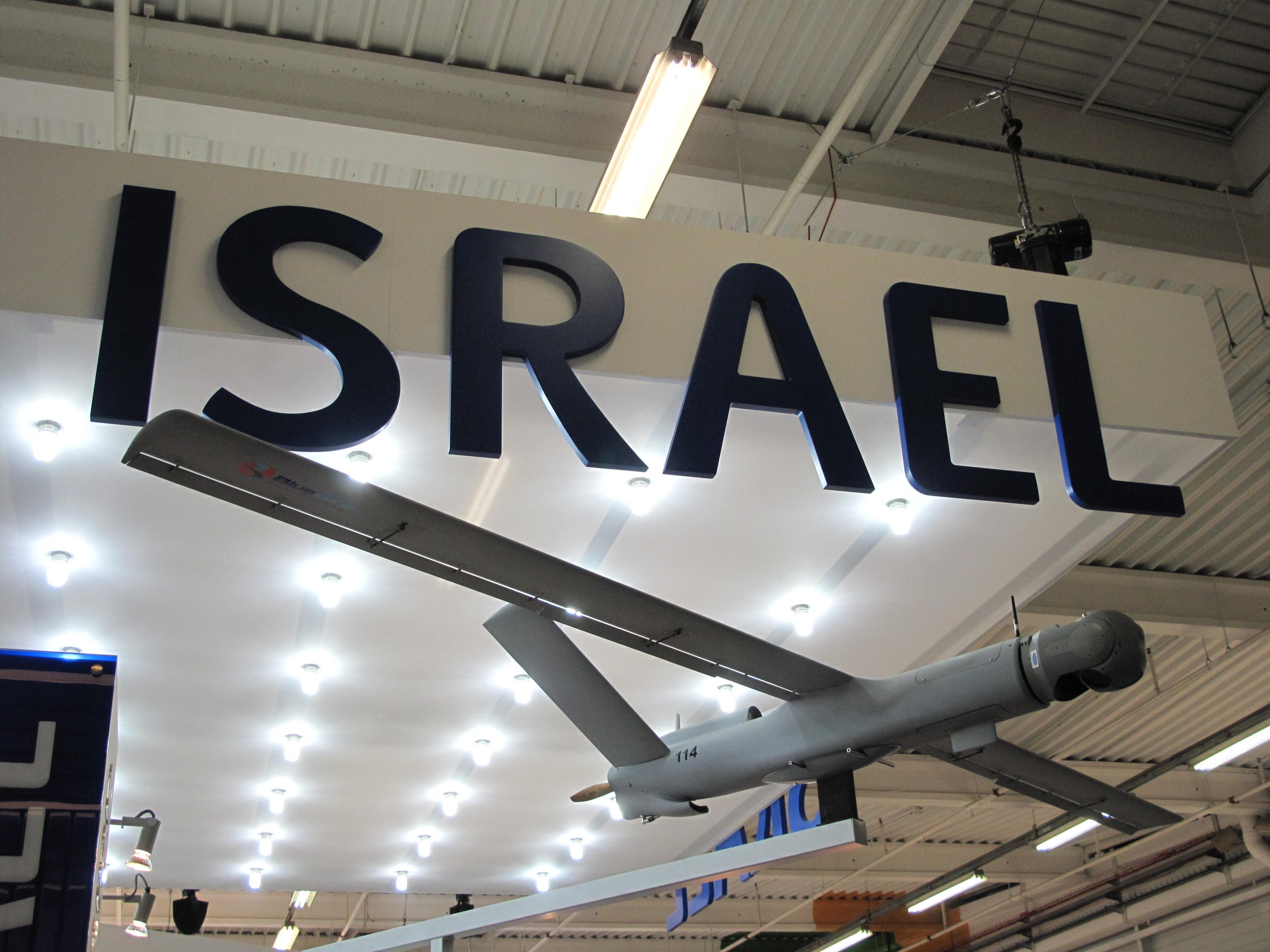
BlueBird closes on Baykar as Africa’s largest drone supplier by units
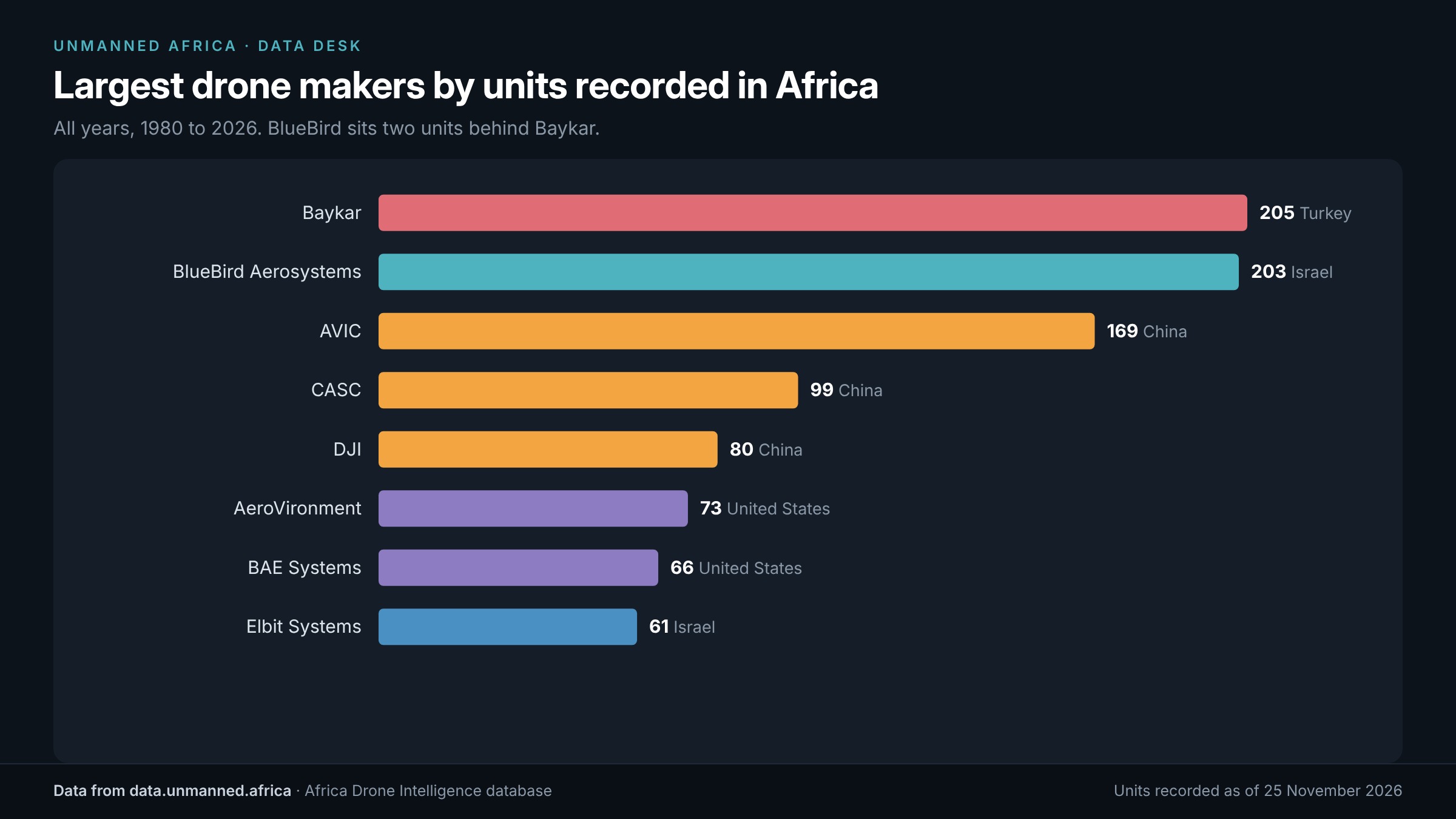
Israel’s BlueBird Aero Systems now has 203 military drones recorded with African buyers in the Africa Drone Intelligence database, two fewer than Turkey’s Baykar and more than any Chinese maker. The total rose from 197 this week after the database moved Ethiopia‘s six 2011 Wander B drones from IAI to BlueBird. Almost all of it comes from one customer: Morocco accounts for 166 of the 203.
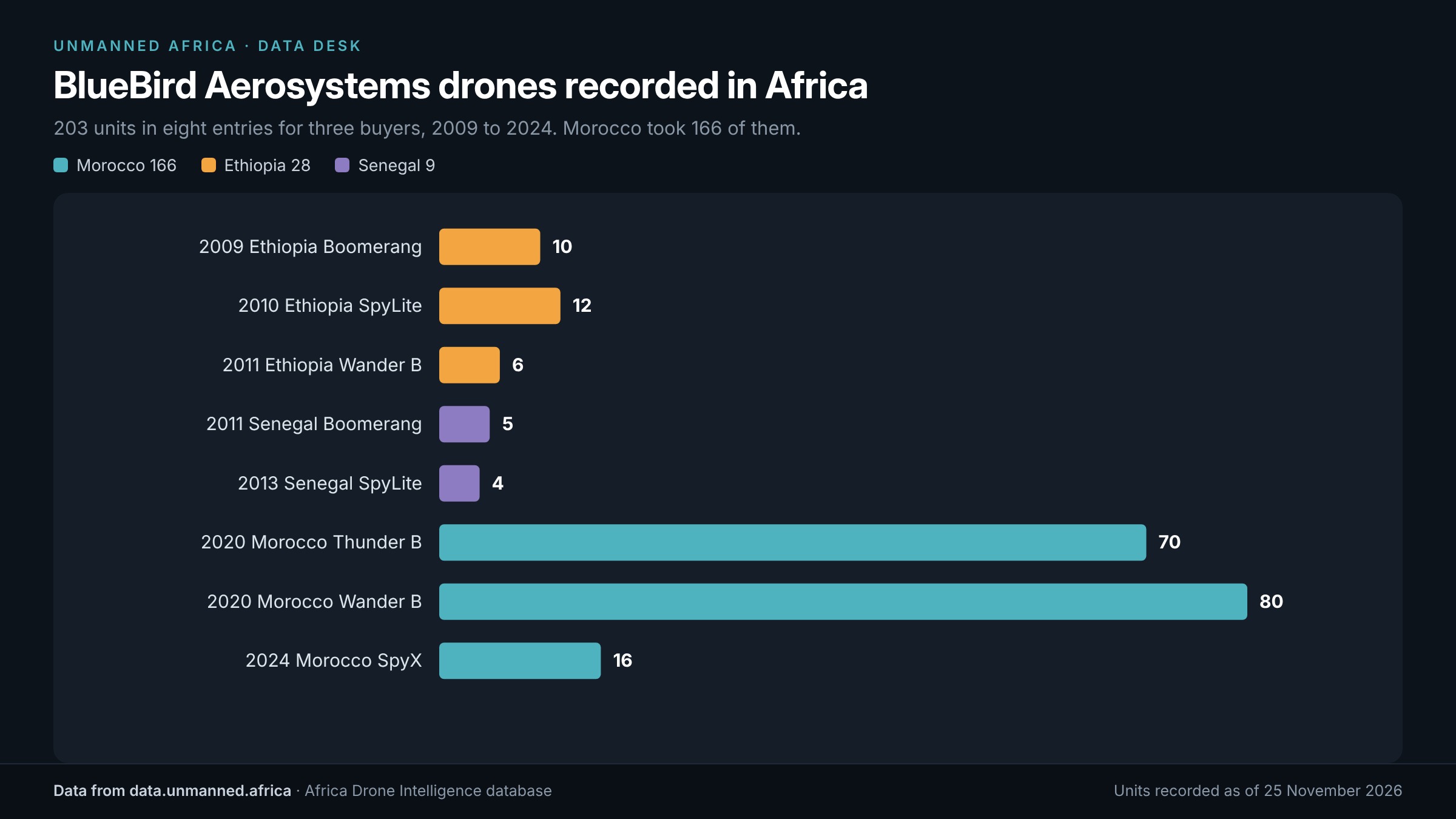
The record has eight entries for three buyers between 2009 and 2024. Ethiopia took 28 aircraft from 2009 to 2011, Senegal nine in 2011 and 2013, and Morocco 150 in 2020 and 16 more in 2024. Every BlueBird entry is a Class 1 drone, under 150 kg, and all but the last are surveillance types. That makes BlueBird the largest single source of small military drones in Africa, with 203 of the 844 Class 1 units on record, 24.1%.
Unit counts favour makers of small aircraft. A WanderB-VTOL weighs about 18 kg at take-off, while a Baykar Akinci weighs several tonnes, so BlueBird’s place near the top of the table says more about volume than about the value or reach of what it sold. It is still the clearest case in the database of a single order reshaping a supplier’s African record.
One Moroccan order
The 2020 Moroccan entries, 80 Wander B and 70 Thunder B, include the largest single entry for any African buyer in the database, the 80 Wander B. Outside reporting dates the contract to early 2021, a year later than the database, and puts its value at about $50 million. The order for 150 WanderB-VTOL and ThunderB-VTOL aircraft became public in September 2022, when the drones were seen during the Maroc Mantlet exercise, according to Morocco World News and Overt Defense. Neither the company nor Rabat has published the split between the two types, so the 80 and 70 in the database should be read as an estimate.
BlueBird lists the ThunderB-VTOL at a maximum take-off weight of 45 kg, with up to 12 hours’ endurance and a 150 km link, and the smaller WanderB-VTOL at 18 kg, about three hours and 50 km, according to figures published by Unmanned Systems Technology. Both take off vertically and cruise on a wing, which suits units working away from runways. Morocco’s 2020 order alone lifts the Israeli share of African deliveries in 2020 to 2022, as Unmanned Africa showed in Morocco takes over half of Israel’s African military drone exports.
The 2024 entry is different in kind. The 16 SpyX are loitering munitions, BlueBird’s first armed product in the African record. Moroccan forces tested the SpyX in March 2024 and Military Africa reported in April that year that it had entered service. The maker gives a take-off weight of 10 kg, a warhead of up to 2.5 kg and a range of 50 km. The quantity of 16 is the database’s figure and has not been confirmed by either side.
From Addis Ababa to Benslimane
BlueBird’s first African customer was Ethiopia. In April 2011 the company won an Ethiopian army contract for upgraded Boomerang and SpyLite drones, which also covered local maintenance facilities and technology transfer, Flight Global reported. The database records 10 Boomerang for 2009, 12 SpyLite for 2010 and the six Wander B for 2011. No outside source found for this report confirms a Wander B sale to Ethiopia, and the type is generally described as a later design, so the 2011 entry needs checking. Ethiopia has recorded no Israeli purchase since 2012, as set out in Ethiopia’s drone fleet draws on seven countries and its own industry.
Senegal’s five Boomerang and four SpyLite, recorded for 2011 and 2013, have no outside source attached, and no published report links BlueBird to Dakar by name. Senegal has since bought Spanish, French and Chinese drones instead, covered in Senegal swaps Israeli drones for Spanish, French and Chinese types.
Ownership changed between the Ethiopian and Moroccan orders. Israel Aerospace Industries bought 50% of BlueBird in September 2020, with founder and chief executive Ronen Nadir keeping the other half, Globes reported. The company, founded in 2002, is based at the Emek Hefer industrial park and is often described as an IAI subsidiary, though the reported stake is half.
Production in Morocco
BlueBird is now building in Africa. It inaugurated a SpyX production line at Benslimane, in the Casablanca-Settat region, in November 2025, which Globes described as the first such facility in the Middle East and North Africa outside Israel. Moroccan technicians trained in Israel under a technology-transfer programme, and Médias24 reported that Morocco intends to build a wider range for its own forces and for export to African buyers. Baykar is setting up at the same site through its Moroccan subsidiary.
Reports on the start of output differ. Bladi said in January 2026 that local SpyX production would begin in April, and Al Majalla reported in June that it had begun, without giving a date or volumes. No new Moroccan BlueBird order has been recorded in 2025 or 2026. The plant sits within a wider push: the EBRD found that Morocco’s exports of drone components rose 60% before the factory projects, as reported in EBRD: Morocco’s drone component exports rose 60% before factory push, and Military Africa traced the shift to local production in its 24 November report on Moroccan suppliers.
Within Israel’s African sales, BlueBird now accounts for 203 of 322 recorded units, 63.0%, ahead of Elbit Systems with 61, and IAI and Aeronautics Defence Systems with 29 each. Morocco alone holds 166 of BlueBird’s 203, 81.8%, and 61.3% of Morocco’s own 271 recorded drones came from the company. No other maker in the top five depends on one African buyer to that degree.
Data limits
The database records the Moroccan order by entry year, 2020, while outside reports date the contract to 2021 and public confirmation to 2022. The type split of the 150 aircraft is not public. The SpyX quantity, the Ethiopian Wander B entry and both Senegalese entries rest on the database alone. The database lists the Moroccan Wander B and Thunder B as conventional fixed-wing drones, although the versions reported for Morocco are the vertical take-off variants.
What to watch
The open question is whether Benslimane turns into new entries: a first batch of Moroccan-built SpyX for the Royal Armed Forces, or a first export from the plant to another African buyer. The database records no BlueBird sale to any other African buyer since 2013. A second Moroccan order of any size would also put BlueBird ahead of Baykar on recorded units, a lead that would rest even more heavily on one country.
