
KrattWorks brings Estonian target drones to African forces at AFRIDEX
Estonian drone maker KrattWorks used the Africa International Defence Exhibition (AFRIDEX 2026) in Lagos, held at Eko Atlantic from 26 to 29 October, to show its aerial target drones to African armed forces for the first time. The company is pitching two families of targets, the PARM quadcopter and the DART fixed-wing drone, for live-fire training and for testing counter-UAS weapons and sensors. “Our main business here is to display our target drones, which are mainly meant for target practice for armed forces, or also weapon testing for counter-UAS manufacturers,” business development manager Ranno Pajuri told Military Africa, which published the interview on 26 November. “This is our first time here.”
The Tallinn company builds drones that play the enemy. Its aim in Lagos was partners rather than a single sale: it is seeking local representatives and contacts with Nigerian and other African companies.
PARM: one operator, a swarm of targets
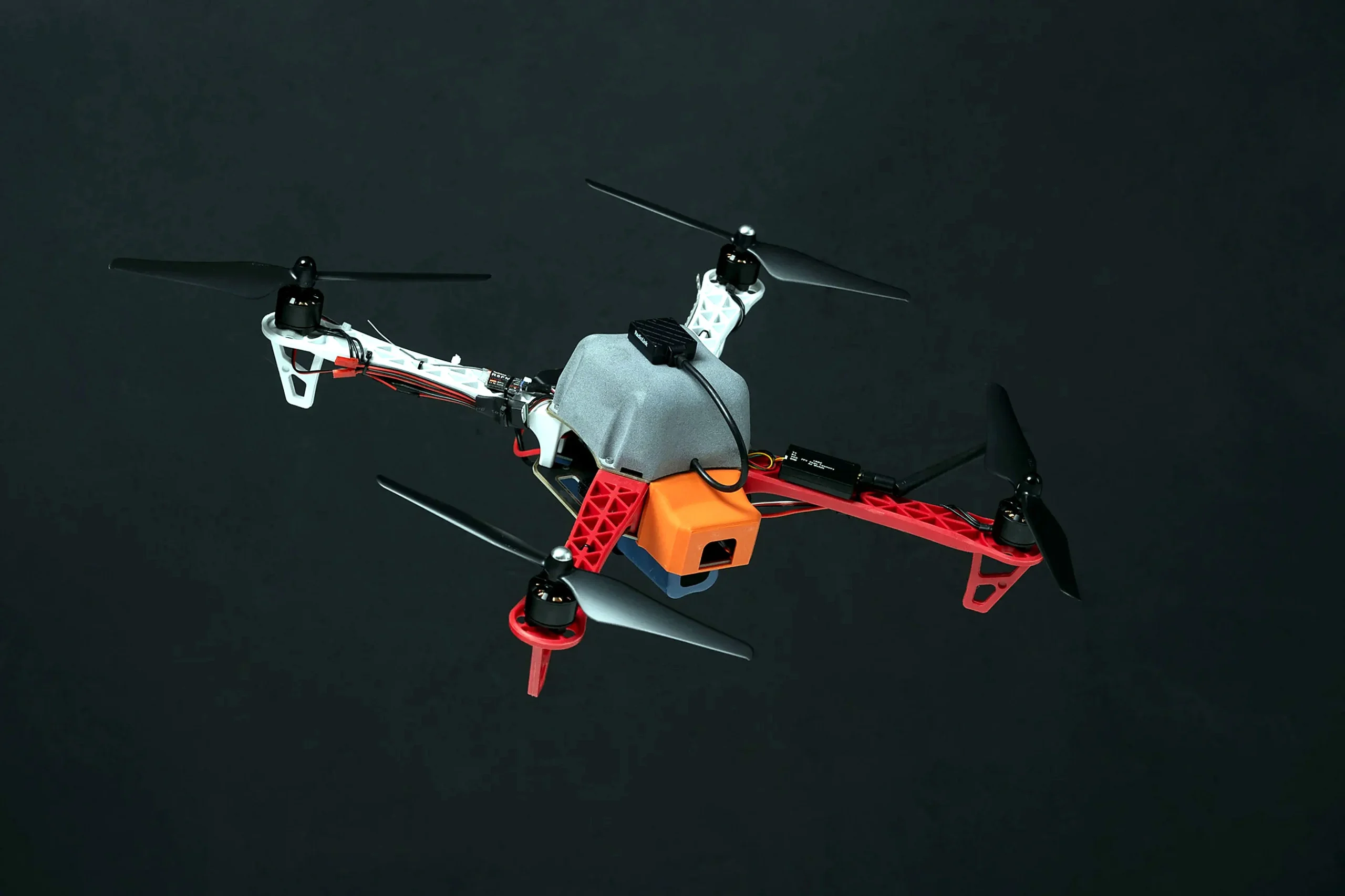
The PARM is a 36 by 36 centimetre quadcopter built to imitate first-person view (FPV) attack drones and swarms. According to KrattWorks, it flies for 20 to 25 minutes depending on conditions, reaches up to 65 km/h and has a radio range of up to 1 km. One ground control station, a rugged tablet or touch-screen laptop, can fly several PARMs at once, so a single operator can stage a swarm attack on a range. The company says operators are ready after about two days of instruction, with no dedicated drone pilots needed. PARMs are sold in sets of 10 drones in two cases, with a control computer, batteries and charging stations.
KrattWorks lists three uses: live-fire practice with small arms, heavy machine guns and anti-aircraft cannons; counter-drone drills from small-unit to battalion level; and testing of radar, radio-frequency and acoustic drone detection equipment.
DART: a fixed-wing target for air defence crews
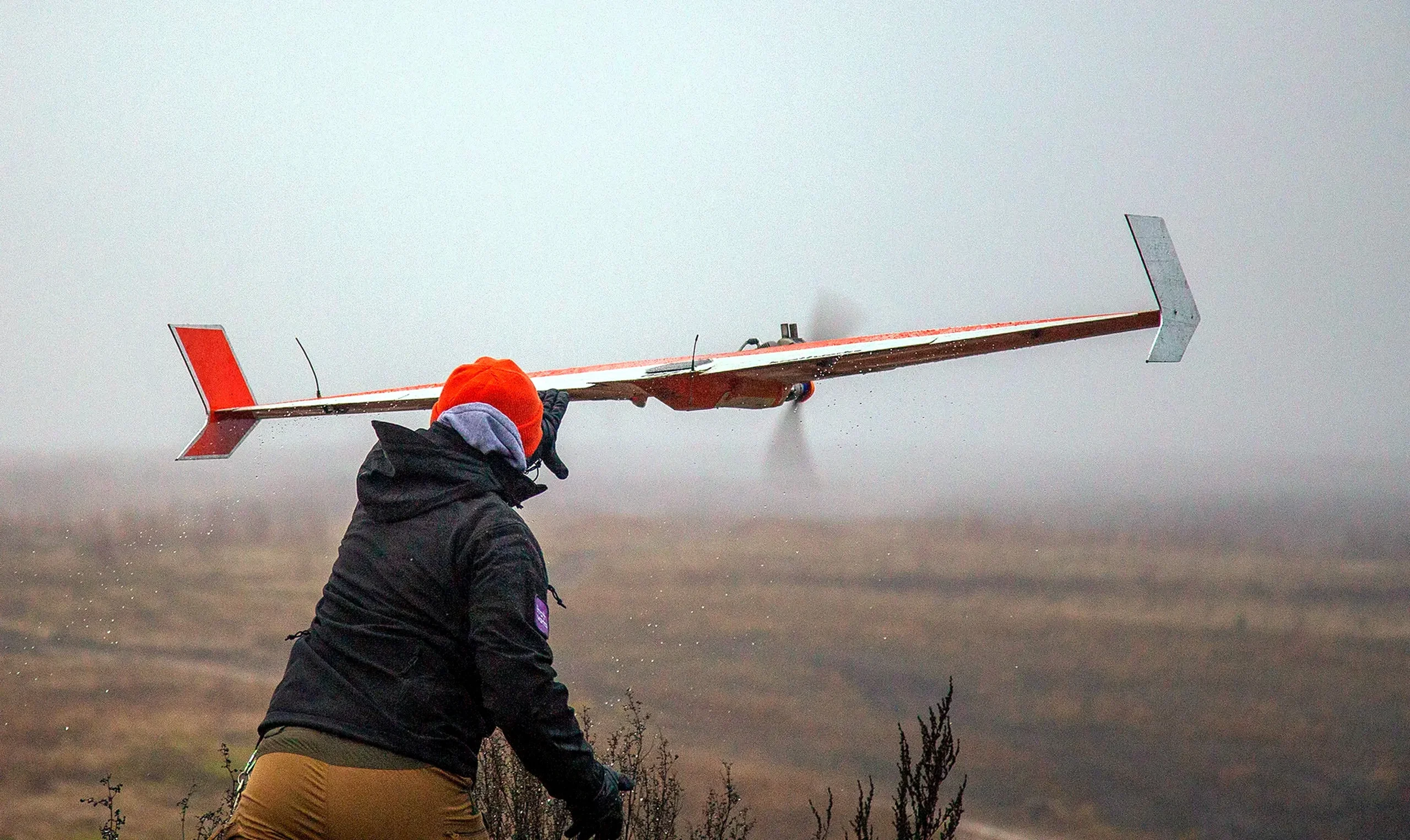
The larger DART is a fixed-wing target “that can simulate middle-sized attack drones”, Pajuri said. Its published specifications give a 2.2 m wingspan, a length of 0.95 m and a take-off weight of 13 kg. It cruises at 35 to 50 m/s, reaches 56 m/s, about 200 km/h, and flies for 40 or 110 minutes depending on the version, at operating altitudes of 4,000 to 5,000 m, in winds of up to 12 m/s and temperatures from minus 15 to plus 40 degrees Celsius. It takes off autonomously without a catapult and can operate from land or sea. It carries infrared flares, so crews can train with heat-seeking short-range air defence missiles as well as guns.
A variant, the DART-R, has an adjustable radar signature and can carry X-band or S-band reflectors to appear as a larger threat. Militarnyi reported a one-way range of up to 200 km for the DART-R. The Estonian Defence Forces fly the DART, which KrattWorks says is codified in the NATO catalogue. In September 2022, Estonia’s Centre for Defence Investment signed a seven-year, €15 million contract with KrattWorks for aerial targets for the army’s air defence battalion, public broadcaster ERR reported.
Next: jet-powered targets
Pajuri said targets must change as attack drones do. “The new threat is jet-powered fast attack drones. So we will very soon need jet-powered, fast target drones,” he said. He told Defense News in October that KrattWorks expects to present a target that mimics jet-powered Shahed-type drones by the end of 2027, once it has a reliable working prototype. The company also has a research line on intelligence, surveillance and reconnaissance (ISR) drones, including the Ghost Dragon quadcopter, and a one-way attack drone derived from the same platform. It builds its drones in a 2,300-square-metre facility in Tallinn certified to ISO 9001 and AQAP 2110.
A training gap in African counter-drone programmes
African forces are buying counter-drone systems faster than they are building the ranges and targets needed to train crews on them. Nigeria is due to receive counter-UAS equipment and training under the European Union’s €20 million package, covered in EU’s €20m package to give Nigeria counter-drone kit and training, and Nigerian and Rwandan delegations watched ASELSAN’s Korkut 35 destroy UAVs in Turkey, as Unmanned Africa reported in Nigerian, Rwanda military delegations watch ASELSAN’s Korkut 35 down drones. Guns, jammers and interceptors need regular live practice against something that behaves like a real drone.
KrattWorks will meet local competition. In South Africa, AutonoSky is developing the Vuma fixed-wing target for anti-aircraft and counter-drone gunnery, set out in AutonoSky scales up South African-made drones for army and training, and Incomar showed weapons-testing drones at AAD 2026, covered in Incomar unveils drone, munition and avionics suite. In Lagos, Nigerian firms such as Proforce Air Systems showed FPV strike drones of the kind PARM is designed to imitate.
What to watch
No African customer has been announced. KrattWorks told Defense News it is open to moving some production abroad if demand in a customer country is large enough, an offer that fits Nigeria’s push for local defence manufacturing. The markers to watch are a named African representative, a first target-drone order from a Nigerian or other African force, and whether African counter-UAS makers adopt PARM or DART for their own trials. “Hopefully we’ll be here next year,” Pajuri said.
