
Mali wants Turkish drone know-how, not just more drones
Mali has bought its armed drones from Türkiye for four years. Now it wants the skills to keep them flying, and eventually to build its own. Foreign Minister Abdoulaye Diop made the request in plain terms during the second Bamako International Defence and Security Exhibition (BAMEX 2026). “We want to acquire advanced technology and equipment, but we also want technology transfer,” he told Anadolu Agency in an interview published on 10 November. “We want to work with Türkiye and our other partners to develop our own capabilities.”
Diop did not name a drone programme. He did not need to. Drones are the core of what Türkiye has sold Bamako, and they are where Malian dependence on a foreign supplier is deepest. Military Africa, which reported the interview on 11 November, counted more than 20 Turkish companies at the show.
A fleet built in Türkiye
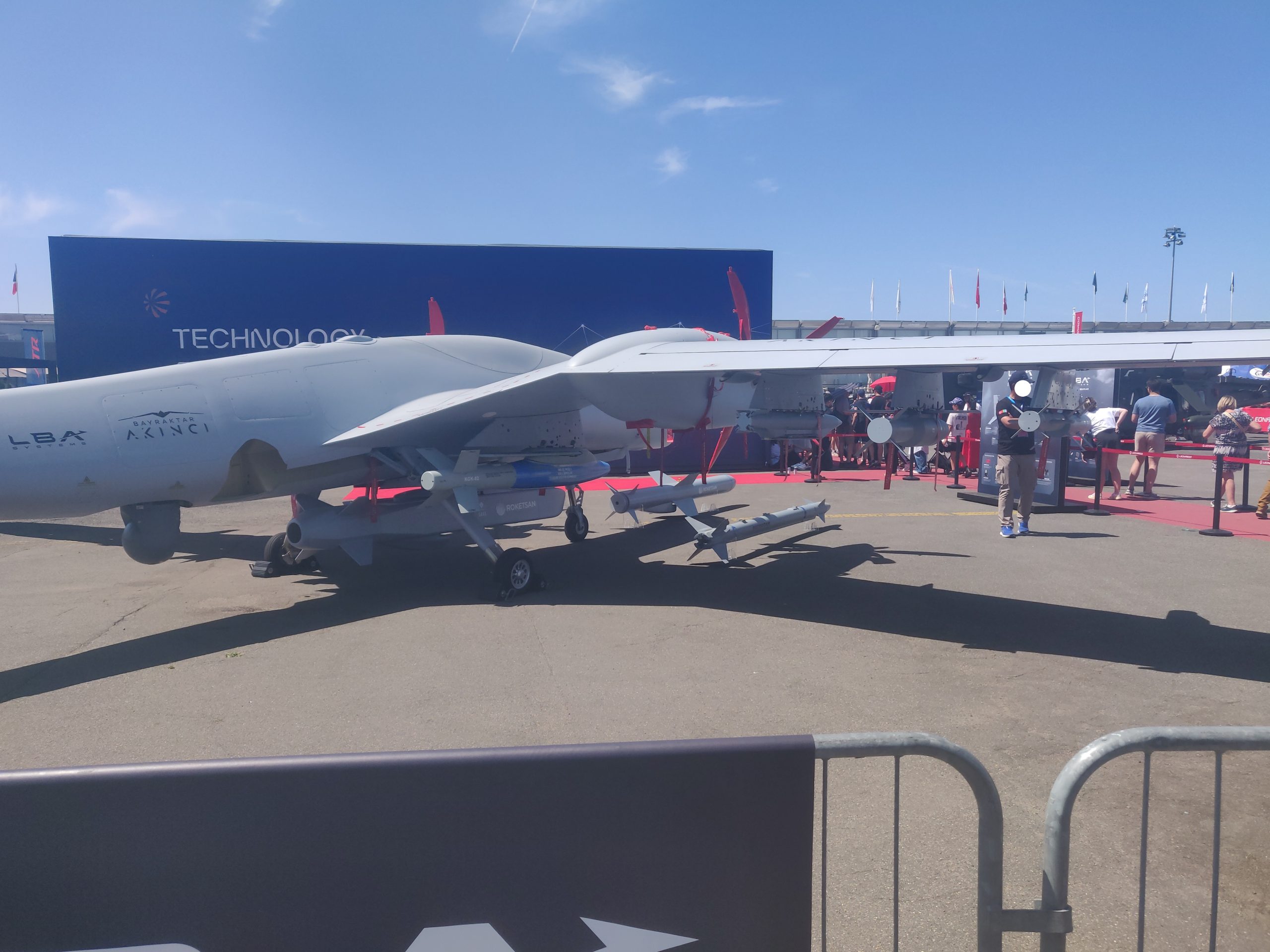
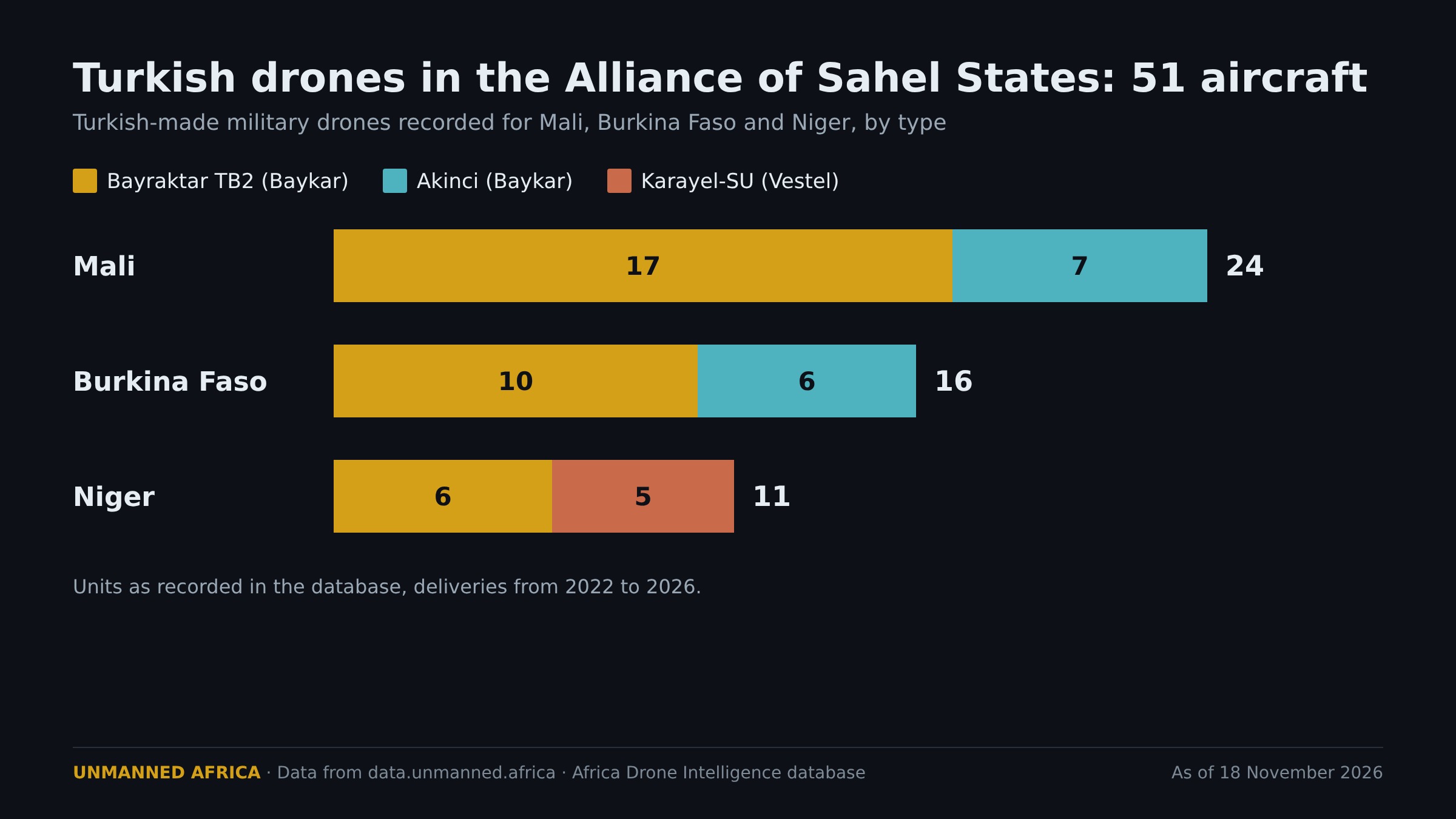
The Africa Drone Intelligence database records 62 military drones for Mali. Twenty-four of them are Turkish: 17 Bayraktar TB2 and seven Akinci, all from Baykar. The TB2s arrived in batches from December 2022 to January 2024. The heavier Akinci followed from November 2024, with further deliveries on 30 January and 30 July 2026, as Unmanned Africa set out in its report on Mali’s security chief, Turkish drones and the manpower gap. Both 2026 batches went to Sévaré air base in central Mali, Turkish analyst Göktuğ Çalışkan wrote in Daily Sabah.
Mali’s partners in the Alliance of Sahel States (AES) fly the same aircraft. The database records 10 TB2 and six Akinci for Burkina Faso, and six TB2 plus five Vestel Karayel-SU for Niger. That makes 51 Turkish drones across the three juntas. Russia’s ZALA Lancets and Kub-BLAs and Iran’s Shahed-131s fill out Mali’s inventory, but the Turkish aircraft carry the medium-altitude surveillance and strike work.
All of them depend on Turkish spare parts and technical support. Mali has also lost at least one. Algeria said its air defences shot down a Malian Akinci near the border on the night of 31 March to 1 April 2025, a loss that cost Bamako one of its most expensive aircraft and soured relations with its northern neighbour. Çalışkan wrote that Diop pressed for the technical knowledge needed to maintain equipment, and noted that no local production agreement has been reported.
What Türkiye put on show
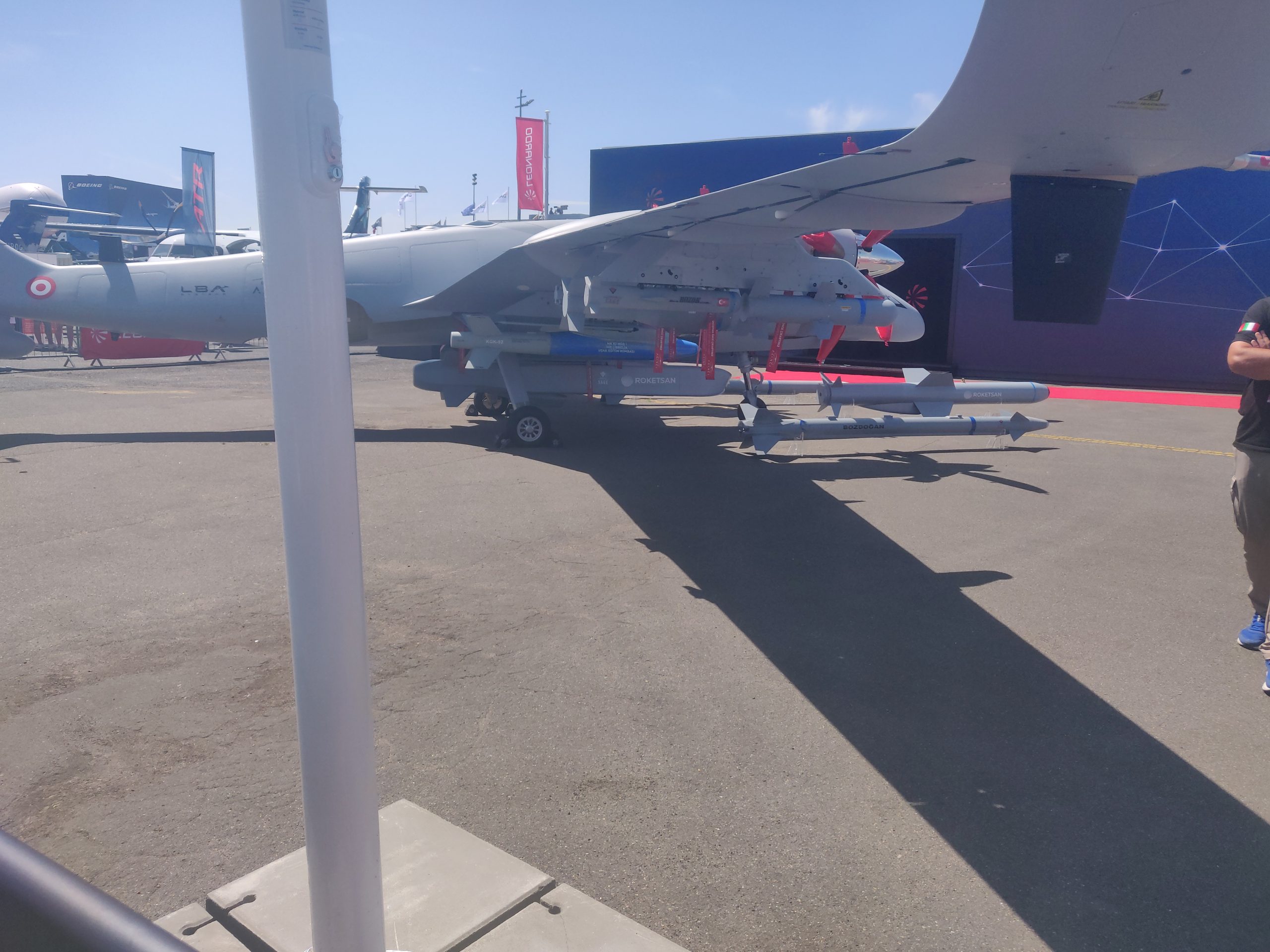
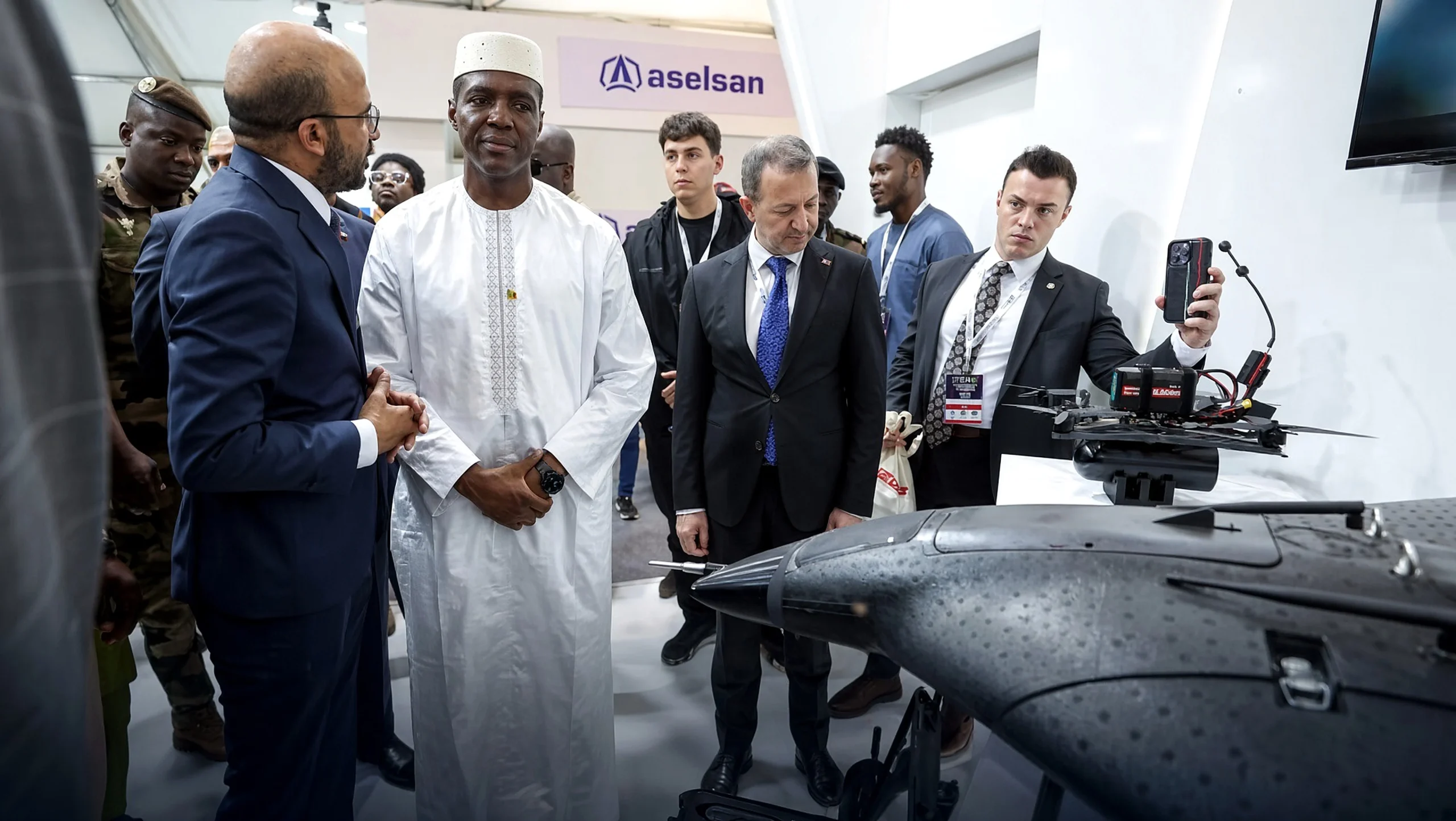
Turkish industry used Bamako to show what comes next. Baykar displayed a KIZILELMA jet-powered combat drone in Malian markings alongside the TB2, TB3 and Akinci, though no sale has been announced. Aselsan and Roketsan exhibited too, and a loitering munition and an FPV drone stood near the Aselsan stand. Newer firms came looking for their first African buyers. Skydagger brought FPV strike drones and interceptors and says it plans factories in five countries. Turaç showed its Drone Kalkanı counter-drone turret.
The politics around the show were busy. Turkish Deputy Defence Minister Bilal Durdalı met transitional president General Assimi Goïta on 11 November, a day after the commander of US Africa Command, General Dagvin Anderson, did the same, according to Daily Sabah. Turkish trade with Mali was worth about $194 million in 2025, the same column said, and Malian and Nigerien soldiers completed special forces training in Isparta, Türkiye, in June, ADF reported.
Diop’s wider message was about the AES. “Threats, pressure, sanctions and even disinformation have no effect,” he said, and the alliance’s priority in talks with the Economic Community of West African States “is not to return to ECOWAS”. Mali, Burkina Faso and Niger left the bloc in January 2025. He also said Mali wants Turkish companies in energy, agriculture and health. “Türkiye has stood by us despite all the difficulties of this period.”
The Moroccan model
Baykar has done this in Africa once. Morocco used local-content rules to get the company to set up a drone facility at Benslimane, east of Casablanca, as Unmanned Africa explained in Africa’s drone indigenisation numbers hide more than they show. The vehicle is Atlas Defense, a company registered in Morocco in December 2024 and owned in equal shares by Haluk and Selçuk Bayraktar. In February 2026 it advertised for mechanical, structure, painting and electronics technicians and a test pilot, all focused on maintenance, repair, overhaul and flight testing, Morocco World News reported. With paid-up capital of MAD 2.5 million, about $250,000, one source quoted by Middle East Eye judged a full production line unlikely and said the subsidiary mainly services the drones Baykar has already sold Rabat.
Mali is not Morocco. Rabat brought money, a large fleet and stable relations with Ankara and the West. Bamako has the stable relations with Ankara but a smaller budget, a fleet a fraction of Morocco’s size, and an insurgency that keeps its aircraft busy. A servicing and training centre in Bamako or Sévaré, run with Baykar, is easier to imagine than a production line. Elsewhere in West Africa, Turkish defence firms have tended to start with memoranda: HAVELSAN signed one with Nigeria’s Defence Industries Corporation (DICON) at AFRIDEX in Abuja, Turkish defence outlet Envanter noted in its BAMEX coverage.
From know-how to airframes
Bamako showed some of its own ambition at the same exhibition. The N’Gelèni, a petrol-engined drone described as designed and built in Mali, sat on the AES stand, though no developer or performance figures have been published. A home-built surveillance aircraft and a maintenance deal for imported strike drones are different things. Bamako is asking for both.
Nothing has been signed yet. Neither Ankara nor Bamako has announced a technology transfer agreement, a joint venture or a training contract since the show closed on 13 November. Malian technicians certified to service the TB2 and Akinci at home would be a real step, and a Baykar office in Bamako a bigger one. The third BAMEX is set for 2028.
